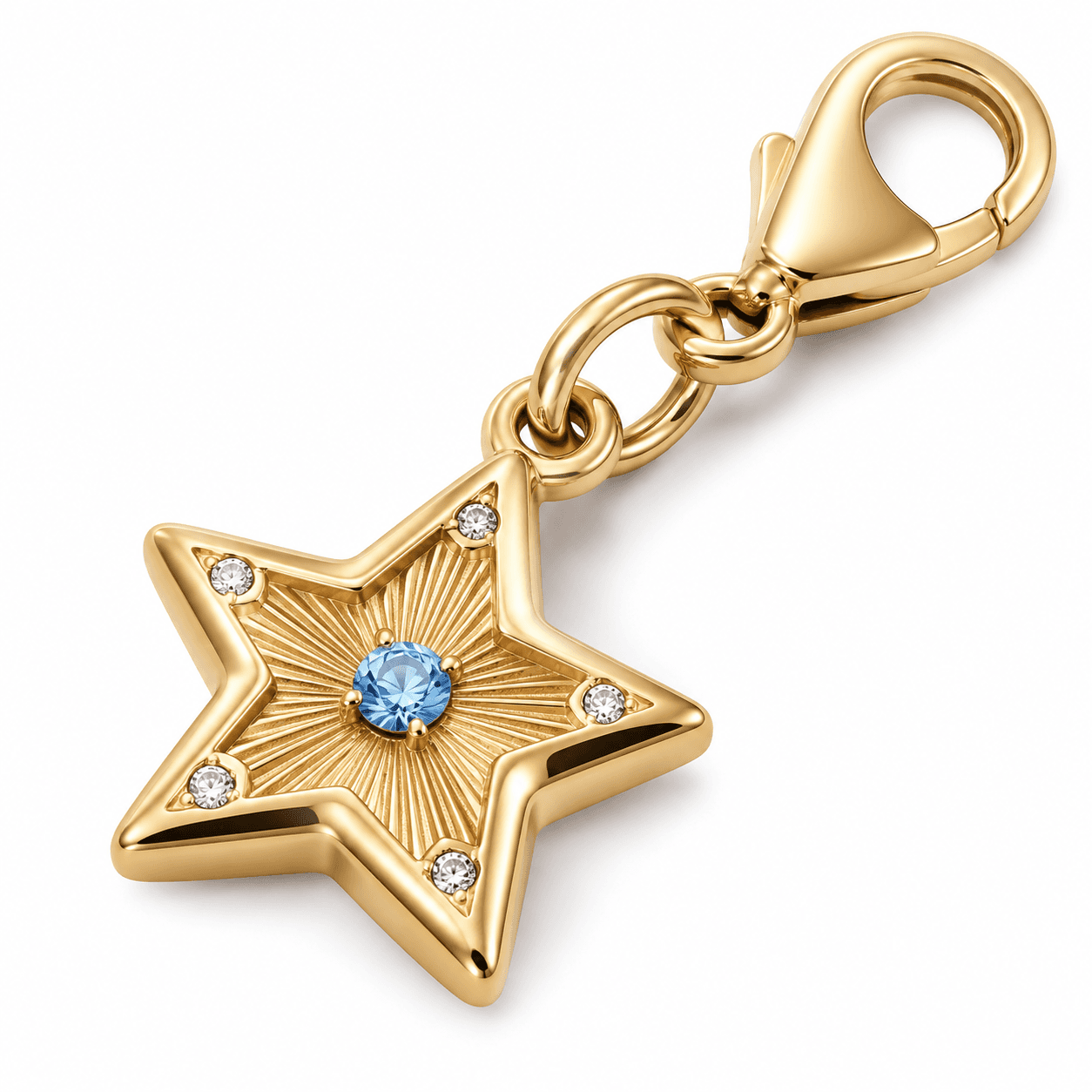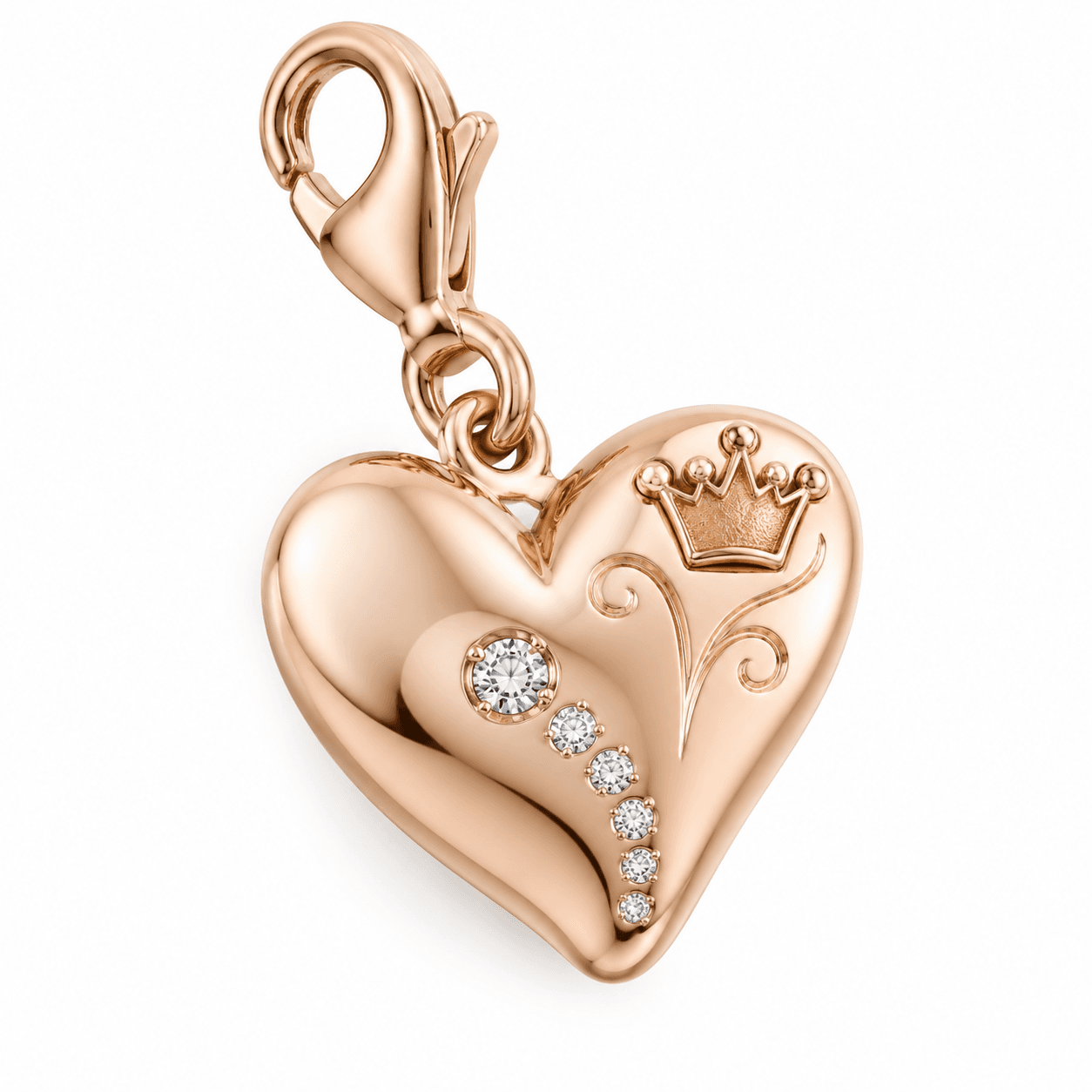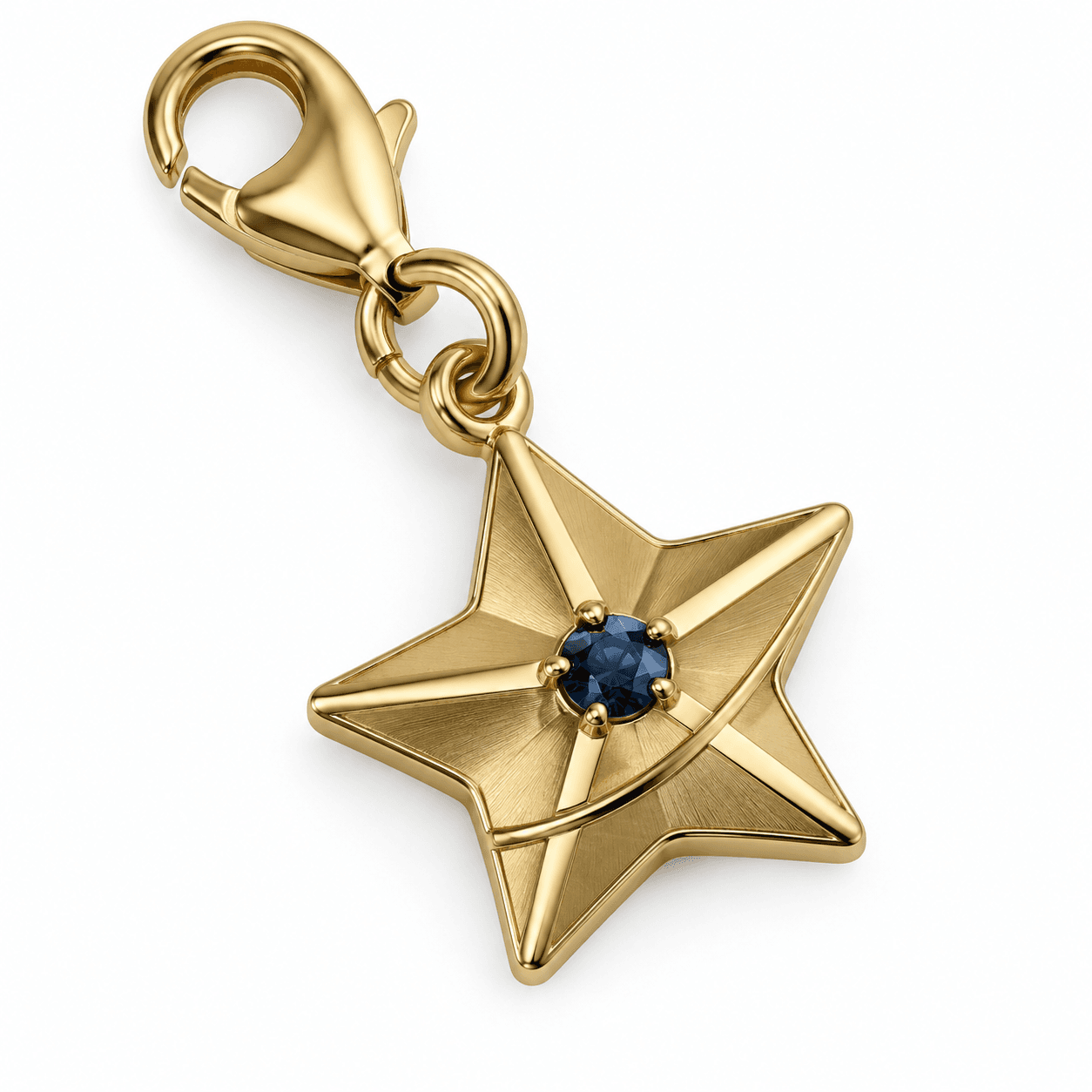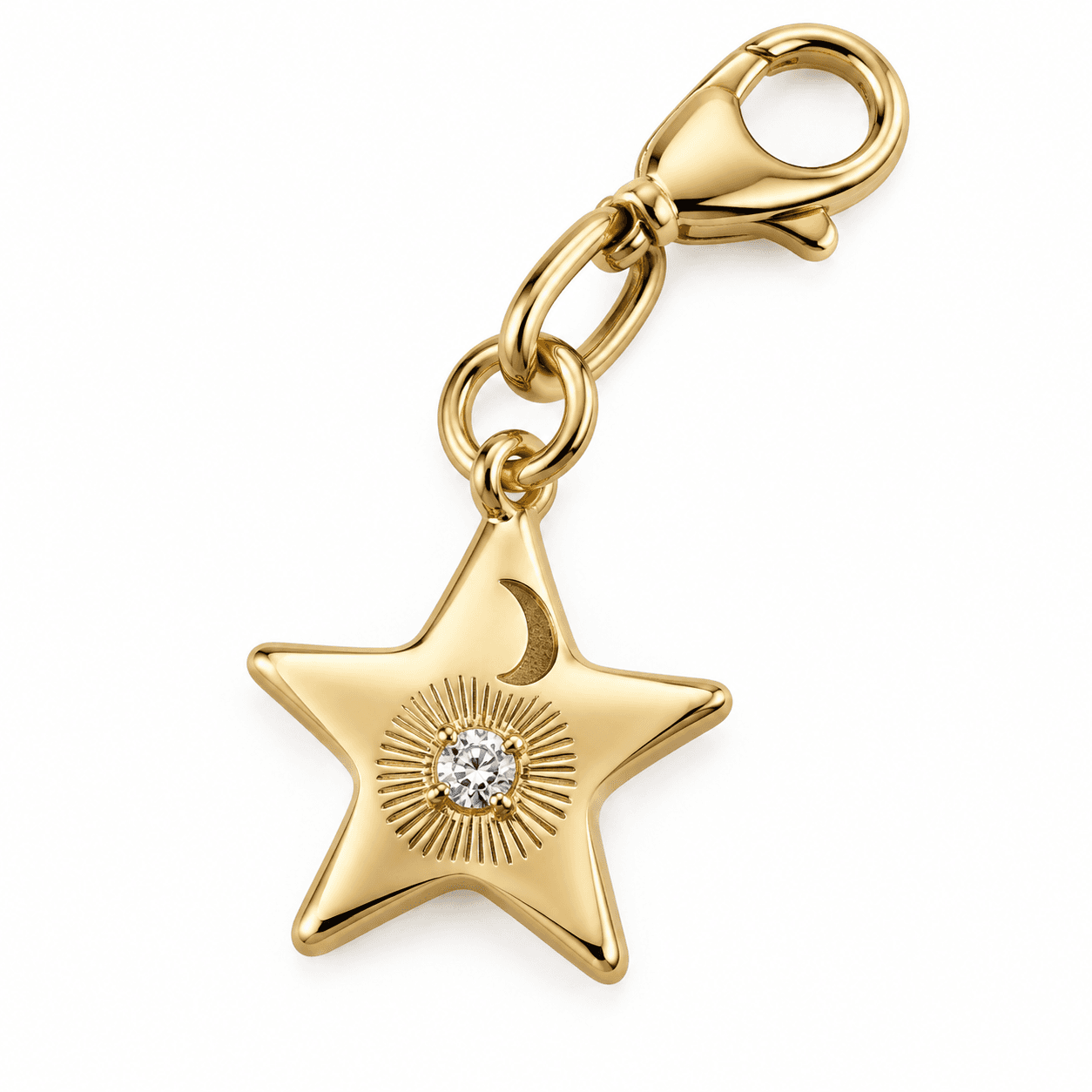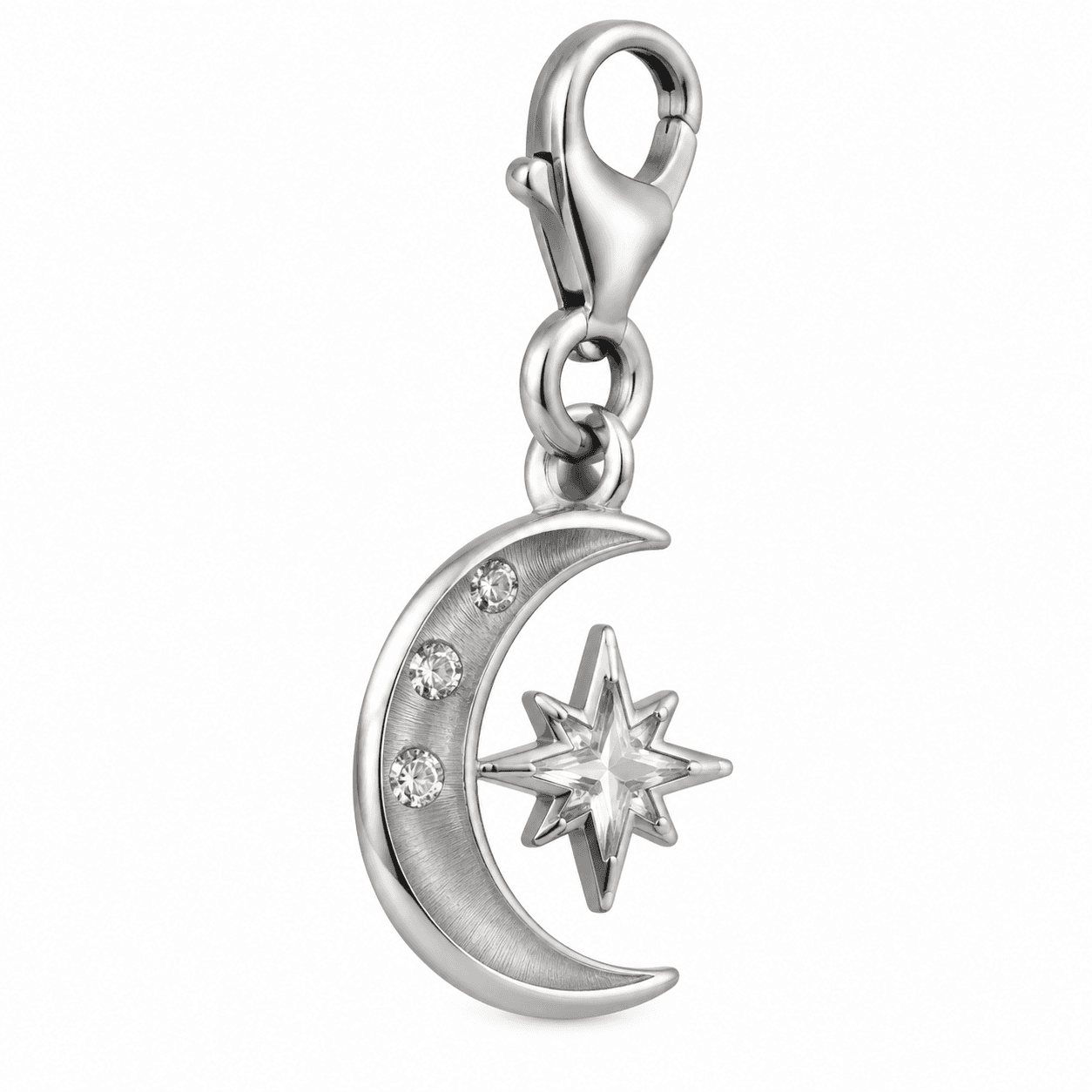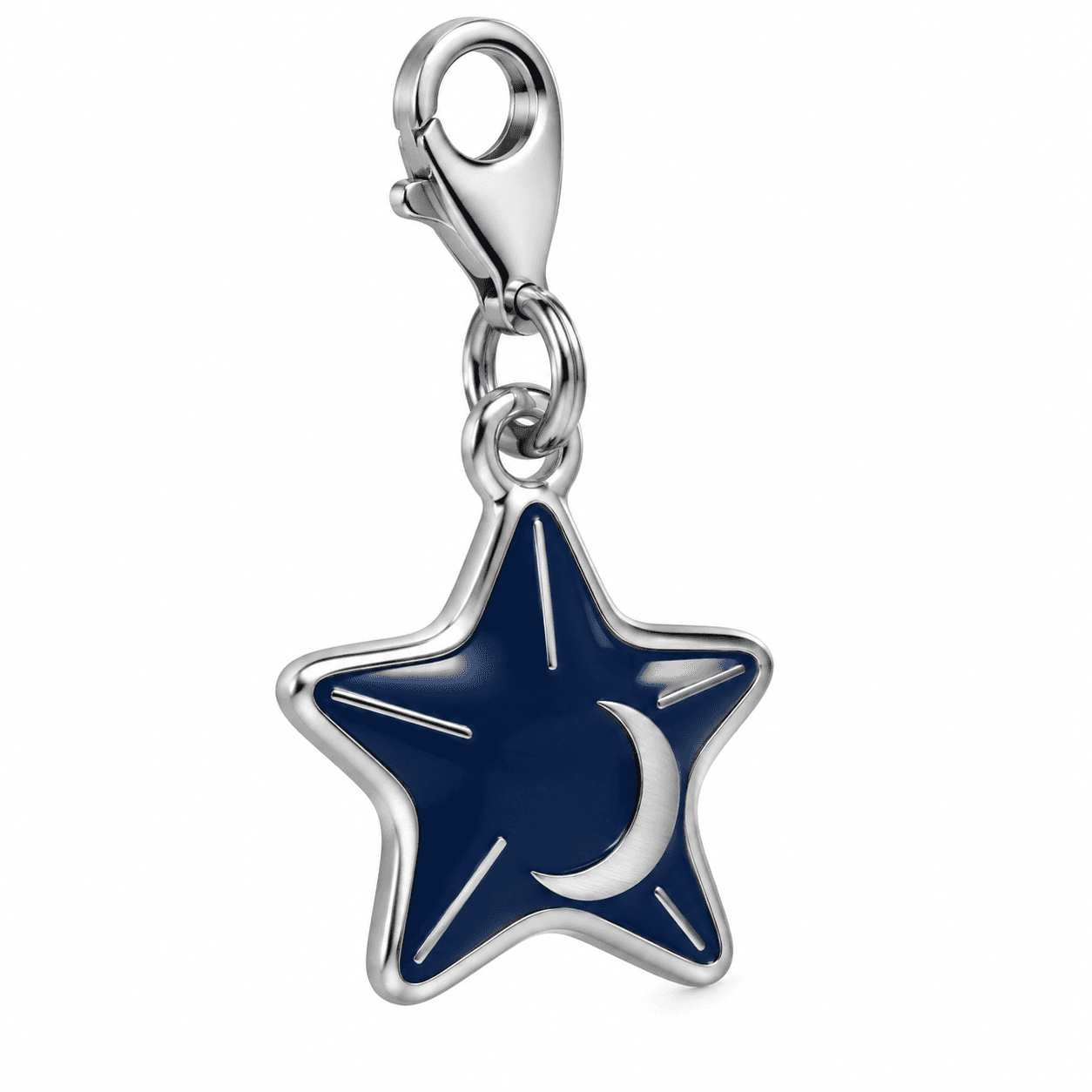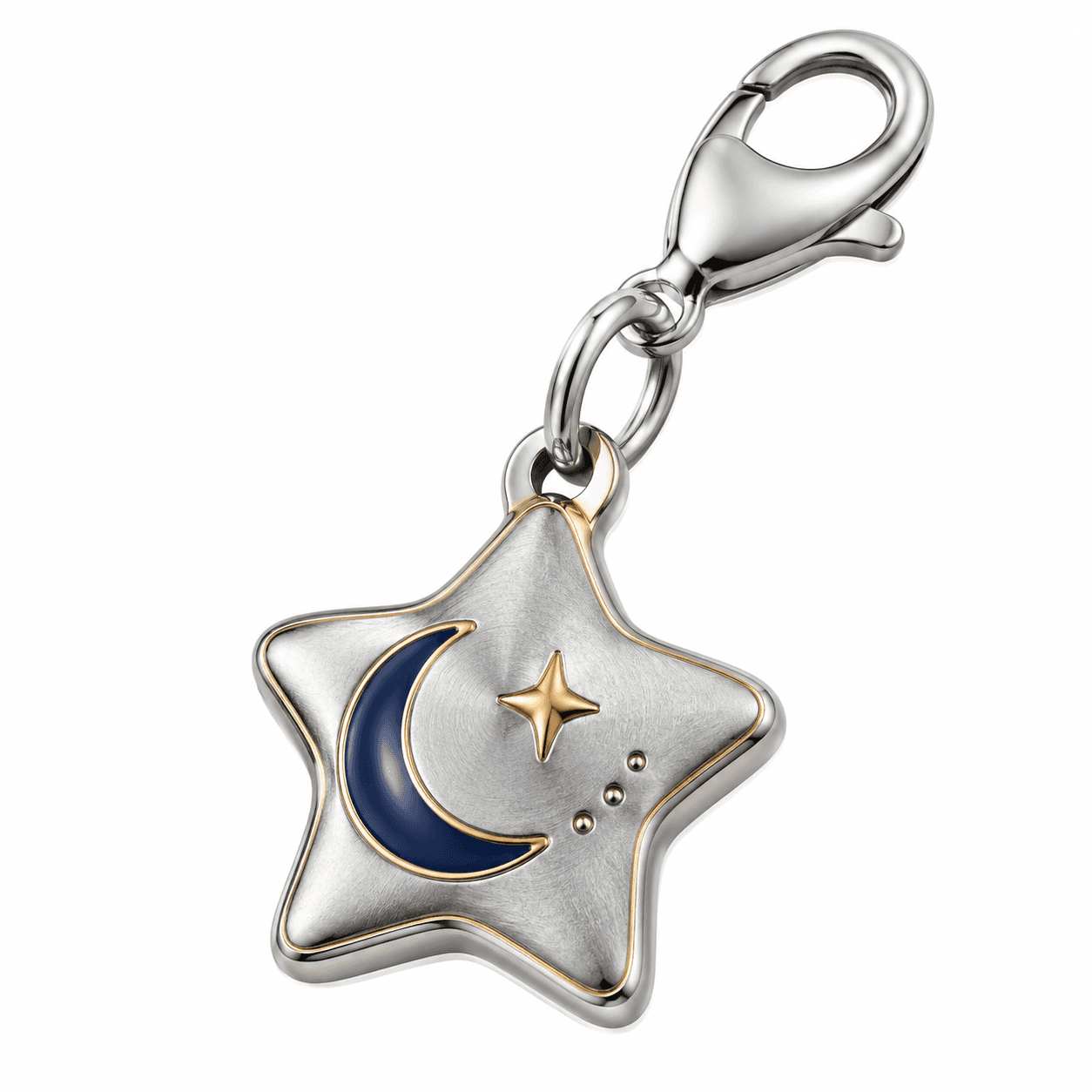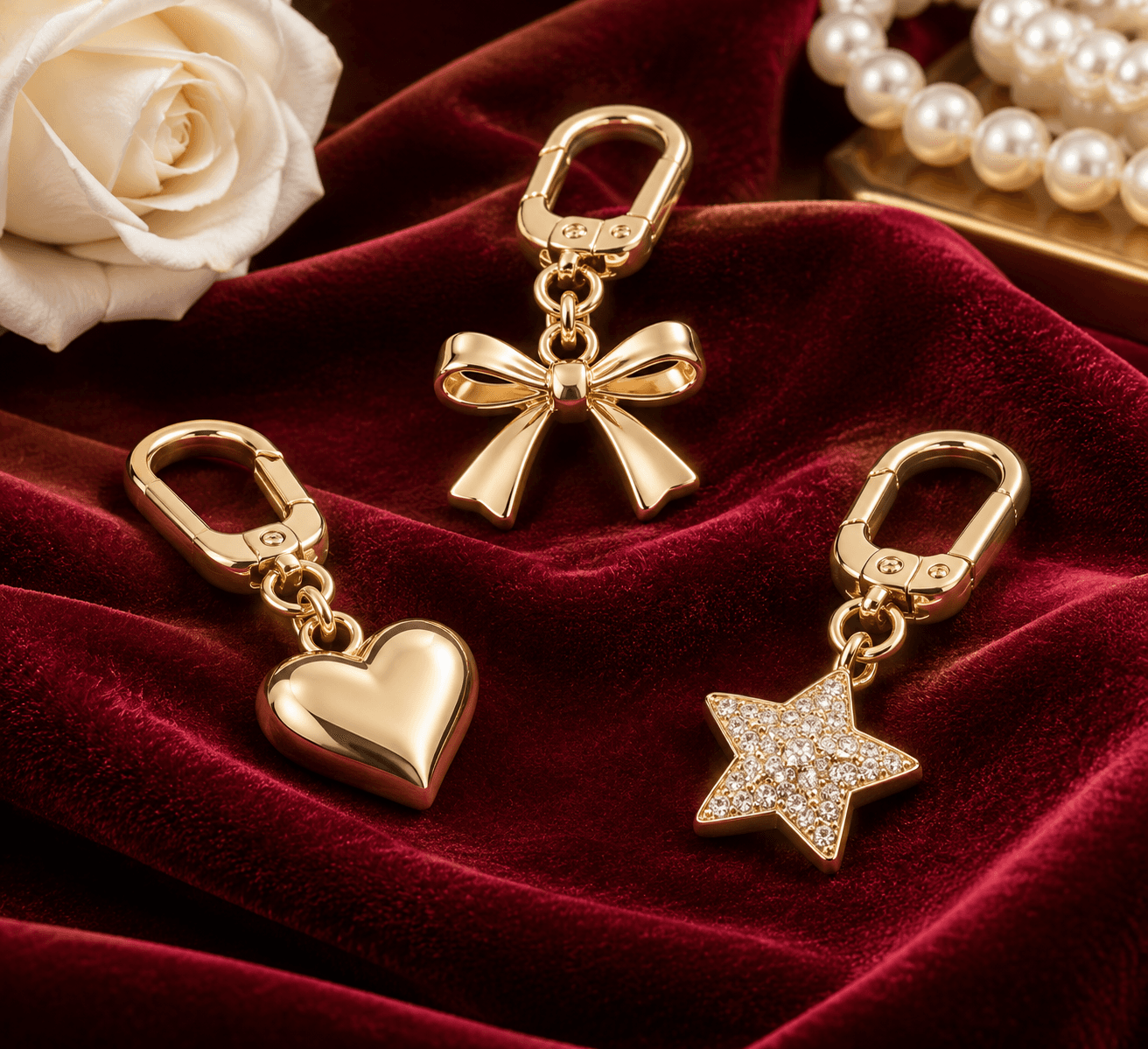
Star charms combine a recognizable geometric silhouette with substantial opportunities for surface engineering and customization. For jewelry designers developing a commercial series, the important decisions extend beyond the star outline: 316L stainless steel selection, surface preparation, PVD color, enamel placement, crystal inlay, hole geometry, and attachment hardware all influence the finished result.
This material deep dive explains how Lancy approaches star charms from concept through sample development and production. The focus is practical: how designers can specify surface effects, evaluate finish consistency, interpret test documentation, and prepare artwork for an OEM charms manufacturer or ODM charm supplier. Lancy supports 316L stainless steel charms with PVD, enamel, crystal inlay, engraving, and private-label development for boutique collections.
Why 316L Stainless Steel Works Well for Star Charms
316L stainless steel charms are well suited to star motifs because the material provides a stable foundation for precise outlines, cut-through details, recessed areas, polished faces, and controlled surface textures. The low-carbon composition of 316L is particularly useful when designers want consistent machining and finishing across repeated production runs. A star silhouette can contain narrow points and small internal openings, so dimensional consistency matters during both forming and finishing.
Material behavior also affects how a design should be engineered. Sharp external points may require controlled edge treatment so the finished charm feels refined rather than excessively sharp. Small holes need enough surrounding material to remain structurally sound during handling and attachment. Designers should therefore consider the relationship between overall size, thickness, hole diameter, edge radius, and decorative detail before approving a prototype.
For buyers, this is one reason to involve a stainless steel charms manufacturer during the design stage rather than treating material selection as a final production decision. Lancy can review the intended dimensions, attachment method, finish requirements, and decorative process before sample development, helping reduce avoidable revisions between artwork and physical samples.
How Surface Preparation Shapes Star Charm Finishes
The visible quality of star charms begins before PVD plating, color filling, or crystal setting. Surface preparation determines how light interacts with the metal and how consistently the decorative finish appears across a production batch. Polished surfaces can create a bright reflective appearance, while controlled brushed or satin areas can create contrast between the star face and recessed details. The objective is not simply maximum shine; it is controlled surface definition that supports the intended visual hierarchy.
For PVD applications, cleaning and surface preparation are especially important because contamination, residue, or inconsistent pre-treatment can affect coating appearance and adhesion. A designer specifying gold plated, rose gold plating, or another PVD finish should identify which surfaces require the treatment and whether contrasting untreated or silver finish areas are part of the design. Masking and process sequencing should be considered early when a single charm contains multiple visual zones.
For custom stainless steel charms, Lancy can translate these requirements into production specifications covering surface areas, finish direction, color expectations, engraving locations, and decorative boundaries. This gives designers a clearer technical reference for prototype approval and subsequent bulk charm orders.
PVD Plating: Color, Thickness, and Process Control
PVD is a physical vapor deposition process used to create a durable decorative coating on a prepared stainless steel surface. In star charms, PVD can be used to establish a gold plated or rose gold appearance while retaining the dimensional definition of the underlying 316L stainless steel form. Because the coating follows the prepared surface, the quality of the base finish remains important to the visual result.
Designers should distinguish between color specification and process specification. A color reference communicates the intended appearance, but production also requires controls around surface preparation, coating coverage, handling, and batch consistency. Areas around narrow star points, recessed lettering, holes, and raised borders should be checked carefully because geometry can influence how a coating presents visually.
When evaluating samples from an OEM charms manufacturer, compare the same viewing angle and lighting conditions across samples. Inspect color uniformity, edge coverage, recessed areas, attachment holes, and transitions between PVD surfaces and other finishes. Lancy can incorporate PVD requirements into OEM and ODM specifications so approved samples become a practical production reference.
Enamel and Crystal Inlay for Dimensional Contrast
Enamel and crystal inlay give designers additional ways to create contrast within star charms without changing the fundamental 316L stainless steel base. Enamel is particularly useful for filling recessed zones, outlining selected points, or separating the central area from the outer frame. The cavity geometry needs to be designed with the filling process in mind so the color remains visually clean after curing and finishing.
Crystal inlay uses a different technical approach. The charm needs accurately prepared setting locations with sufficient structure around each setting area. Small decorative elements should be positioned so they do not interfere with the bail or jump ring. The setting should also preserve the intended silhouette of the star, especially when the design depends on narrow points or negative-space details.
For designers planning a series, it can be useful to create a controlled design language: for example, one star shape can be developed in several combinations of PVD, enamel color, and crystal placement. This supports efficient ODM development because the factory can work from an established dimensional platform while the decorative specification changes between variants.
Engineering the Bail, Hole, and Jump Ring
A star charm is only commercially successful when its attachment system works as reliably as its decorative surface. The bail, hole, or jump ring must be proportionate to the charm and positioned so that the completed component hangs naturally. Hole placement also affects visual balance: a hole that sits too close to a point can weaken the surrounding area, while a hole that is too low can make the star rotate into an unintended orientation.
Designers should specify the intended attachment context before finalizing the hole geometry. A small jewelry charm may require a different hole and connector arrangement from a larger decorative charm intended for a gift accessory or charm bar program. The connector should pass through a real hole or loop with sufficient clearance, and any closed jump ring should be fully formed rather than visually overlapping the charm without a mechanical connection.
During sample development, Lancy can assess the relationship between charm dimensions, attachment hardware, and functional movement. This stage is also an opportunity to check edge comfort, rotational behavior, visual balance, and whether the chosen connector remains proportionate after PVD, enamel, or crystal detailing is completed.
Quality Testing and How to Read Certification Evidence
Material claims should be supported by appropriate documentation rather than evaluated only from appearance. For 316L stainless steel charms, buyers may request relevant SGS testing or certification documentation covering areas such as RoHS, REACH, EN1811, and Salt Spray. Each test addresses a different aspect of product or material performance, so the report title, sample identification, test method, result, and applicable standard should be reviewed together.
RoHS and REACH documentation is useful for understanding compliance with applicable substance restrictions and chemical requirements. EN1811 testing is relevant to nickel release assessment for articles intended for prolonged skin contact, while Salt Spray testing can provide evidence about corrosion resistance under a defined laboratory test method. A Salt Spray result should not be treated as a universal prediction of every real-world environment; the test duration and conditions matter when interpreting the result.
Lancy's quality process can incorporate material verification, appearance inspection, dimensional checks, attachment inspection, plating evaluation, enamel review, and applicable third-party testing. Buyers should request documentation tied to the relevant production specification and sample where appropriate. This evidence-based approach helps a B2B accessory supplier communicate technical information clearly to sourcing teams and downstream customers.
From Prototype to Low MOQ and Bulk Production
The transition from a prototype to commercial production requires more than approving the visual appearance. The approved sample should establish the reference for dimensions, material, surface finish, decorative placement, attachment geometry, logo engraving, and packaging requirements. For a designer working on a boutique series, documenting these elements early helps preserve consistency when multiple star variants are developed.
Low MOQ charm production can be useful when testing several design directions before committing to larger quantities. A practical development sequence is to confirm the CAD or production drawing, review the first physical sample, evaluate the finish and attachment system, approve any revisions, and then establish the final production specification. Once the reference sample is approved, bulk quantities can be planned against the same controlled requirements.
Lancy supports OEM and ODM workflows for buyers who need custom logo charms, coordinated finishes, private-label packaging, and repeatable series planning. Buyers can also use the internal OEM Service route for custom manufacturing information, browse All Products for existing design directions, or prepare an RFQ when specifications and quantities are ready for quotation.
Design Specification Checklist for Star Charms
A strong technical brief makes star charm development faster because the manufacturer can evaluate the same criteria the designer will use for approval. Start with the overall silhouette and dimensions, then specify material as 316L stainless steel, followed by thickness, hole or bail geometry, and attachment requirements. Next define surface treatment, including polished or controlled surface areas, PVD color, silver finish, rose gold plating, enamel zones, crystal inlay positions, and any logo engraving.
The brief should also identify the intended application, target quantity, packaging format, and whether the design is an existing factory direction or a new OEM/ODM concept. If several variants are planned, state which dimensions remain fixed and which decorative variables change. This allows the factory to determine whether the variants can share tooling or process stages, which can improve development efficiency and consistency.
For international B2B sourcing, include artwork files, dimensional drawings, reference color information, estimated order volume, packaging requirements, and testing expectations. A complete brief gives the wholesale stainless steel charms buyer and factory a common technical language and reduces ambiguity during quotation and sample approval.
Frequently Asked Questions About Star Charms
Start Your Star Charm Development
When you are ready to move from concept to a manufacturable specification, send Lancy your star charm artwork or drawing, target size and thickness, 316L stainless steel requirement, preferred PVD or decorative finish, enamel or crystal inlay details, attachment geometry, estimated quantity, and packaging requirements. If testing is required, specify the standards or documentation your market requires, including any relevant SGS RoHS, REACH, EN1811, or Salt Spray expectations.
For a faster RFQ and sample review, include your target application, preferred development timeline, logo requirements, and whether you need OEM, ODM, or private-label support. You can review the OEM Service, browse All Products, or submit an RFQ with your production details. Lancy can then evaluate the design, recommend a practical sample-development route, and define the specifications needed for consistent bulk production.
Related resources
Related resources
- 316L Stainless Steel Custom Enamel Sterling Charms: A Buyer’s Guide
- Stainless Steel Custom Enamel Charms: A Buyer’s Quality Guide
- Stainless Steel Custom Enamel Pins With Charms: Sourcing Guide
- How to Choose Stainless Steel Enamel Charms Wholesale UK Suppliers
- How to Evaluate 316L Stainless Steel Zodiac Bracelet Charms Wholesale Suppliers
- 316L Stainless Steel Custom Enamel Pins with Charms: A Buyer’s Guide
- 316L Steel Guide to Custom Enamel Charms Manufacturing for Buyers
- Antique Distressed Finish on Stainless Steel Charms: A Buyer’s Guide to Durability
- Custom OEM/ODM Guide to Stainless Steel African Jewelry Charms Wholesale
- How to Choose the Best Custom Car Charms in Stainless Steel