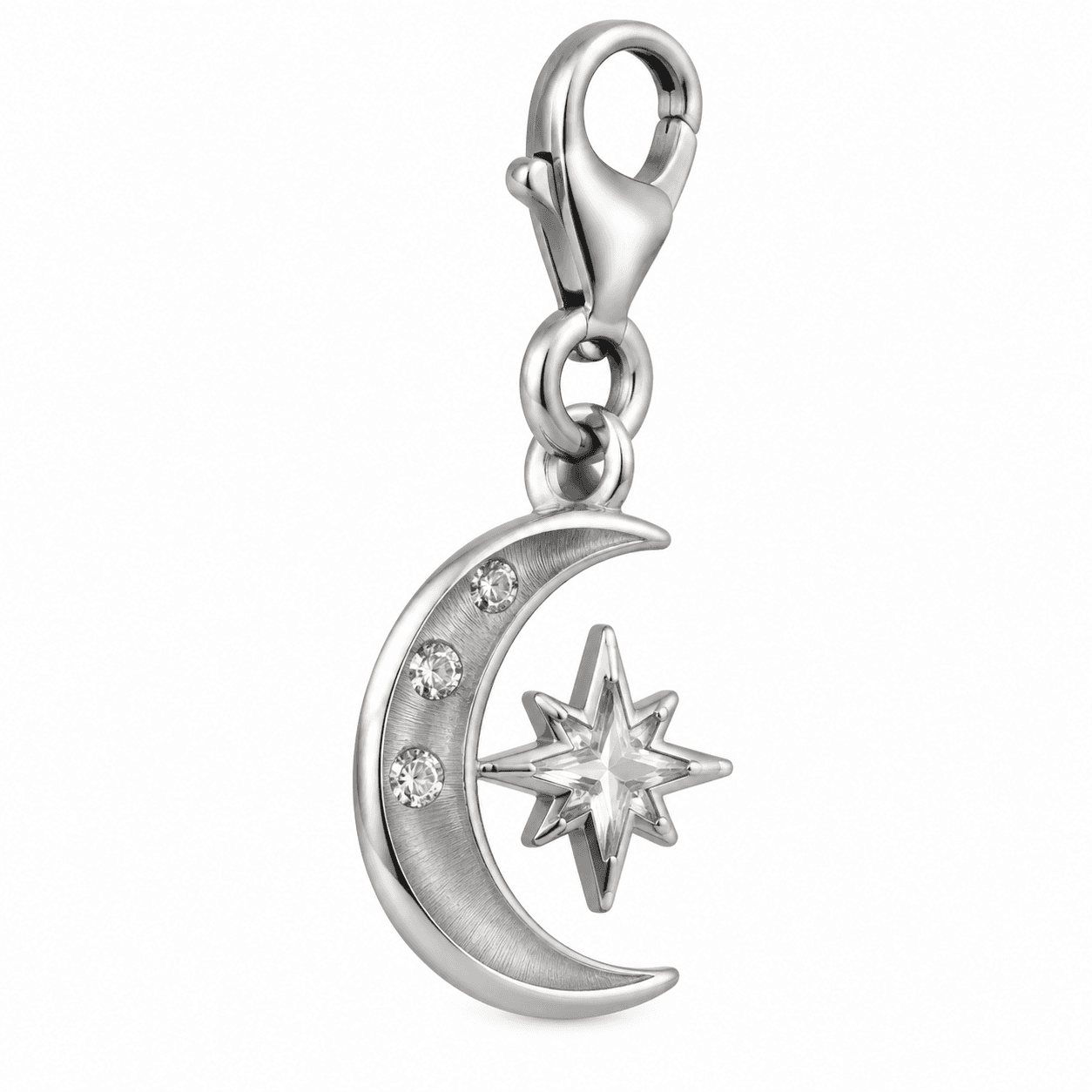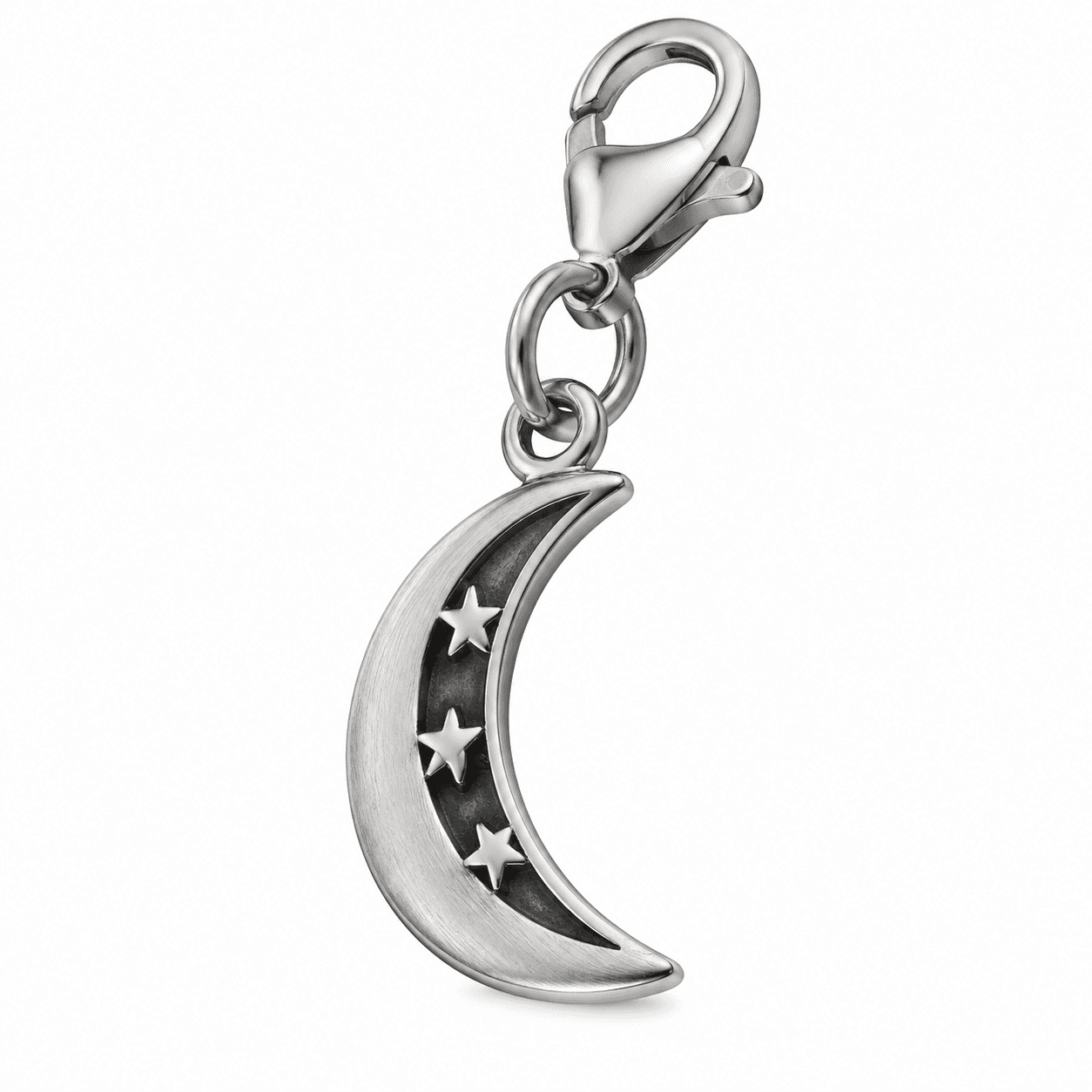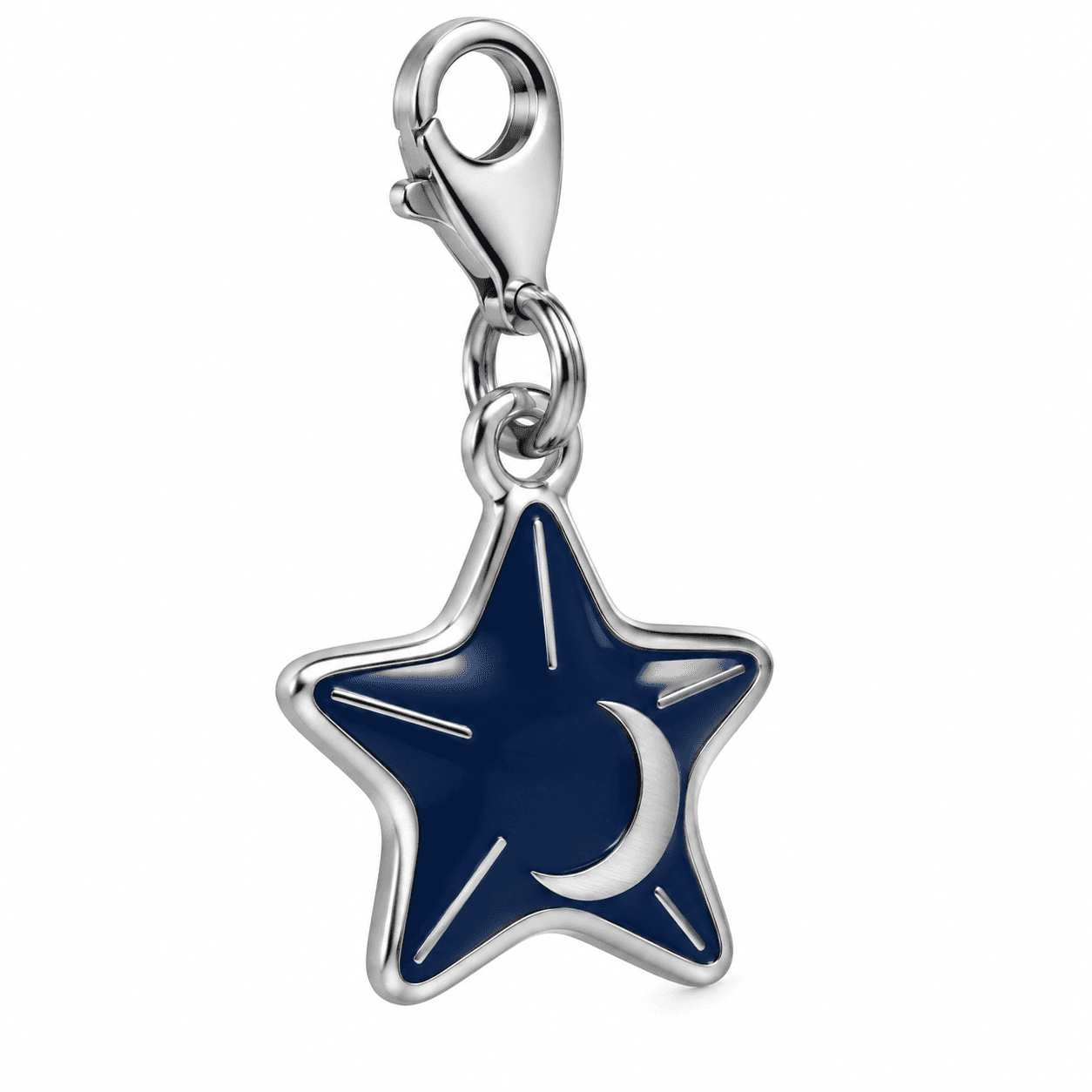
This practical guide explains how retail store owners can plan a moon-themed charm assortment around 316L stainless steel charms while balancing display impact, customer appeal, turnover rate, and margin potential. The focus is operational: choosing a coherent assortment, preparing display logic, validating quality, and using sales data to refine future orders.
For B2B buyers, the same process helps connect retail requirements with factory execution. A stainless steel charms manufacturer can translate a retail concept into repeatable specifications covering dimensions, surface finish, enamel color, crystal inlay, logo engraving, packaging, and production quantities. Lancy Jewelry supports OEM charms manufacturer and ODM development workflows, with low MOQ support and sample development for buyers building boutique-ready programs.
Use this guide alongside the Special Symbols collection, OEM Service, and All Products when planning a commercial assortment.
1. Overview and Prerequisites for a Moon Charm Retail Program
Before ordering a moon-themed assortment, define the commercial job the charms need to perform. A useful retail brief should specify the target customer, expected selling price, preferred finish, display location, planned quantity, and the number of designs needed to create a coherent choice. For a boutique, a small coordinated group can often be easier to merchandise than a broad assortment with no visual relationship. Establish a target margin before production so that design complexity, packaging, and finishing choices are evaluated against the intended retail price.
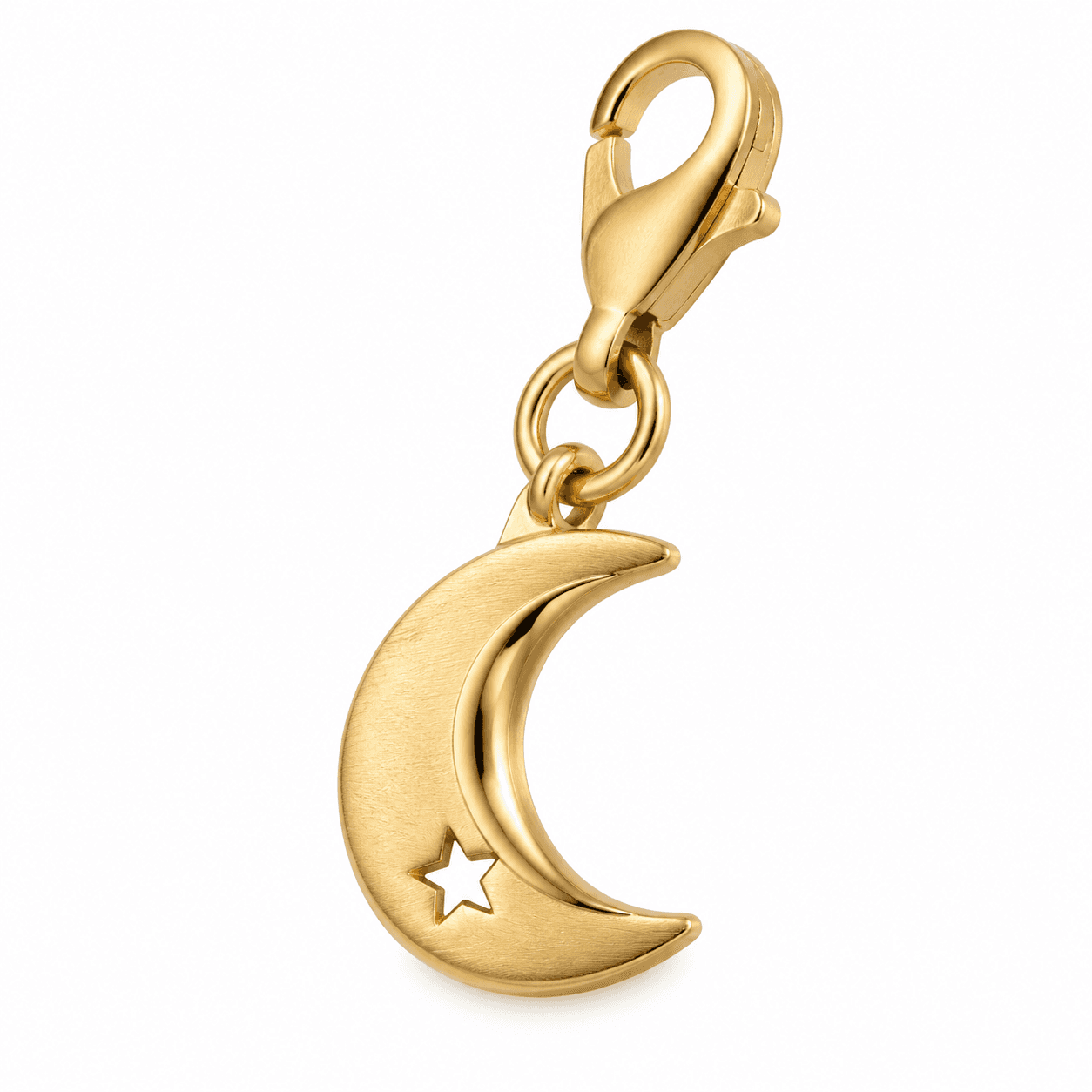
Start with 316L stainless steel charms as the fixed base material and then select the visual treatment. PVD can create a durable decorative surface in gold plated or rose gold plating options, while a silver finish provides a clean neutral presentation. Enamel color filling can introduce controlled color accents, and crystal inlay can add a focused highlight. From a material-science perspective, 316L stainless steel relies on a chromium-rich passive surface that helps resist everyday corrosion, while the final appearance and wear performance also depend on surface preparation, plating control, edge coverage, and finishing inspection.
Prepare a sourcing sheet before requesting samples. Include the desired charm dimensions, front design, bail or jump-ring location, finish, enamel colors, crystal details if required, logo requirements, packaging format, estimated first order quantity, target markets, and delivery expectations. Buyers should also identify required compliance documentation. Ask for relevant SGS documentation covering RoHS, REACH, EN1811, and Salt Spray testing where applicable, and review the test scope, sample identification, test method, and report date rather than treating a certificate name alone as proof of every performance claim.
2. Step One: Build the Assortment Around Customer Appeal
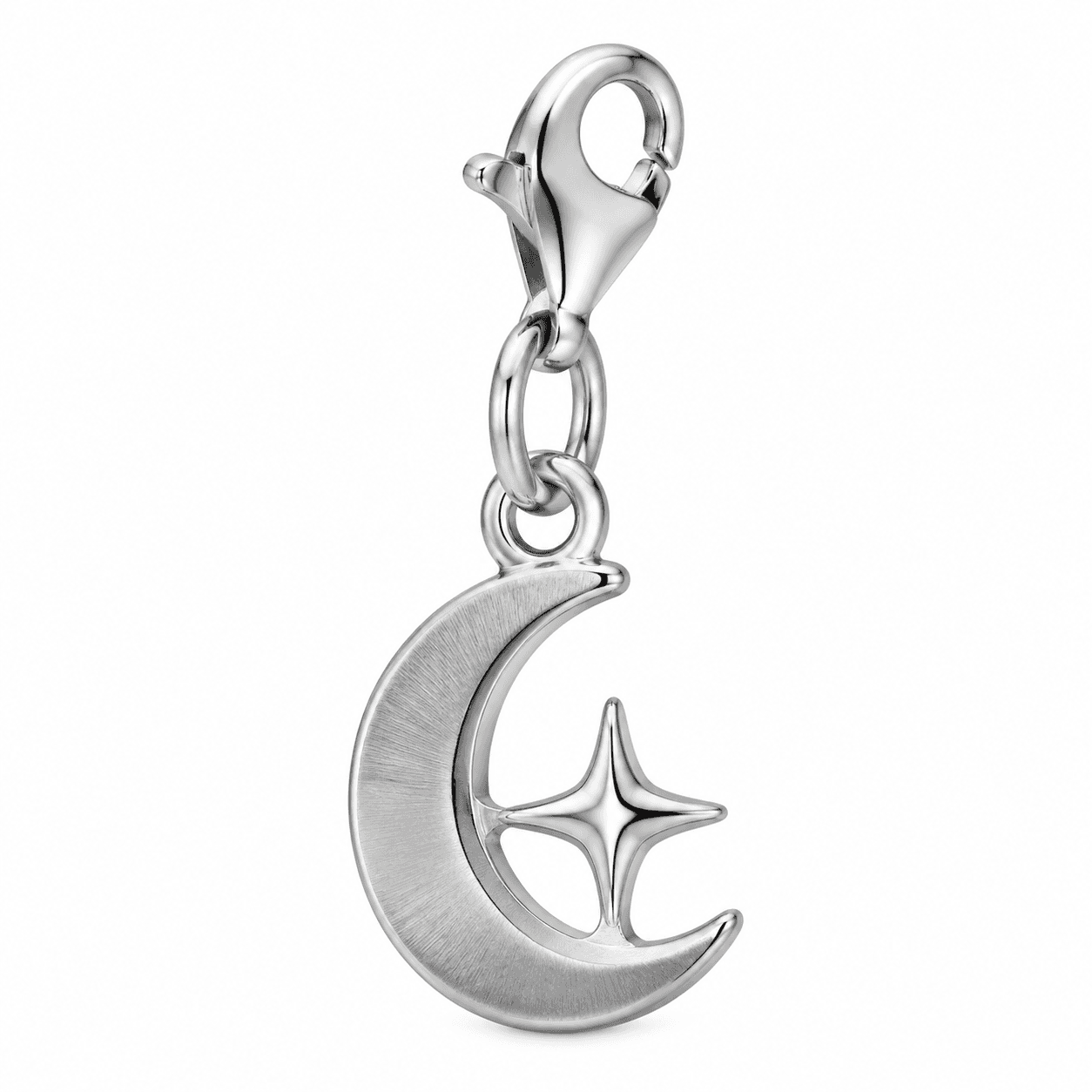
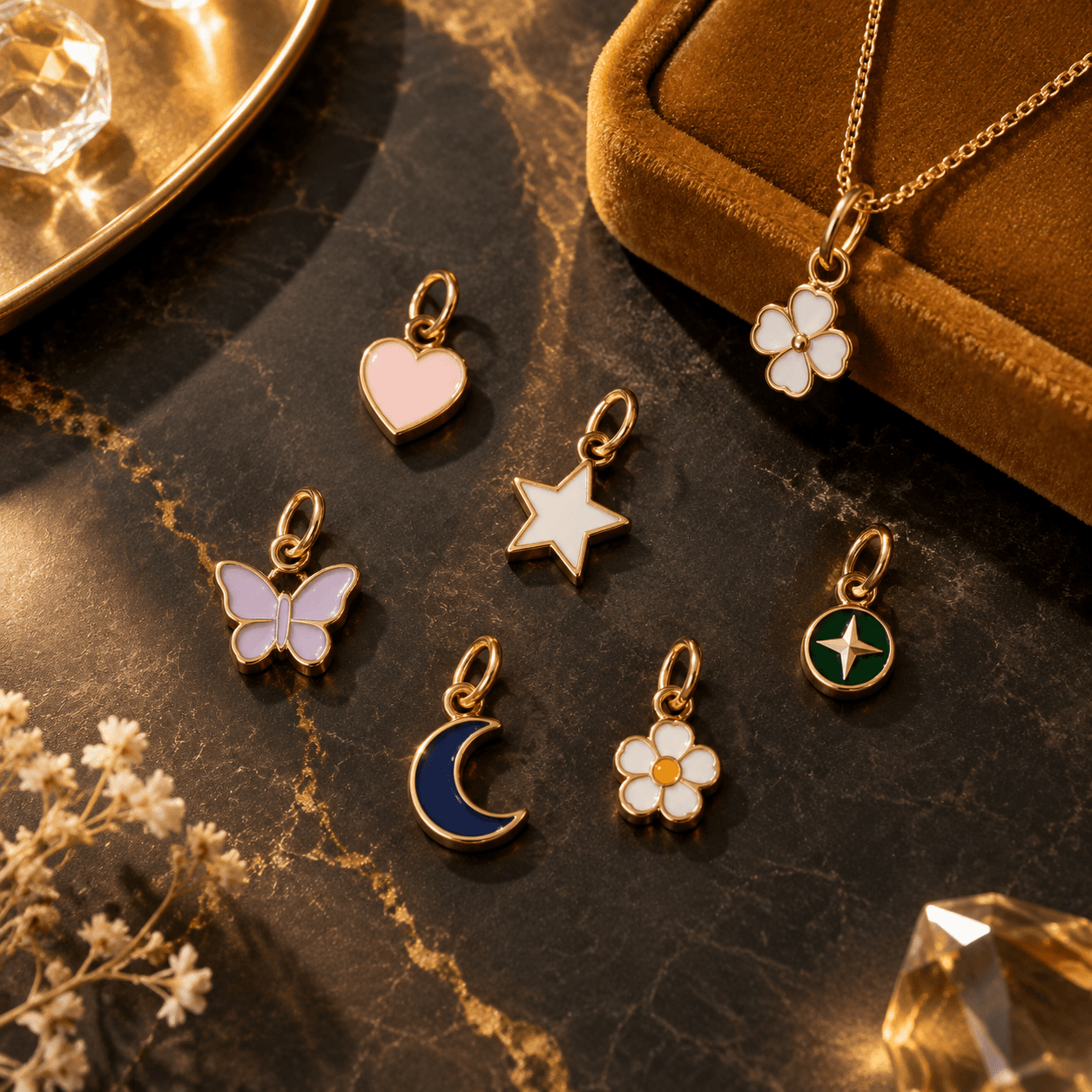
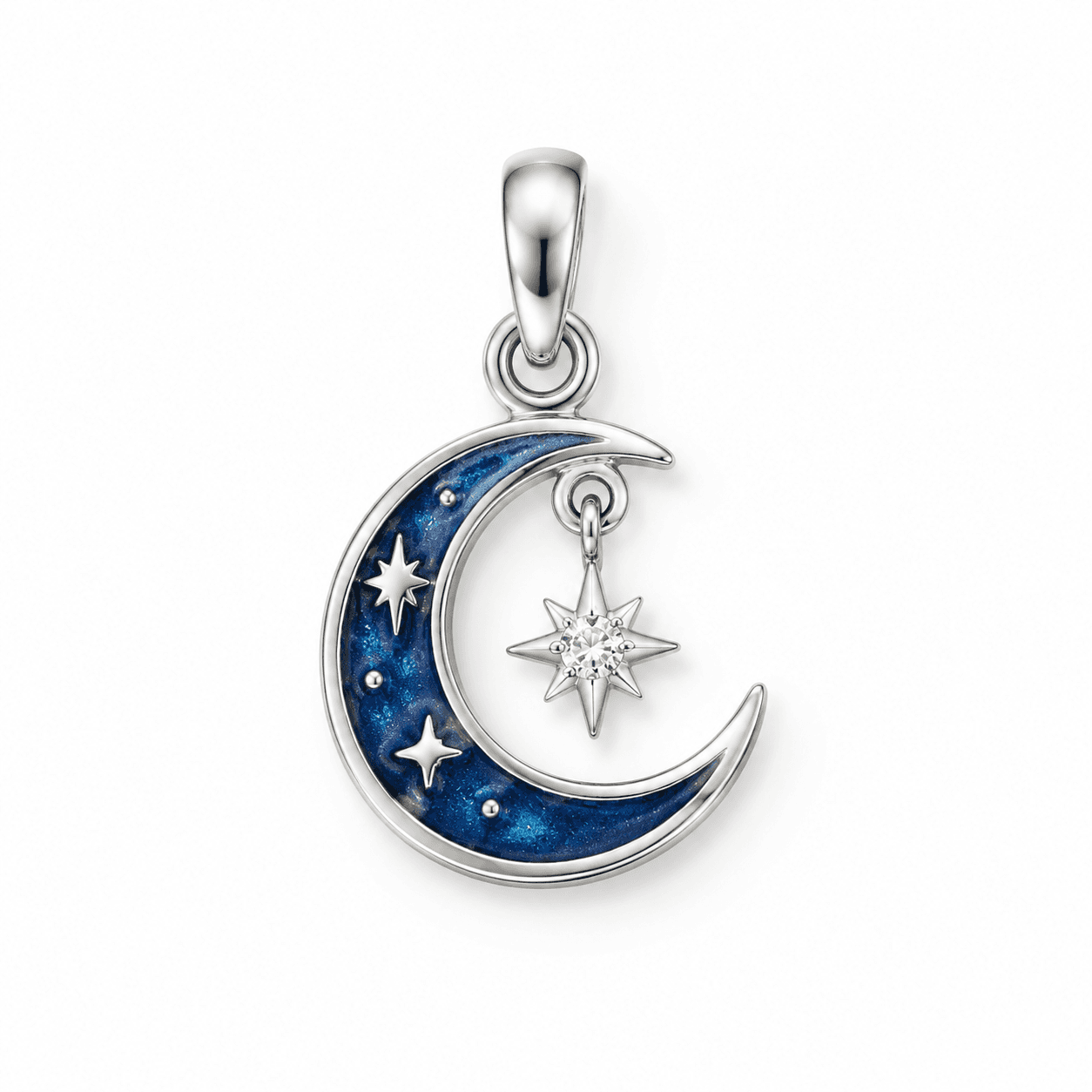
Begin with the visual story customers should understand within a few seconds of seeing the display. A moon assortment can use a controlled family of crescent, full-moon, star, night-sky, and celestial-symbol concepts without making every item identical. For a retail program, variation should create reasons to browse while repeated visual cues make the collection feel intentional. Keep the number of core designs manageable and use finish or color variation selectively so customers can compare options without being overwhelmed.
For a private label charms program, define which elements are fixed across the range and which can change. The fixed elements might include charm thickness, overall scale, jump-ring position, packaging dimensions, logo placement, and finishing standard. Variable elements can include the front motif, PVD tone, enamel color, or crystal arrangement. This structure helps a buyer create a recognizable store assortment while keeping manufacturing specifications consistent from one design to another.
Measure customer appeal using actual retail behavior rather than relying only on initial opinions. Track which designs attract attention, which pieces are picked up, which designs convert at checkout, and which items remain after the first replenishment cycle. These observations help determine whether the assortment needs more symbolic variety, stronger color contrast, simpler designs, or additional entry-price options. A good initial assortment is not simply visually attractive; it gives the store enough variation to learn what customers will repeatedly purchase.
3. Step Two: Plan Display, Merchandising, and Foot Traffic
Display placement affects how quickly shoppers notice small charms. Position the assortment where customers naturally pause, such as near a checkout zone, gift-focused area, or a dedicated charm bar display. Group products by a simple decision path: theme first, then finish or color, then price or customization option. Keep the front-facing designs visible and avoid overcrowding, because excessive density makes small details difficult to inspect.
A practical display should communicate three things immediately: what the product is, how much choice is available, and why the shopper should examine it. Use a clean display tray or packaging card as a scale reference and keep the hardware visibly connected to the charm through a real hole or loop. This is especially important for small products because shoppers need to understand the actual size and attachment structure before purchasing. For boutique programs, coordinated packaging can also make a small assortment appear more complete without adding visual clutter.
From a B2B perspective, display planning should be communicated to the factory before final sampling. A charm factory can then check whether the selected dimensions, bail placement, engraving area, enamel boundaries, and packaging format support the intended merchandising method. If the store expects frequent handling, request samples that allow inspection of edges, plating coverage, enamel boundaries, and connector construction. The goal is to prevent a visually attractive sample from becoming difficult to merchandise or inspect at retail.
4. Step Three: Validate Quality, Margin, and Turnover Before Bulk Orders
Once the assortment and display plan are defined, evaluate the samples against measurable quality criteria. Inspect the front surface under consistent lighting, check that the design is centered, confirm that the bail or jump ring passes through the intended opening correctly, and look for uneven plating, sharp edges, incomplete enamel filling, surface marks, or poorly seated crystal inlay. For engraved designs, verify line depth, legibility, positioning, and repeatability across multiple samples rather than approving a single attractive piece.
Turn the sample review into a commercial calculation. Estimate landed cost, packaging cost, expected retail price, gross margin, and the quantity required to reach the desired sales contribution. Then consider turnover: a lower-cost design that sells consistently can be more commercially useful than a highly detailed design that receives attention but moves slowly. When preparing bulk charm orders, use sales expectations and replenishment history to separate core designs from experimental designs. This reduces the risk of committing the entire budget to an untested assortment.
Quality documentation should also be reviewed with the same discipline. SGS reports for RoHS, REACH, EN1811, and Salt Spray should be interpreted according to the exact tested item and stated scope. Salt Spray results, for example, provide controlled corrosion-test information rather than a guarantee that every retail environment will produce identical results. EN1811 testing is relevant to nickel-release assessment for applicable products, while RoHS and REACH address different regulatory concerns. A professional buyer should retain the relevant reports with the approved sample and purchase specifications for traceability.
5. Step Four: Move From Sample Approval to Repeatable Production
After approving the sample, convert the design into a controlled production specification. Record the exact 316L stainless steel specification, dimensions and tolerances, surface finish, PVD color if applicable, enamel references, crystal-setting requirements, engraving artwork, connector position, packaging details, inspection points, and approved sample reference. The more clearly these details are documented, the easier it is to maintain consistency when an order is repeated or when several designs are produced together.
Lancy supports OEM and ODM development with logo engraving, PVD plating, enamel color filling, crystal setting, private-label packaging, and sample support. Buyers should use the sample stage to resolve production questions rather than waiting until bulk manufacturing begins. Confirm whether artwork is production-ready, whether colors require physical approval, whether packaging requires a dieline or sample, and which inspection criteria will be applied. For a low MOQ charm production program, these controls are especially useful because a smaller first order should still establish a repeatable specification for later replenishment.
For ongoing programs, create a simple approval record that links the approved sample to the purchase specification and packaging version. Keep photographs or inspection references for critical visual details, but make written measurements and material requirements the controlling specification. This approach supports consistent production across replenishment orders and makes it easier for a sourcing manager to identify whether a future variation is a planned design change or an unintended production deviation.
6. Tips, Common Mistakes, and Next Steps
One common mistake is treating a moon-themed assortment as a collection of unrelated individual products. Retail performance is usually easier to evaluate when the range has a clear visual structure and each design has a defined role. Another mistake is ordering too many variations before the store has enough sales data to identify winners. Start with a disciplined assortment, monitor sell-through, and use replenishment data to decide which designs deserve greater depth. Also avoid judging quality from photographs alone; small details such as edge finishing, connector placement, enamel boundaries, and plating consistency require physical sample inspection.
A second common mistake is separating merchandising decisions from manufacturing specifications. If a display requires a particular charm size, packaging format, or connector position, those requirements should be included in the RFQ and sample brief from the beginning. Buyers should also distinguish between a visual finish and the underlying production process. PVD is a surface-treatment process, while enamel and crystal inlay introduce additional manufacturing controls. Clear specifications make it easier to compare samples against the approved standard and protect consistency during repeat production.
For the next step, prepare a concise RFQ containing your target quantity, preferred charm dimensions, artwork or reference drawings, 316L stainless steel requirement, desired finish, enamel or crystal details, logo requirements, packaging needs, target market, and requested compliance documentation. Link the commercial plan to the OEM Service workflow, review suitable designs through All Products, and use Request a Quote when the specifications are ready. A well-prepared brief gives the supplier enough information to respond with realistic sampling, production, and packaging recommendations.
Frequently Asked Questions About Moon Charm Retail Programs
Request Your Quote and Sample Plan
When you are ready to move from retail planning to production, send Lancy Jewelry an RFQ with your target charm designs, artwork, dimensions, 316L stainless steel requirement, finish, enamel or crystal details, logo engraving needs, estimated MOQ or bulk quantity, packaging requirements, target market, and requested SGS documentation. Include your preferred sample quantity and any deadline for sample review so the development process can be planned around your buying schedule.
For the fastest evaluation, provide one consolidated specification per design and identify which details are mandatory versus adjustable. Lancy can support OEM/ODM development, logo engraving, PVD plating, enamel color filling, crystal setting, private-label packaging, and sample development. Start through the OEM Service page or submit your requirements through Request a Quote. You can also browse All Products for additional assortment planning.
Related resources
Related resources
- Stainless Steel Wholesale Enamel Charms UK: Quality Buyer Guide
- Guide to Stainless Steel Lucky Charm Inspirational Jewelry Wholesale
- Stainless Steel Wholesale Beads and Charms for Jewelry Supplier Guide
- How to Choose Durable Stainless Steel Charms for Cross-Border E-Commerce
- stainless steel jane austen charms jewelry wholesale Quality Guide
- Stainless Steel Animal Jewelry Charms Wholesale: Quality Guide
- Stainless Steel Silver Enamel Charms Wholesale: Quality Checklist
- How to Evaluate 316L Stainless Steel Zodiac Bracelet Charms Wholesale Suppliers
- Stainless Steel Floating Charm Keychains in Bulk: A Compliance Checklist
- How to Stock Stainless Steel Shopkins Charm Keychains in Bulk for FBA Success