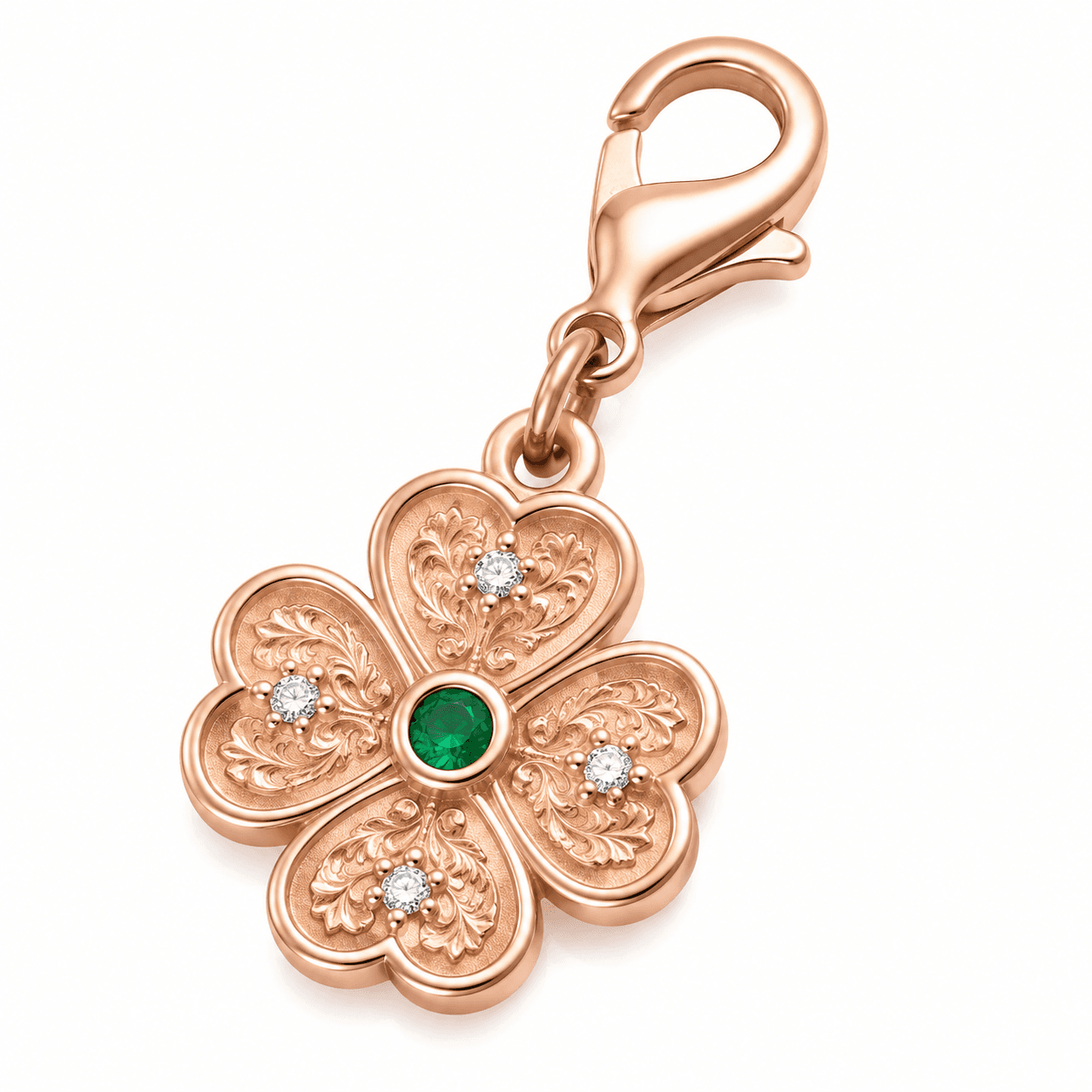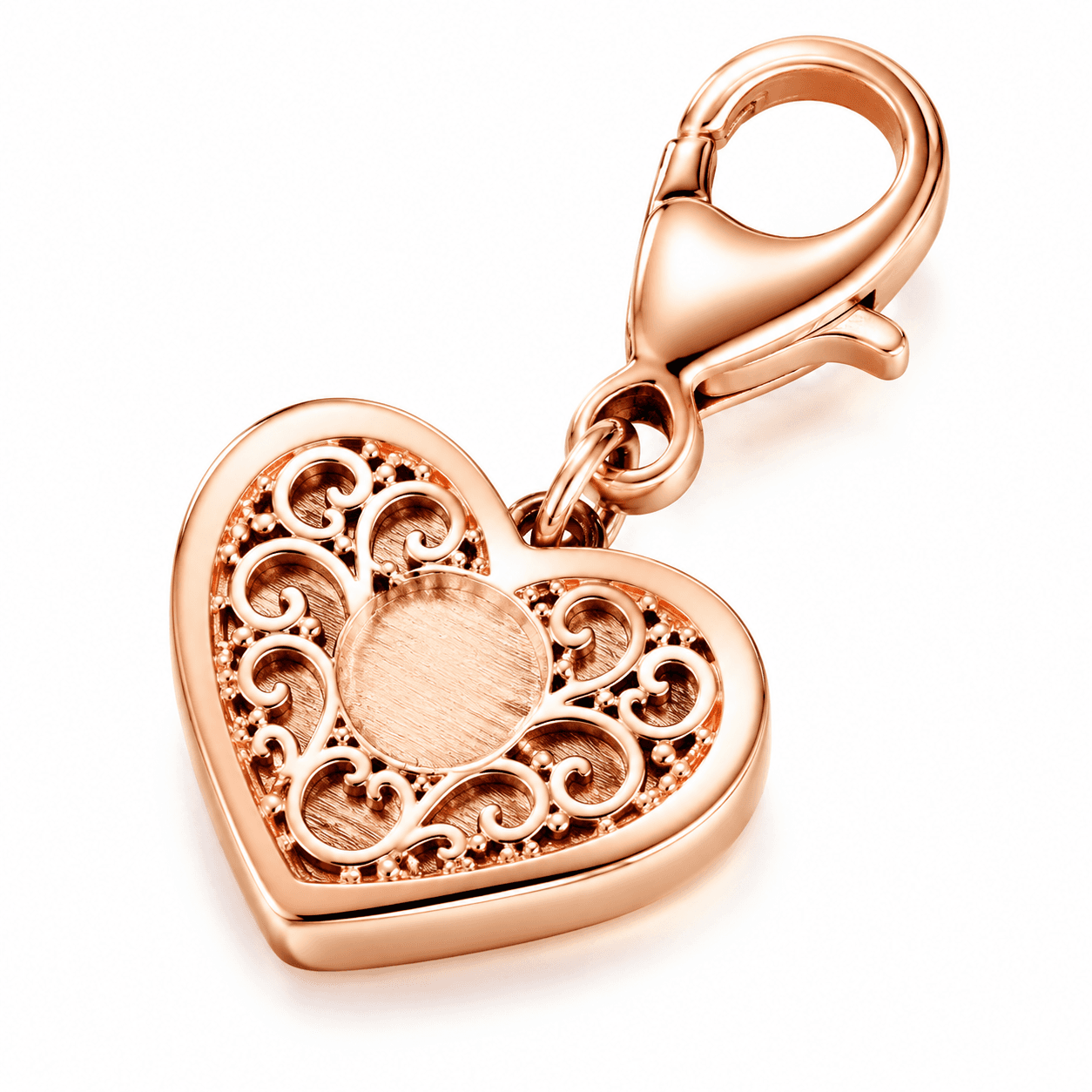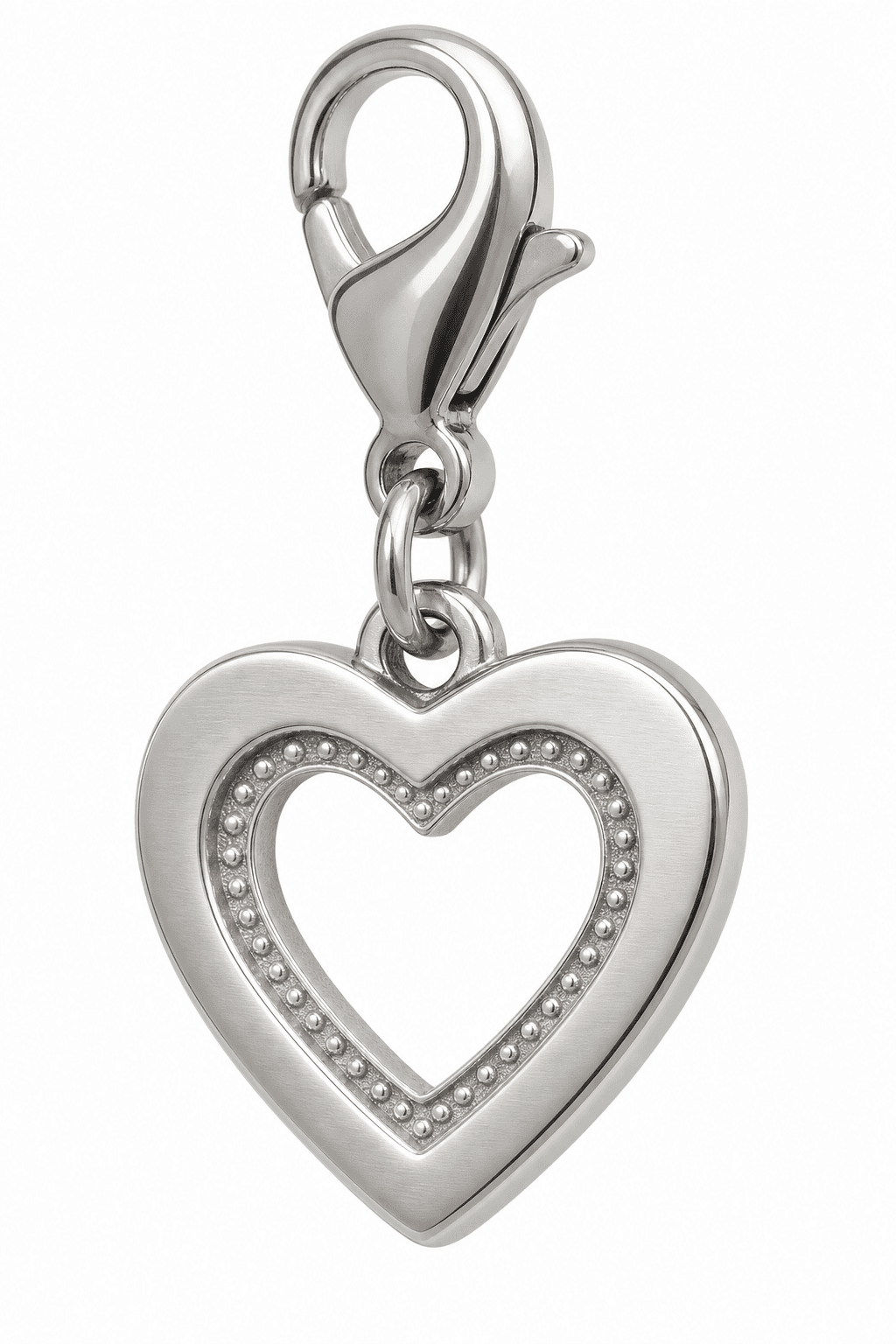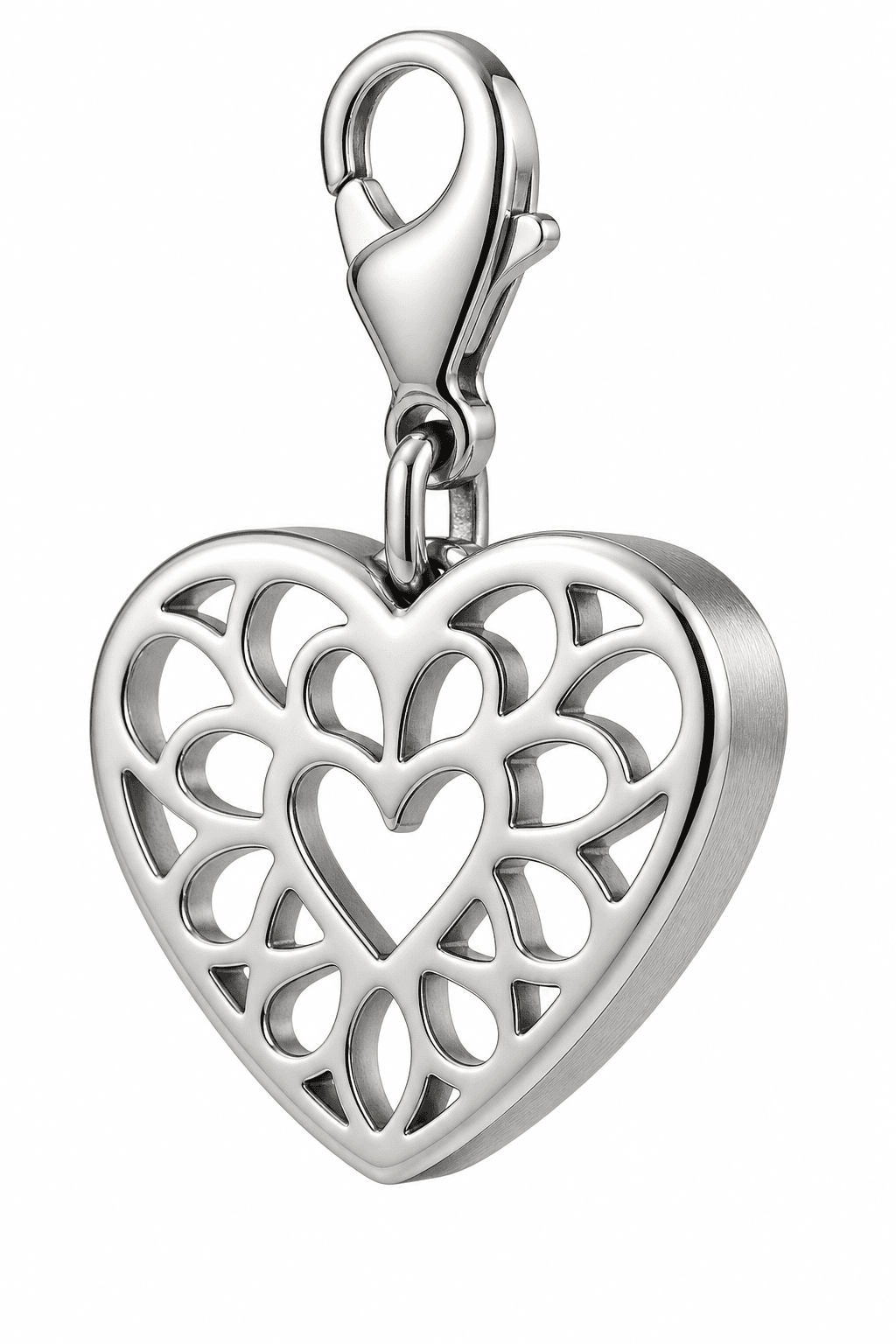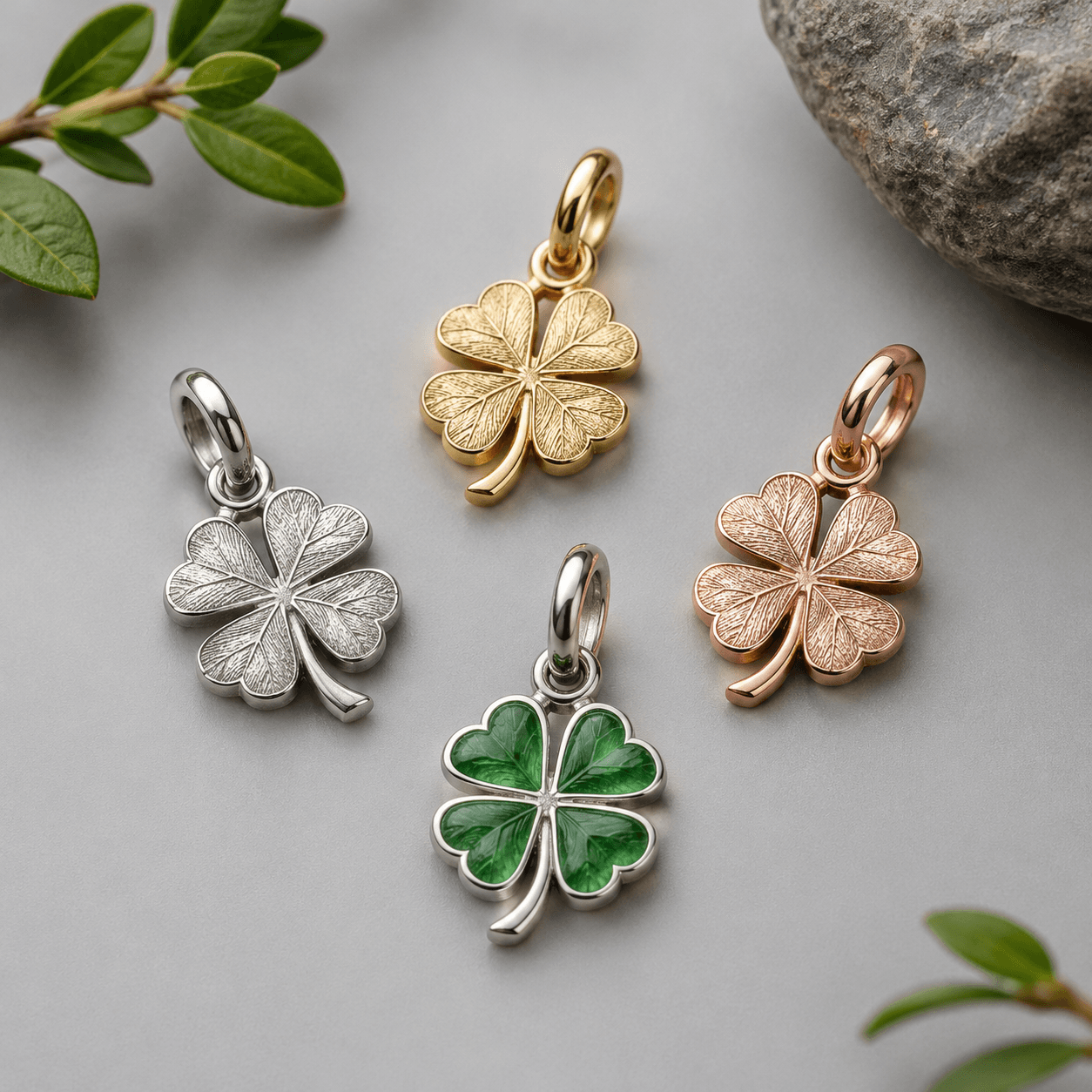
Lucky four leaf clover charms combine a recognizable botanical silhouette with a strong symbolic theme of luck, hope, and new beginnings. For jewelry designers, the challenge is to translate that familiar shape into a distinctive, manufacturable component with balanced proportions, clean edges, dependable attachment hardware, and a finish that suits the intended collection. Understanding the material and production process early helps reduce design revisions and improves consistency when moving from a concept sketch to repeatable production.
Lancy Jewelry develops custom stainless steel charms for boutique jewelry brands, charm bar retailers, gift companies, and private-label buyers. Our focus is 316L stainless steel charms, with customization options including PVD gold plating, silver finish, rose gold plating, enamel color filling, crystal inlay, and logo engraving. Each option affects the visual result, production sequence, inspection requirements, and sample approval process. This guide explains how to evaluate those decisions when developing lucky four leaf clover charms for commercial collections.
Whether you are planning a seasonal capsule, an evergreen botanical range, or a coordinated gift program, a structured approach to design specification helps connect creative intent with factory capability. As a stainless steel charms manufacturer, Lancy supports OEM and ODM development, sample development, low MOQ discussions, and private label production planning. Explore the Nature & Botanical collection for related botanical design directions, or review the OEM service to understand the custom development process.
Understanding the Material Behind Lucky Four Leaf Clover Charms
Why 316L stainless steel is a practical design foundation
Material selection influences the appearance, durability, manufacturability, and maintenance requirements of lucky four leaf clover charms. Lancy Jewelry uses 316L stainless steel as the base material for its charm manufacturing. This austenitic stainless steel grade contains chromium and molybdenum, which support corrosion resistance through the formation of a thin, self-renewing passive surface layer under suitable conditions. The resulting material is useful for small decorative components that need a defined silhouette, a polished surface, and consistent performance during ordinary handling.
Material grade alone does not determine the final quality of a charm. Geometry, surface preparation, manufacturing tolerances, finishing, cleaning, and inspection all influence the result. For a four leaf clover, the central junction between the leaves deserves particular attention because narrow valleys can retain finishing residue or become difficult to polish uniformly. Designers should avoid unnecessarily sharp internal corners, fragile stems, and extremely thin connecting sections. Rounded transitions can improve the visual flow of the motif while making the component easier to manufacture and inspect.
Separate base material from surface finish
316L stainless steel is the structural base, while the visible finish is a separate design decision. A silver finish emphasizes the natural metallic appearance, whereas PVD gold plating and rose gold plating create different color directions. Enamel adds defined color areas, and crystal inlay introduces reflective accents where the geometry and setting design allow. These options should be specified separately on drawings and purchase documentation so the intended base material is not confused with the decorative surface treatment.
For sourcing teams, a useful specification identifies the material grade, nominal dimensions, thickness, finish, attachment method, and any color or decorative requirements. It should also identify which characteristics are critical to acceptance, such as visible surface uniformity, color consistency, edge smoothness, and attachment security. This shared specification gives the designer, sample team, and production team a common reference before the first prototype is approved.
Four Leaf Clover Geometry, Proportions, and Manufacturability
Translate the botanical silhouette into production-ready geometry
A four leaf clover motif looks simple at first glance, but its visual identity depends on the relationship between the four lobes, the center junction, the outer contour, and the stem. Equal lobes create a symmetrical, orderly appearance. Slightly elongated leaves can produce a more botanical impression, while fuller rounded lobes may suit a playful gift collection. Before selecting a manufacturing route, designers should decide which of these characteristics defines the design and which can be adjusted to improve production reliability.
For a small charm, every line and transition competes for limited surface area. Fine grooves may disappear after finishing, while deep recesses can complicate cleaning and create uneven visual contrast. A practical design review checks the narrowest metal sections, the depth of decorative lines, the spacing between adjacent leaves, and the amount of detail that remains visible at the finished size. If a charm is intended for a bracelet or charm bar, a common starting range is approximately 10–16 mm, subject to the chosen geometry and attachment requirements. The actual size should be confirmed on a dimensioned drawing rather than inferred from a reference image.
Choose the manufacturing route around the design
Flat silhouettes, raised relief, openwork motifs, and layered visual effects have different production implications. A straightforward flat profile can be easier to reproduce consistently, while recessed details and sculpted surfaces may require more development work. Openwork clover designs reduce the solid visual area and create negative space, but the remaining bridges between leaves must be strong enough for the intended use. Relief details can help distinguish the front from the reverse, although the added depth must remain practical for finishing and inspection.
Attachment geometry is equally important. The bail or jump ring should pass through a real hole or closed loop, remain mechanically plausible, and provide enough clearance for the intended connection. Its position affects how the clover hangs, whether the front faces outward, and whether the charm rotates during use. Designers should review the center of gravity and connector orientation using a prototype. A beautiful front design can still underperform commercially if the charm consistently hangs sideways or the connection point interferes with adjacent components.
Before requesting a sample, supply a front view, side view where depth matters, nominal dimensions, hole or loop dimensions, and a note identifying the preferred orientation when suspended. A stainless steel charm factory can then assess the design for manufacturability and flag features that may need adjustment before tooling or sample preparation proceeds.
PVD, Silver Finish, Rose Gold Plating, and Surface Preparation
Understand how finish choices affect the final appearance
Surface finish is one of the most visible decisions in lucky four leaf clover charms. A natural silver finish presents a clean metallic look, PVD gold plating supports a warm gold-colored appearance, and rose gold plating offers a softer pink-toned direction. These options can support different merchandising concepts without changing the requirement that the underlying charm be made from 316L stainless steel. Designers should evaluate finish samples under consistent lighting because color perception can change with illumination, neighboring colors, polishing quality, and surface texture.
Physical vapor deposition, commonly abbreviated PVD, describes a family of coating processes in which material is transferred through a vapor phase and deposited onto a prepared surface under controlled conditions. The appearance and performance of a PVD-coated charm depend on the coating system, substrate preparation, component geometry, process control, and handling after coating. PVD is not a guarantee of identical wear performance across every design. Edges, recesses, contact points, and raised details may behave differently from broad, flat surfaces, so the sample should be assessed in the actual geometry intended for production.
Surface preparation and quality control
Before decorative finishing, the component needs appropriate cleaning and surface preparation. Residue, scratches, polishing marks, and inconsistent texture can remain visible after coating rather than disappearing. For clover motifs, the junction between the leaves, the outer perimeter, and any raised center detail should receive particular attention. Establish acceptable limits for visible marks and finish variation before sample approval, and inspect the front, reverse, edges, and connector area rather than judging only the main face.
Enamel color filling and crystal inlay introduce additional process considerations. Enamel requires clearly defined compartments, suitable recess geometry, and a color approval method. Crystal inlay requires a secure setting structure, consistent positioning, and inspection for looseness or visible gaps. Both options can increase development time and the number of quality checkpoints. A design with several colors or multiple inlay points should be reviewed as a complete assembly, because decorative detail, surface finish, and attachment hardware must work together rather than being evaluated independently.
For repeat orders, retain an approved reference sample and document the finish name or code, target color, inspection method, and acceptable variation. A written approval standard is especially valuable when the same clover design is produced in silver finish, gold plated, and rose gold plating versions. It provides a practical basis for comparing subsequent production batches and communicating discrepancies with the supplier.
Enamel, Crystal Inlay, and Custom Logo Design Options
Build a recognizable motif without overloading the surface
Customization gives lucky four leaf clover charms a distinct role within a broader jewelry range. A plain polished clover emphasizes shape and surface quality. Enamel can define individual leaves, add contrasting borders, or introduce a controlled accent color. Crystal inlay can highlight a center point or selected areas, while logo engraving can add discreet brand identification on a suitable face or reverse surface. The strongest designs establish a clear visual hierarchy so that the clover silhouette remains recognizable at the finished scale.
For enamel development, specify each color by a physical reference or an agreed color standard, identify the corresponding leaf or recess, and clarify whether adjacent colors require separating borders. Color appearance can vary with lighting, recess depth, and surrounding finish, so a screen image should be treated as a design reference rather than final approval. If the concept contains multiple colors, approve a physical sample before bulk production. Keep critical linework and color boundaries large enough to remain legible after the finishing process.
Plan crystal placement and engraving early
Crystal inlay should be considered during initial geometry development rather than added as an afterthought. The design needs a suitable seat, adequate surrounding structure, and enough clearance to prevent interference with nearby details or attachment hardware. Designers should identify the intended size, count, position, and visual orientation of each crystal element. The sample review should check alignment, setting security, visible gaps, and whether the decorative feature remains balanced against the four leaf clover silhouette.
Logo engraving also depends on available surface area, engraving depth, and the texture or coating applied to the chosen location. A small reverse-side logo may preserve a clean front face, while a front-side mark can become part of the design if it does not compete with the motif. Confirm logo artwork as a vector file where possible, define minimum line widths with the factory, and review the mark on a finished sample. If a coating covers or changes the appearance of engraved details, agree on the production sequence before approving the artwork.
These details are relevant to an OEM charms manufacturer because design intent must be converted into repeatable instructions. For private label charms, the specification should identify which features are mandatory, which can be adjusted for manufacturability, and which require written approval before any change. This reduces ambiguity during sample revisions and supports consistent execution across a coordinated series.
Prototype Development, Testing, and Certification Interpretation
Use the sample stage to validate the complete design
Sample development is the point at which design assumptions can be checked against a physical component. For lucky four leaf clover charms, assess overall dimensions, thickness, silhouette, edge quality, finish color, enamel boundaries, crystal positioning, logo legibility, and connector function. Test the way the charm hangs from its intended connection point and confirm that the hardware is fully closed where required. Photograph the approved sample from the front, reverse, side, and attachment area, and retain the approved version as the visual reference for later production.
Testing should be selected according to the intended market, product claims, finish system, and foreseeable exposure. For example, corrosion-related assessment, coating adhesion checks where applicable, and nickel release testing may address different questions. An internal visual inspection cannot substitute for a relevant laboratory test, and a successful test on one configuration does not automatically establish the performance of every finish, size, or production batch. Keep the test scope and the tested sample identity linked in the technical documentation.
Read laboratory documents by scope, not by headline
SGS is an independent testing, inspection, and certification organization that may provide reports or certificates for specified products and test programs. When a supplier references SGS documentation relating to RoHS, REACH, EN 1811, or salt spray testing, verify what the document actually covers. RoHS concerns restrictions on specified hazardous substances within its applicable scope. REACH is the European Union chemicals framework, including obligations and restrictions relevant to particular substances and articles. EN 1811 is a reference test method for nickel release from products intended for direct and prolonged contact with the skin. Salt spray testing evaluates corrosion behavior under defined laboratory conditions; it does not by itself predict every aspect of long-term real-world wear.
These references are not interchangeable, and no single report should be interpreted as universal approval for all products or markets. Ask for the issuing laboratory, report number, date, tested product description, sample finish, test method, result, and applicable limitations. Confirm whether the document covers the actual 316L stainless steel charm and its specific decorative finish, rather than a different component or an uncoated sample. Market requirements and product classification can vary, so buyers should verify current obligations for the countries where products will be sold.
Before placing bulk orders, agree on a documented inspection plan covering dimensions, appearance, finish consistency, attachment integrity, decorative features, and packaging. If particular test reports are required, include them in the RFQ and confirm availability before production is authorized. This process helps buyers distinguish verified evidence from general material claims and creates a more dependable foundation for quality decisions.
Wholesale Planning, MOQ, and Collection-Level Consistency
Turn one successful prototype into a coordinated commercial range
A commercially useful clover charm is rarely evaluated in isolation. Jewelry designers and boutique buyers often need a small family of designs that share a recognizable visual language while offering different levels of detail or finish. A collection might combine a clean four leaf clover silhouette, an openwork version, a botanical relief treatment, or a limited enamel accent. Related forms can also be planned alongside leaf, bee, or flower motifs, provided each design has its own approved dimensions, surface treatment, and manufacturing specification.
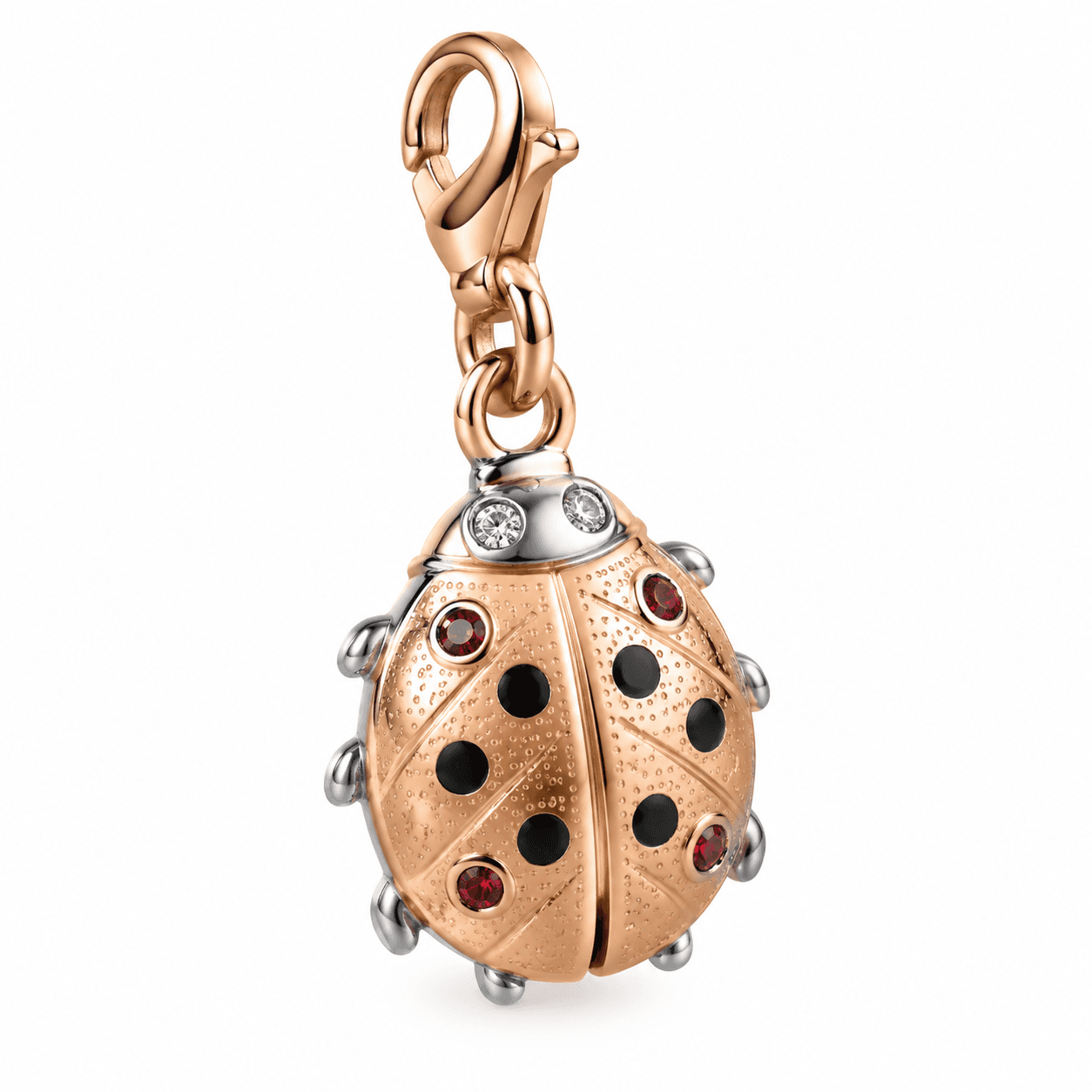
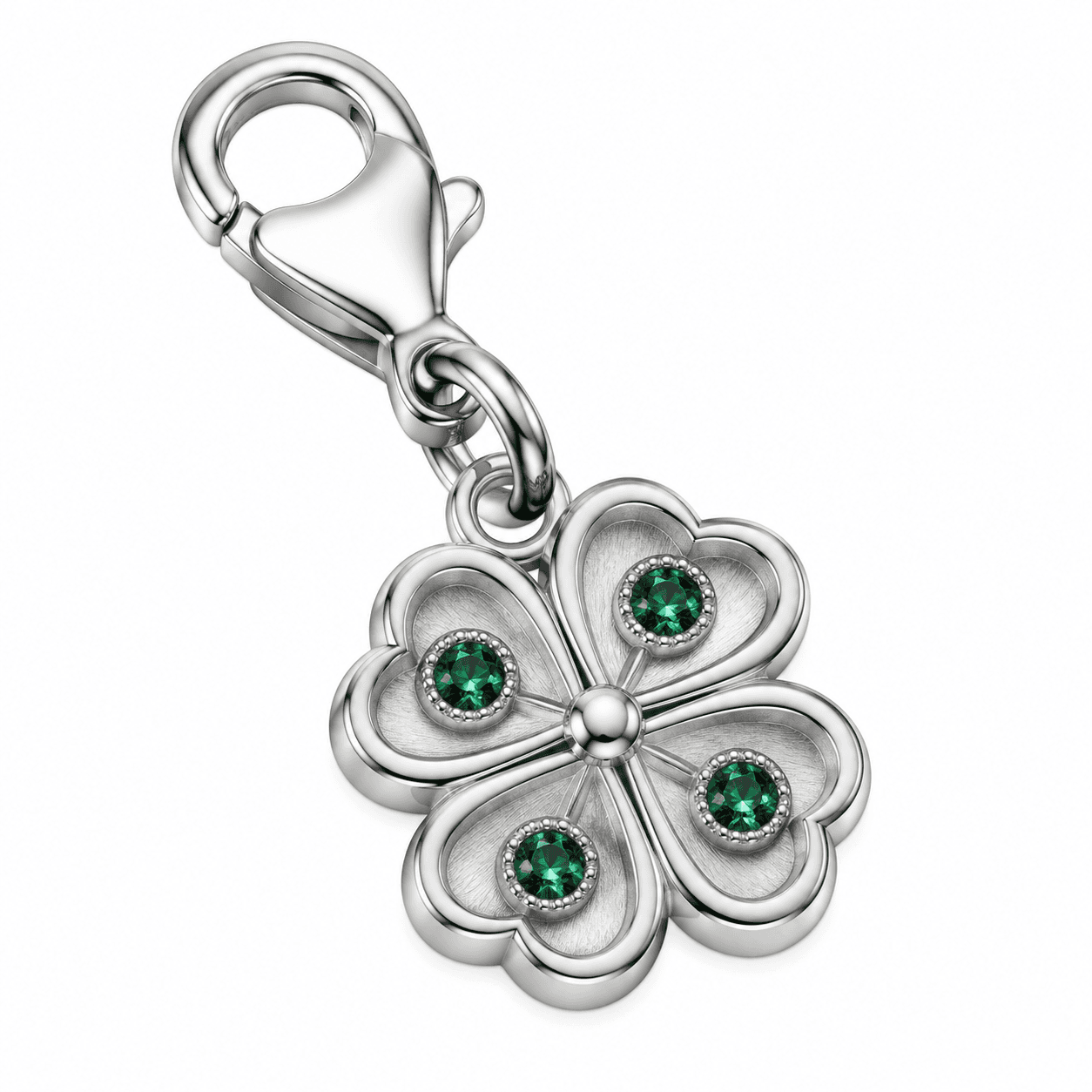
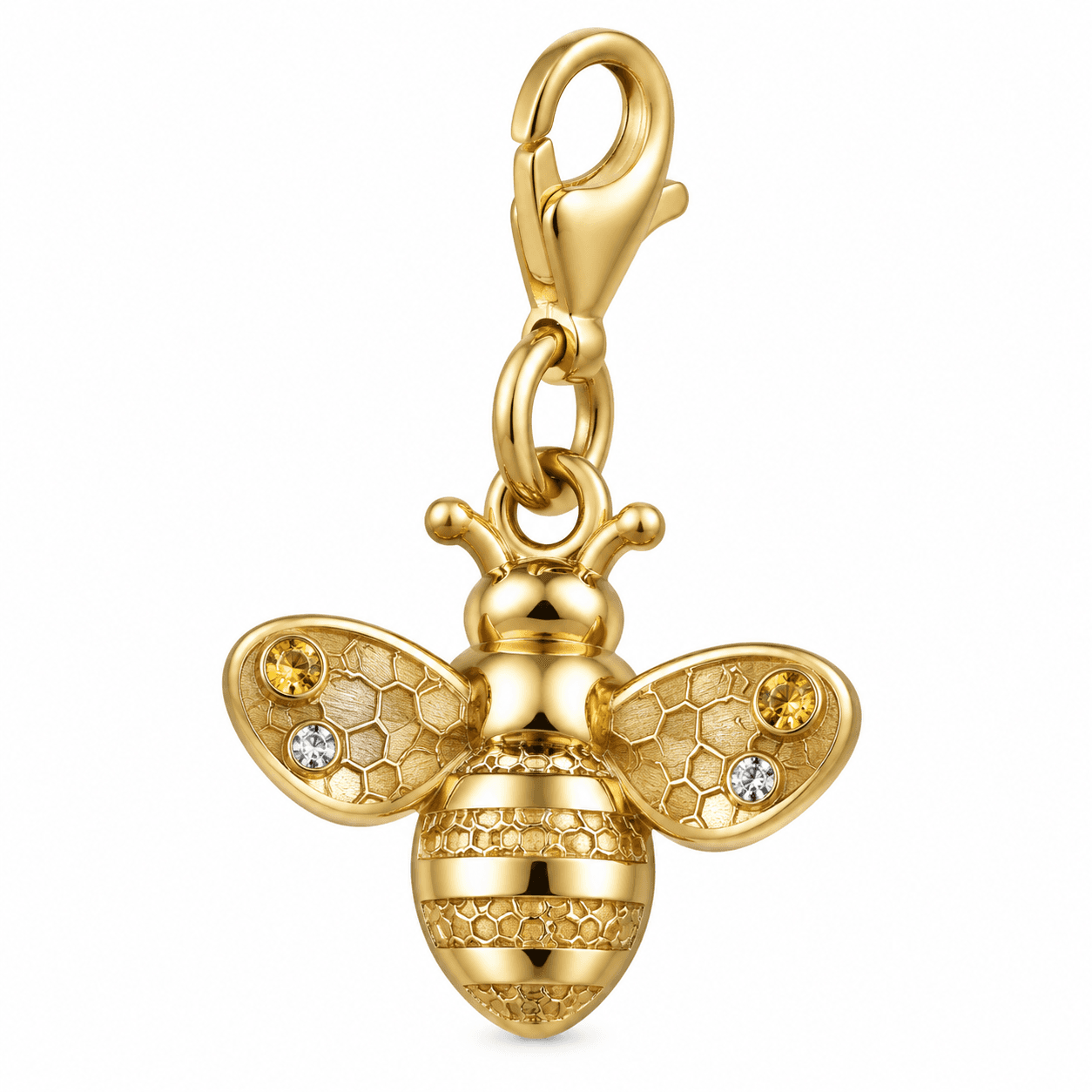
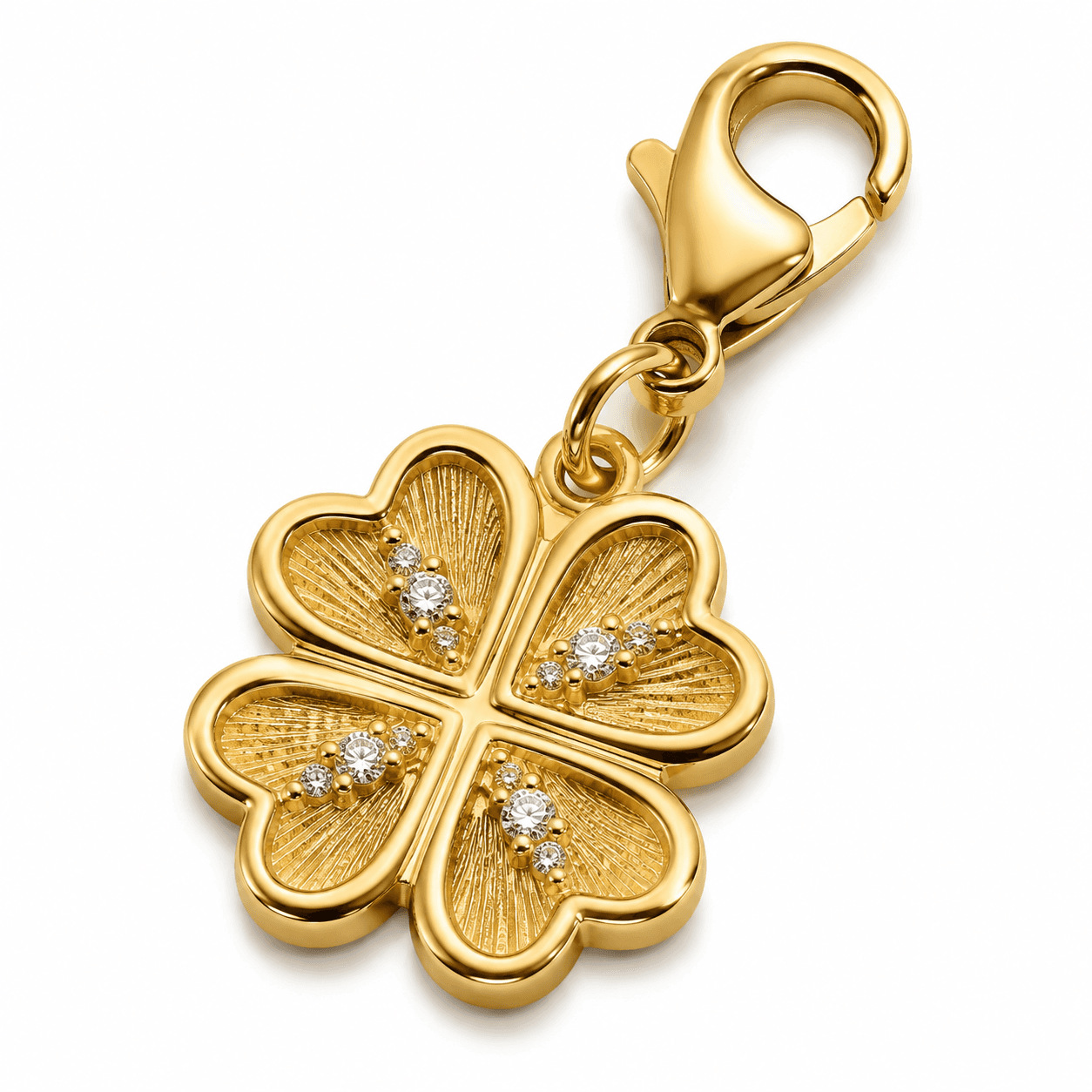
For example, the Hidden Garden Ladybug Leaf 316L Stainless Steel Charm, Lucky Clover Halo 316L Charm with Openwork Clover Drop, Asheville Honey Leaf Bee Charmer 316L Stainless Steel Charm, Golden Ginkgo Fortune Clover 316L Stainless Steel Charm, and Golden Clover Wallpaper Garden 316L Stainless Steel Charm represent distinct botanical and nature-oriented design directions for assortment planning. Treat these as individual design references, not as proof that every size, finish, or customization is automatically available. Confirm the current specification and options for each item with Lancy before finalizing an assortment.
Calculate MOQ against the real production plan
Low MOQ support can help buyers assess a new concept, but the feasible minimum depends on design complexity, finishing steps, color count, tooling requirements, packaging choices, and the number of separate variants. A single design produced in one finish is not operationally identical to a family of designs in several finishes and enamel colors. Ask the supplier to clarify whether the MOQ applies per design, per finish, per color, or to the overall order. Confirm sample charges, tooling costs where applicable, packaging quantities, and whether repeat orders can use the approved specification without unnecessary redevelopment.
Bulk orders benefit from consistent product identification and controlled approval records. Assign a unique SKU to each approved design and finish combination, maintain dimensioned artwork, and record the final sample version. If a collection contains several related charms, identify the features that must remain consistent, such as the gold tone, edge finish, logo position, and packaging presentation. This makes incoming inspection easier and helps prevent visually noticeable variation across a retail display.
As an ODM charm supplier, Lancy can discuss collection development around a buyer's audience, target retail positioning, design requirements, and order structure. For a practical starting point, browse the complete product catalog, review the Nature & Botanical collection, and prepare an RFQ that separates fixed requirements from optional enhancements. Clear commercial assumptions allow the development team to evaluate feasibility before a buyer commits to a larger production run.
Design Review Checklist for Custom Clover Charm Projects
Prepare a specification that the factory can act on
A clear design brief reduces interpretation errors and helps the supplier identify production risks before sampling. Start with the intended application: necklace pendant, bracelet charm, charm bar accessory, bag charm, keychain charm, or gift accessory. Although the same clover artwork may be adaptable to several uses, the attachment mechanism, expected handling, component dimensions, and presentation requirements can differ. Define the use case first so that the sample is evaluated against realistic mechanical and visual expectations.
- Material: State 316L stainless steel as the required base material and list each requested decorative finish separately.
- Geometry: Provide vector artwork, front and reverse views, nominal width and height, thickness where relevant, and any required relief or openwork features.
- Attachment: Show the hole, loop, bail, or jump ring position and specify how the component should hang.
- Surface finish: Identify silver finish, PVD gold plating, or rose gold plating and provide an approved color reference where available.
- Decorative details: Map enamel colors, crystal positions, engraving artwork, and any critical visual dimensions.
- Acceptance criteria: Define tolerances, acceptable surface variation, attachment checks, packaging expectations, and required test documentation.
- Commercial plan: State estimated order quantities, variant counts, target delivery window, destination market, and private-label packaging requirements.
Keep creative freedom and production control in balance
Not every visual detail needs to be fixed at the earliest stage. Separate essential design features from negotiable elements, such as minor relief depth or a small adjustment to a connector position. This allows the factory to suggest practical refinements without changing the defining character of the clover. Any change that affects appearance, dimensions, materials, finish, or function should be documented and approved before it becomes part of the production specification.
For a first sample, request clear photographs and, where needed, a physical sample for hands-on inspection. Review the component under neutral lighting and check the reverse as carefully as the front. Confirm that the connector moves as intended, the edges feel appropriately finished, and any decorative details remain secure and legible. Record comments in a single revision list rather than sending scattered instructions across multiple messages. This creates a clear history of decisions and makes the transition from prototype to bulk production more manageable.
Once the sample is approved, align the purchase order, product specification, inspection plan, packaging artwork, and any testing requirements. The approved sample should serve as a reference, while the written documents define measurable acceptance criteria. This combination is more useful than relying on a photograph alone and helps keep later orders consistent as the collection grows.
Frequently Asked Questions About Lucky Four Leaf Clover Charms
Related Botanical Designs and Technical Resources
Expand the design language around the clover motif
Four leaf clover designs work well as a central motif in a botanical assortment because the silhouette can be interpreted through openwork, surface relief, polished contours, color accents, and restrained decorative details. A related range may include leaf, flower, ginkgo, bee, or other nature-oriented motifs, provided the designs retain their own clear identity and consistent manufacturing specifications. The aim is to create variety at the assortment level without losing control of finish, dimensions, and perceived quality.
For additional visual directions, review the Nature & Botanical collection, which provides a relevant starting point for coordinating botanical forms. The product catalog can help buyers identify existing design references before deciding whether to develop a new silhouette through OEM or ODM. Existing product references should be checked for current availability, dimensions, finish options, and customization scope rather than assumed to be interchangeable with a new specification.
Use technical reading to improve purchasing decisions
Teams developing colored clover designs can also consult the related resources Stainless Steel Custom Hard Enamel Charms: Supplier Risk Checklist and Quality Checklist for Stainless Steel Custom Enamel Charms: A Buyer’s Guide. These topics are useful for structuring supplier questions around color definition, production controls, inspection points, and sample acceptance. When reviewing any material guide, ensure that the proposed specification remains aligned with the required 316L stainless steel base material and the actual finishing process under consideration.
A coordinated collection benefits from a shared design brief, consistent naming conventions, and a master specification for features that repeat across several products. Define common finish expectations and packaging standards once, then document design-specific exceptions separately. This structure helps sourcing managers compare quotations on equivalent terms and makes later assortment expansion more efficient. It also gives the manufacturer a clearer basis for recommending which design features should remain standardized and which should be developed independently.
For project-specific guidance, send the proposed artwork, target application, preferred finish, required quantities, and destination market through the Lancy Jewelry contact page. If your project is ready for quotation, use the RFQ and quote request route to outline the commercial requirements and any supporting technical documents.
Start Your Custom Clover Charm Development
Turn your clover concept into a production-ready specification
Developing lucky four leaf clover charms begins with a clear understanding of the design, material, finish, attachment, and commercial requirements. Lancy Jewelry supports OEM and ODM development for boutique brands, charm bar retailers, gift companies, distributors, and private-label buyers seeking 316L stainless steel charms. Our capabilities include logo engraving, PVD plating, enamel color filling, crystal setting, private-label packaging, and sample support, subject to confirmation of each design's feasibility.
For an efficient RFQ review, provide your target design or vector artwork, nominal dimensions, preferred surface finish, enamel colors or crystal details, attachment requirements, estimated order quantity, variant breakdown, packaging needs, destination market, and desired schedule. Include any applicable test standards or SGS documentation requirements, together with photographs or drawings that explain critical details. If you have a target retail position or a coordinated collection plan, describe it briefly so the team can assess the most relevant development route.
Ask for confirmation of MOQ by design and finish, sample cost, expected sample timing, production lead time, available quality checks, packaging scope, and the documentation that can be supplied for your specific product. Low MOQ support and sample development are evaluated against the actual design and process requirements. This keeps expectations clear before bulk production begins and helps establish a realistic route from prototype approval to repeat orders.
Ready to discuss your specification? Visit the OEM service page to review custom manufacturing options, submit your requirements through Request a Quote, or use the contact page for a project discussion. A complete brief helps Lancy evaluate manufacturability, recommend suitable finish and decoration options, and prepare a quotation based on your actual sourcing needs.
Related resources
Related resources
- 316L Stainless Steel Custom Enamel Sterling Charms: A Buyer’s Guide
- Guide to Stainless Steel Lucky Charm Inspirational Jewelry Wholesale
- Stainless Steel Animal Jewelry Charms Wholesale: Quality Guide
- Custom OEM/ODM Guide to Stainless Steel African Jewelry Charms Wholesale
- Lancy Charms Bar
- Antique Distressed Finish on Stainless Steel Charms: A Buyer’s Guide to Durability
- How to Choose Stainless Steel Enamel Cat Charms Wholesale Suppliers
- How to Choose Durable Stainless Steel Charms for Cross-Border E-Commerce
- 316L Stainless Steel Zodiac Charms Wholesale: Quality Checklist
- How to Source Minimalist Stainless Steel Charms: Finishing Guide