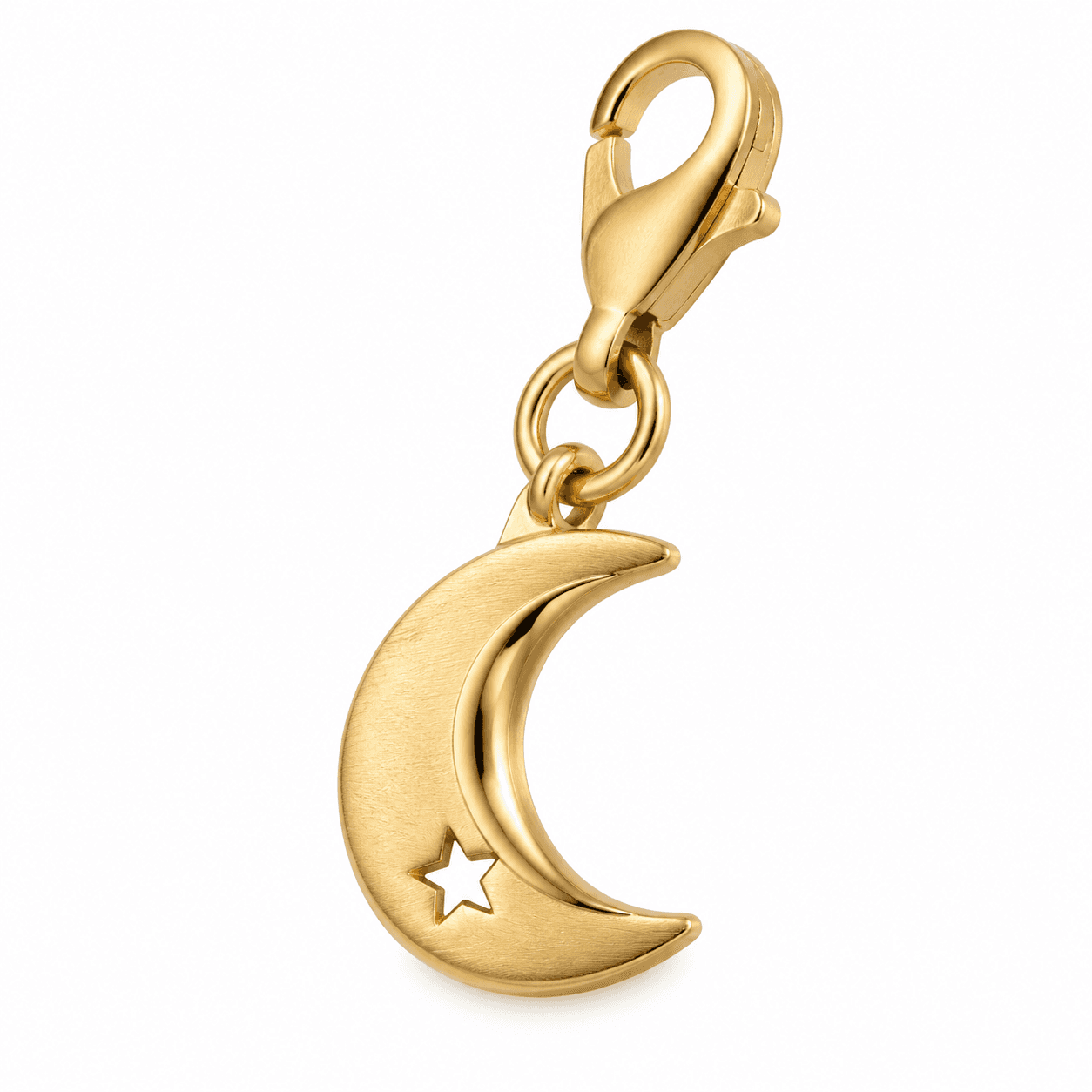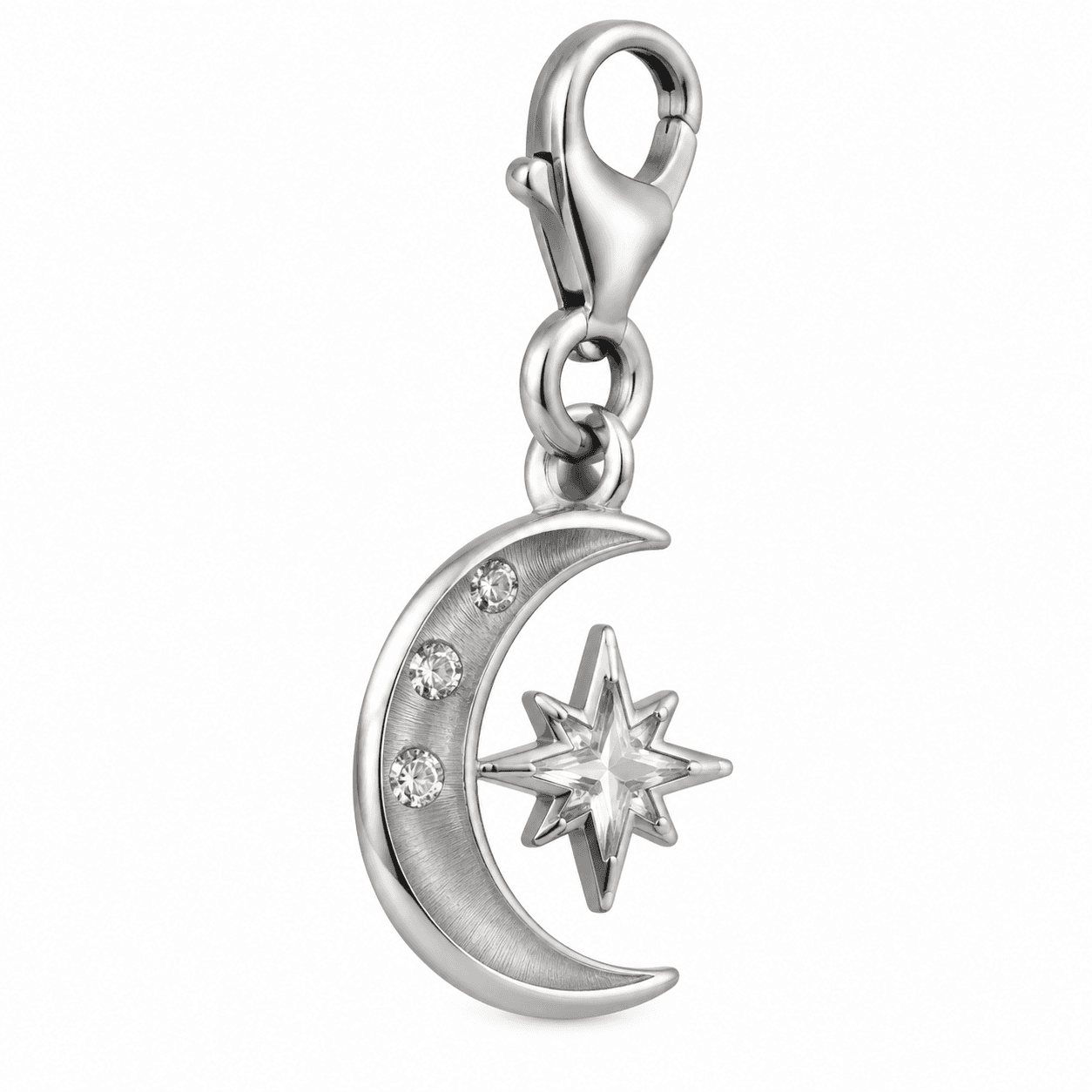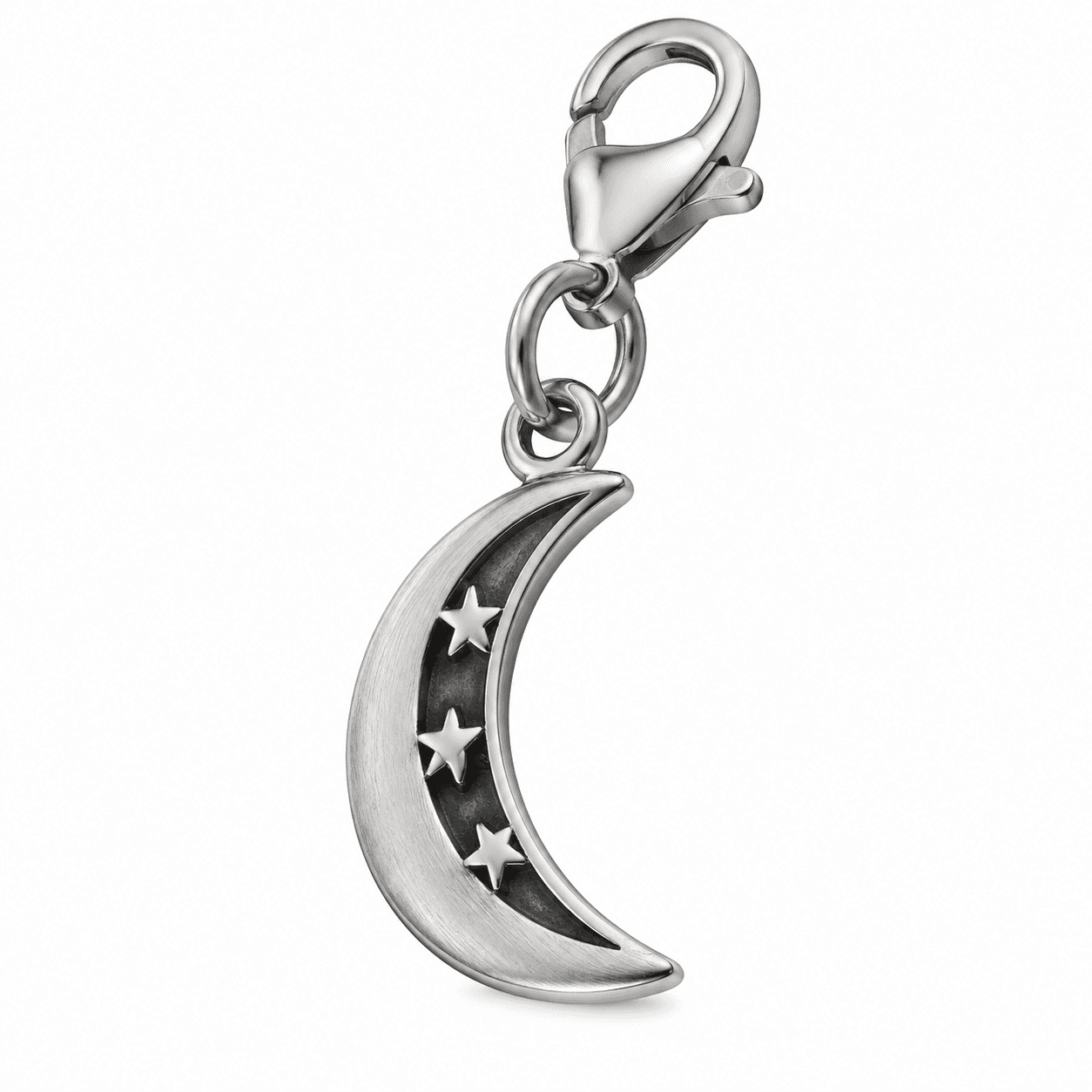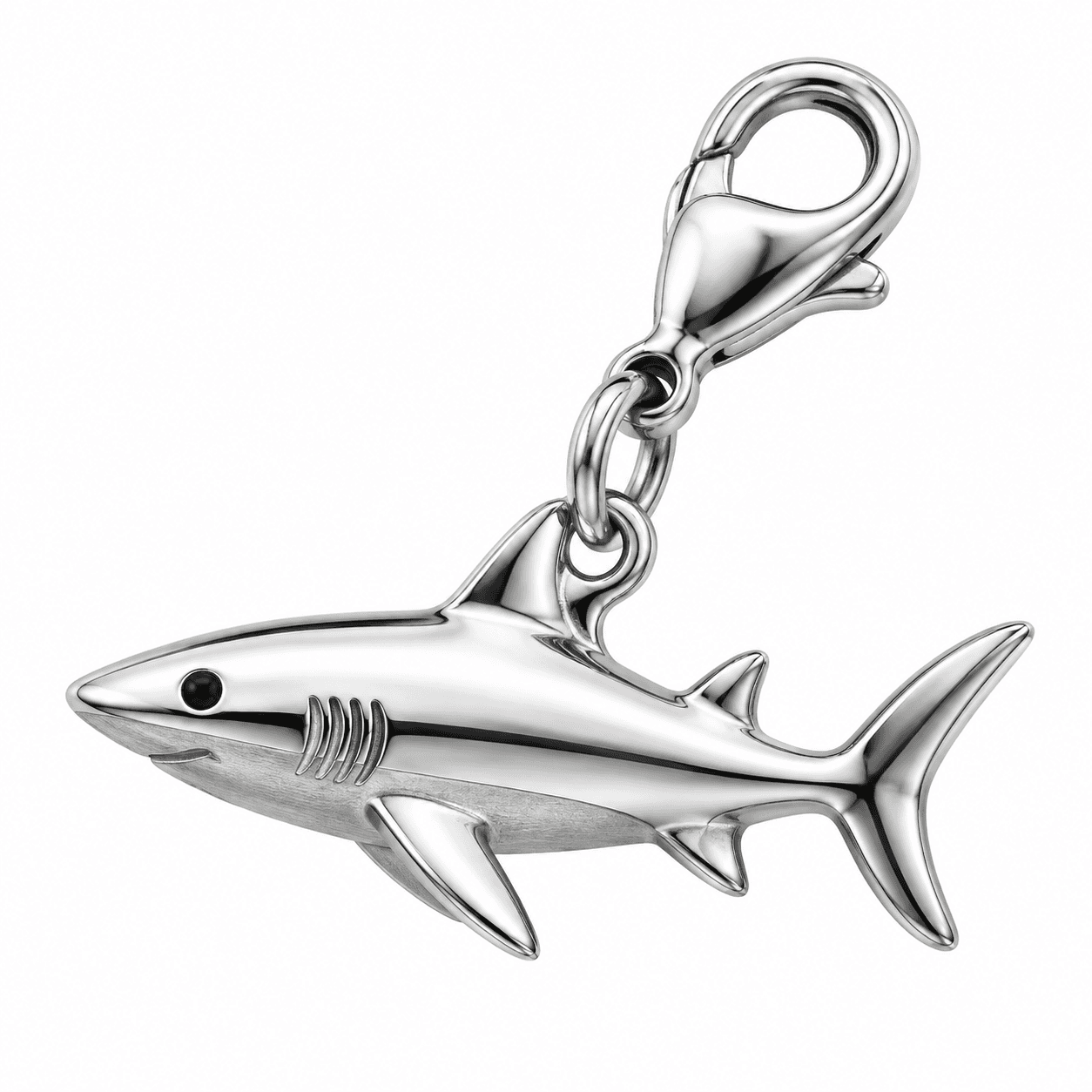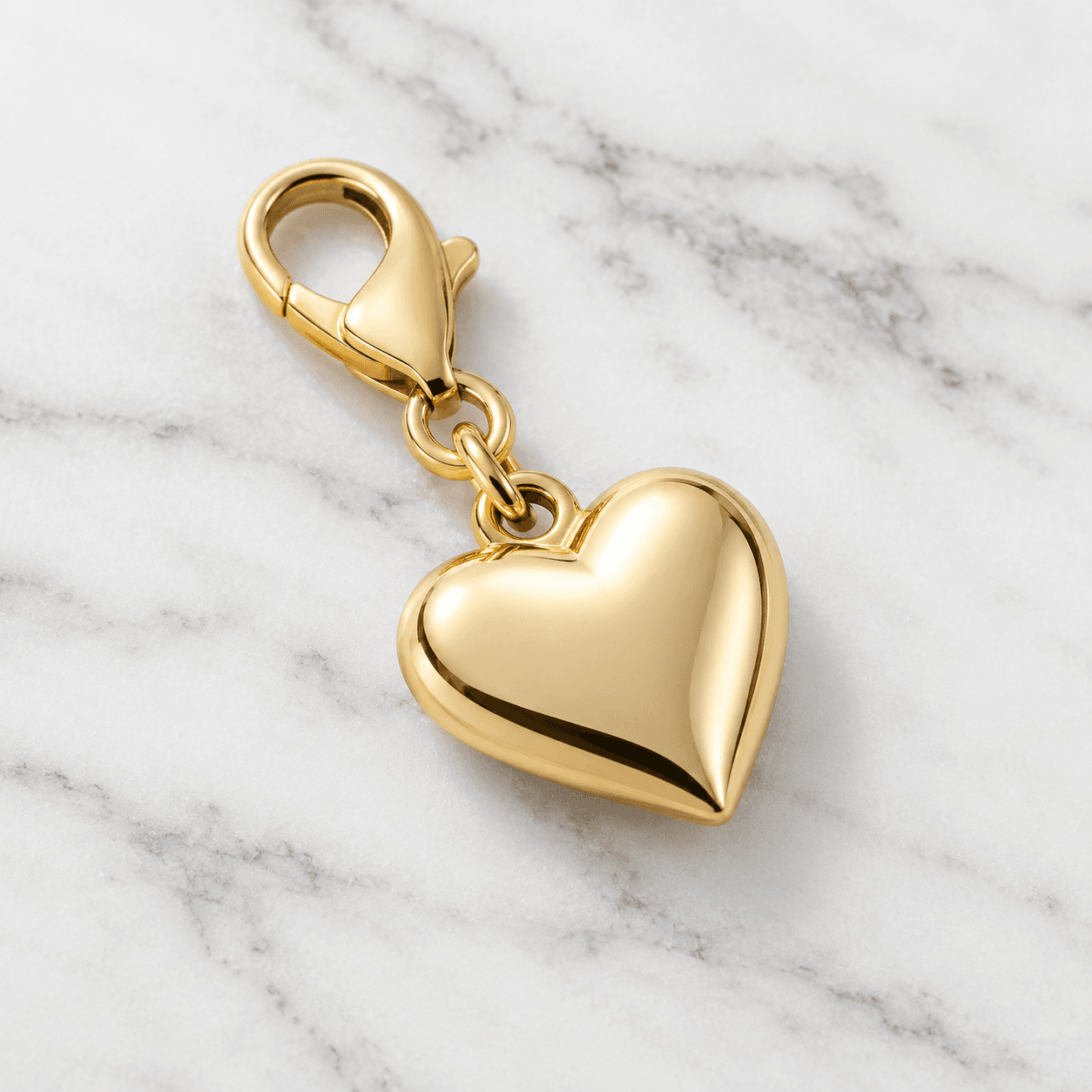
Heart charm clip styling ideas help jewelry designers develop coordinated collections with thoughtful proportions, distinctive finishes, and practical attachment details. Whether you are planning a boutique jewelry range, a charm bar assortment, or a personalized gift program, the heart motif offers a flexible starting point for combining meaningful shapes with contemporary surface treatments. A well-designed heart charm clip concept balances visual appeal with mechanical reliability, allowing each charm to remain attractive while functioning as an individual component in a larger collection.
For professional development, Lancy Jewelry focuses on 316L stainless steel charms with customization options including PVD gold plating, silver finish, rose gold plating, enamel color filling, crystal inlay, and logo engraving. These options help designers establish a recognizable visual direction while maintaining consistent specifications across a collection. As a stainless steel charms manufacturer, Lancy supports OEM and ODM development, sample development, and private label charms for boutique brands, distributors, and gift companies.
This visual styling guide explains how to plan heart charm clip designs, select finishes, evaluate attachment geometry, and prepare production-ready specifications. Use the practical examples to develop coordinated designs before requesting samples or wholesale production, and explore the complete product catalog when planning your next assortment.
Heart Charm Clip Styling Ideas: Start With Shape and Proportion
Build a balanced visual composition
The most effective heart charm clip styling ideas begin with silhouette rather than decoration. A classic symmetrical heart communicates a familiar romantic theme, while an elongated heart creates a more refined vertical profile. A rounded heart appears softer and more playful, whereas a geometric heart with defined shoulders and a controlled point can support a contemporary boutique collection. Before selecting a finish, determine the intended charm size, outline thickness, edge treatment, and available area for engraving or enamel. These decisions influence legibility, visual weight, and the amount of detail that can be manufactured consistently.
For a first design board, organize concepts into three visual directions: minimal polished hearts, textured or sculpted hearts, and colored or crystal-accented hearts. Keep each direction visually distinct so buyers can understand the difference between designs at a glance. A medium charm around 10–16 mm may suit delicate bracelet and bangle applications, while a 16–25 mm statement charm can offer more space for a necklace pendant concept. These are starting ranges rather than universal rules; the final dimensions should account for the attachment opening, wall thickness, design relief, and intended application.
Visual gallery planning
- Minimal profile: Use a clean heart outline, restrained surface detailing, and a silver finish for a versatile everyday assortment.
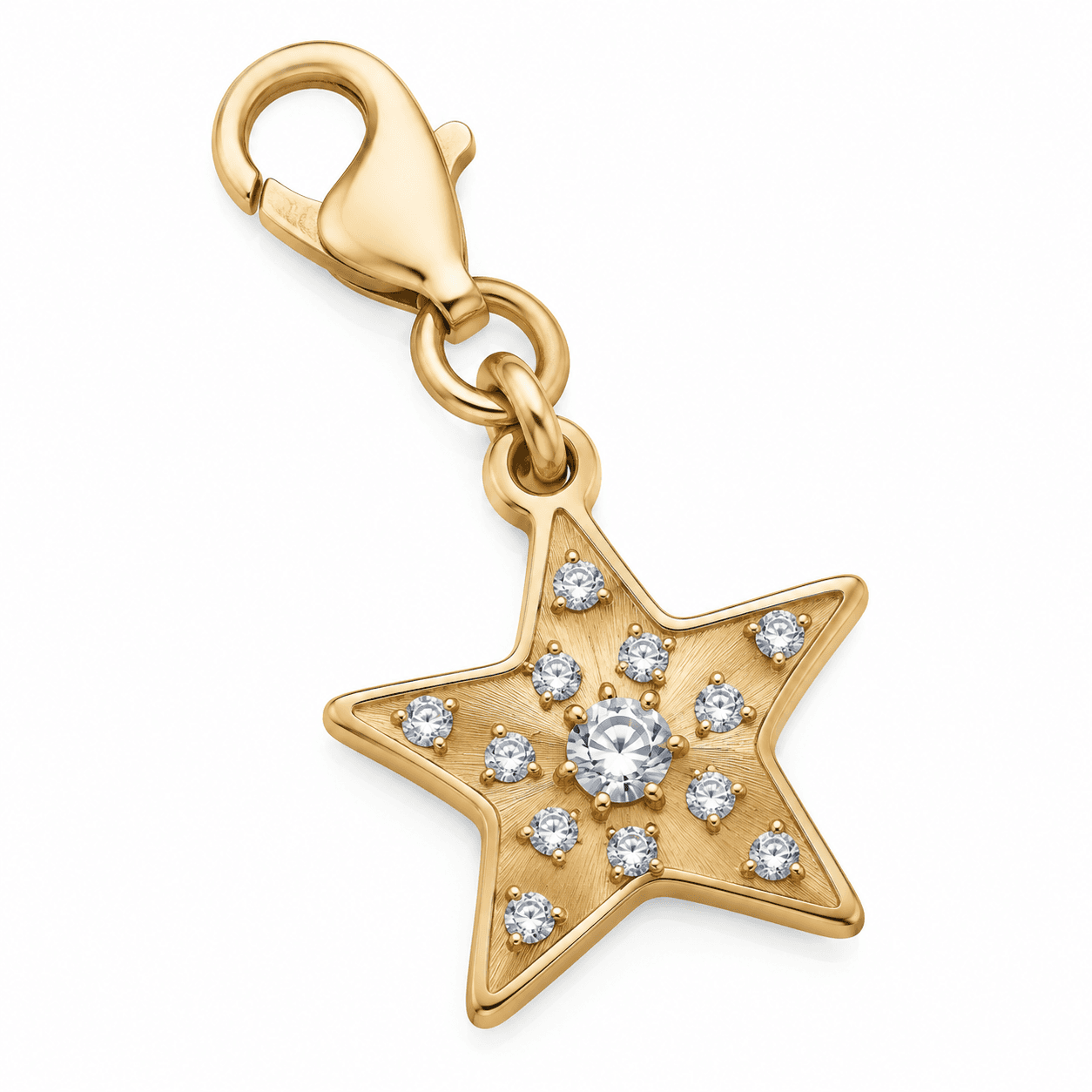
- Warm finish: Use a heart silhouette with PVD gold plating or rose gold plating, checking that edges and recessed areas retain a consistent appearance.
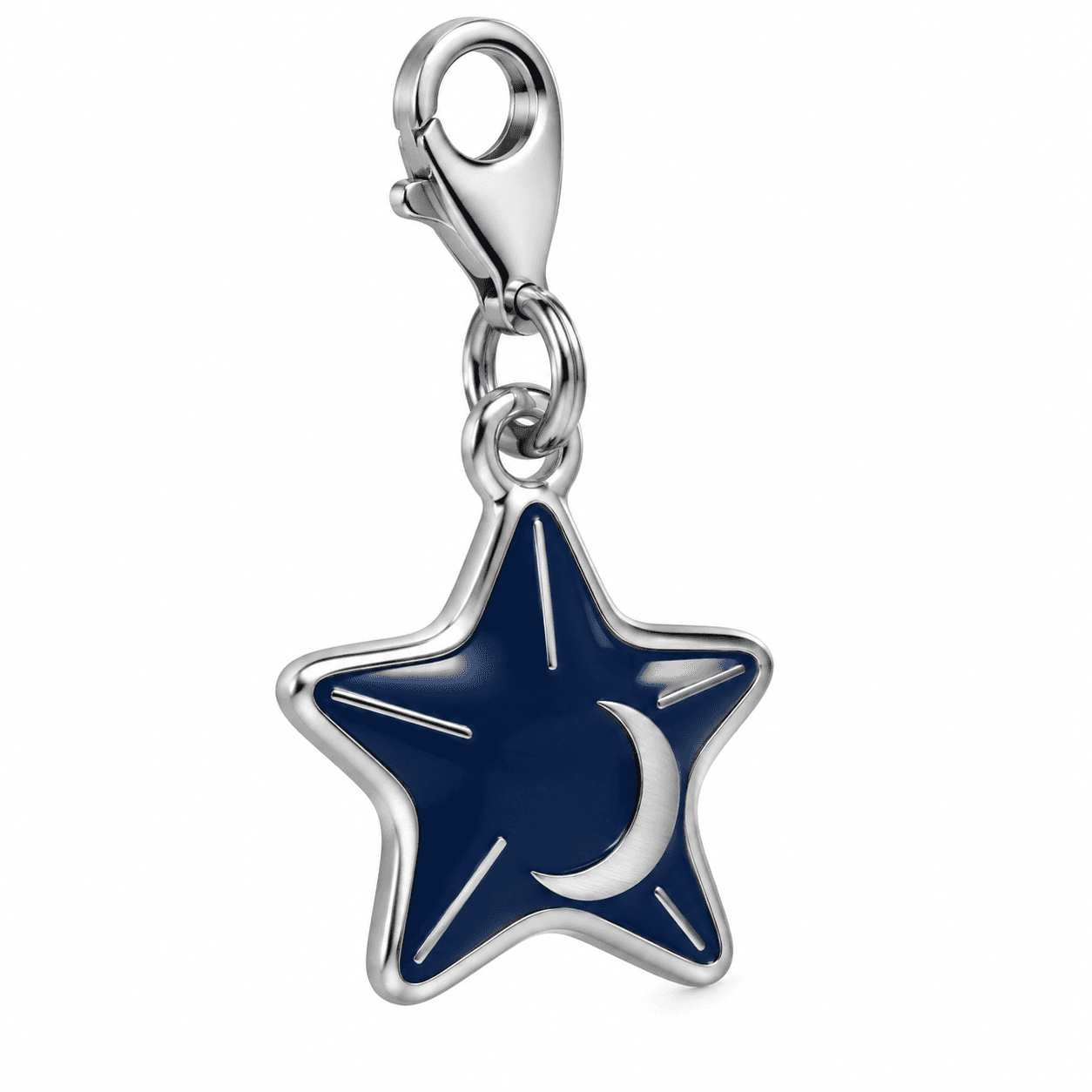
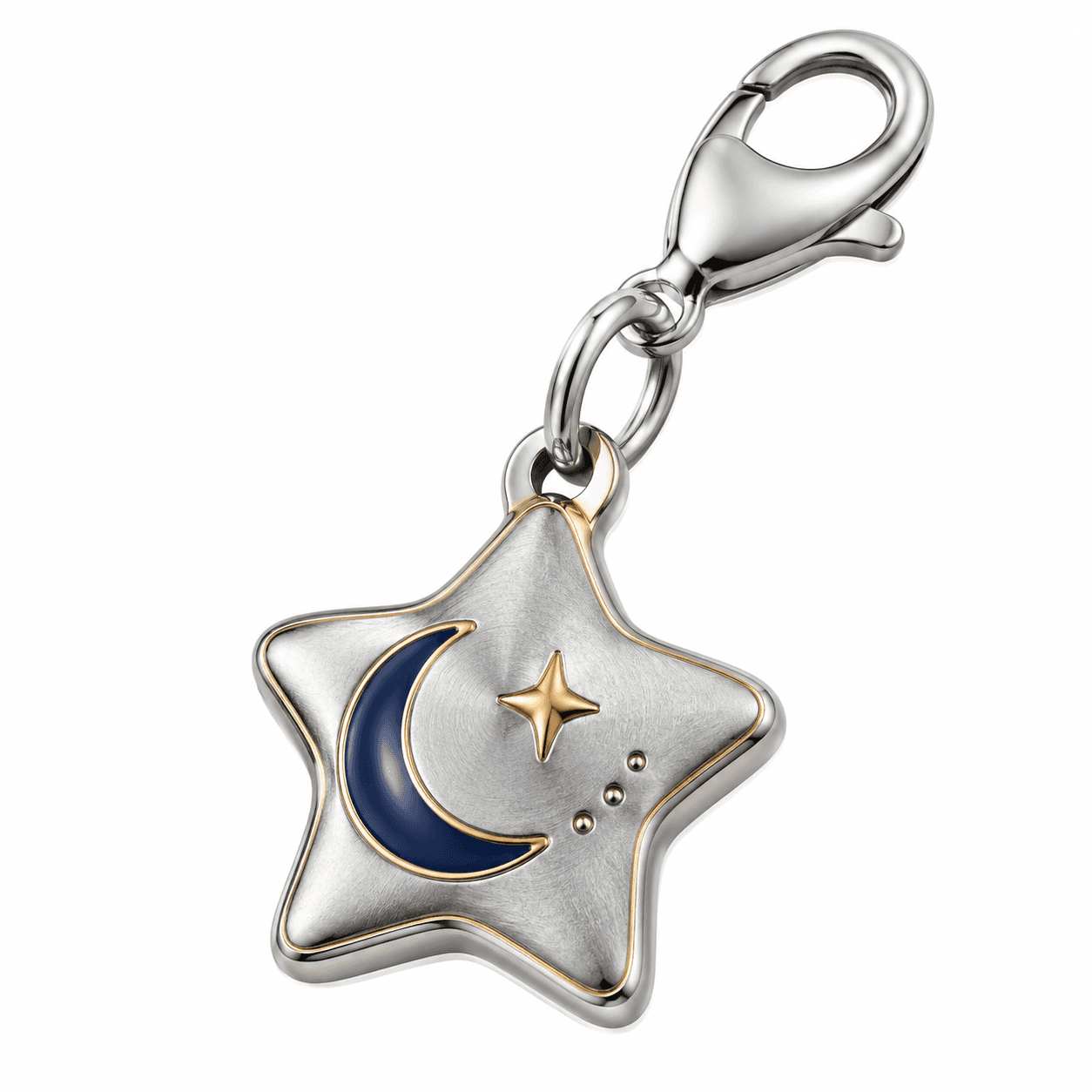
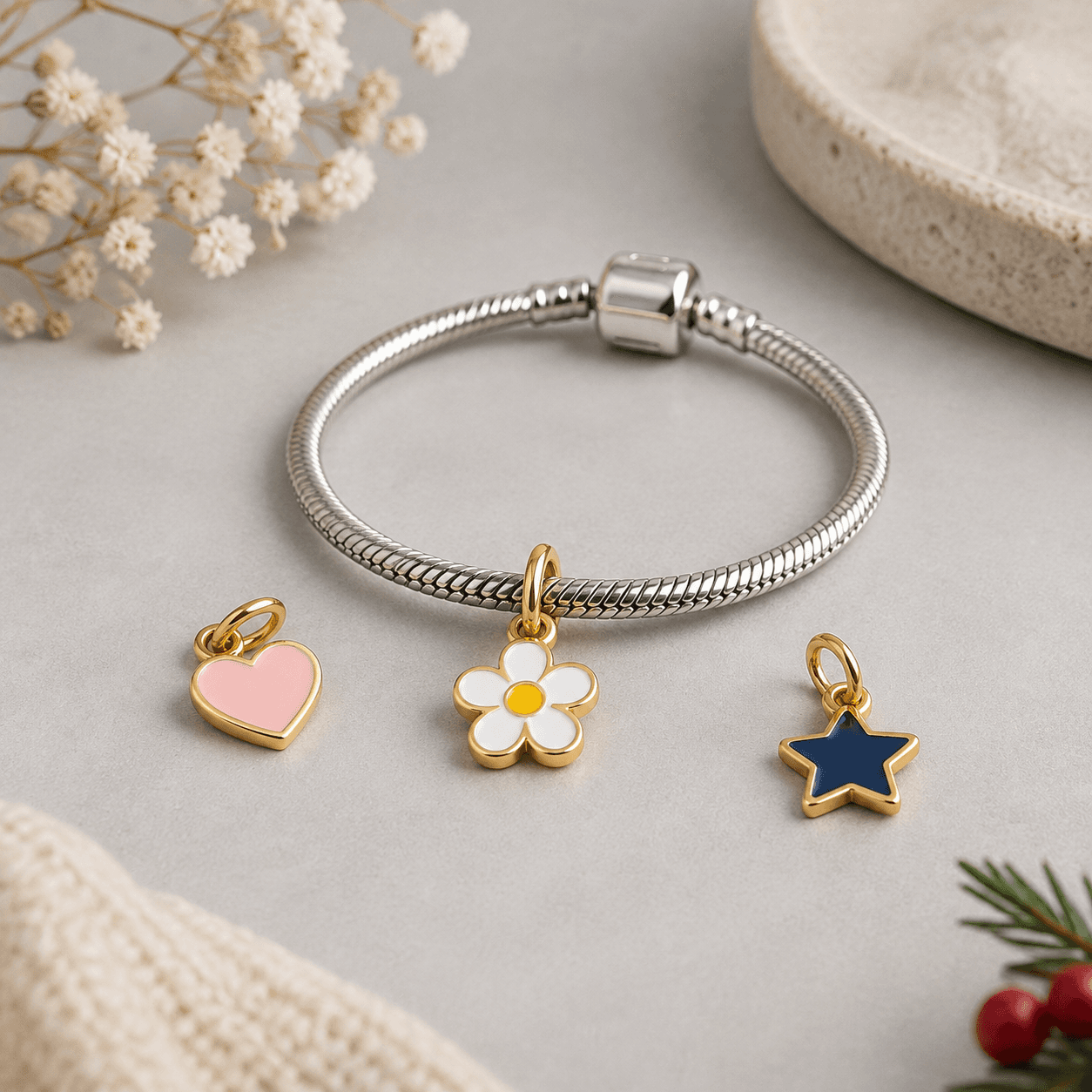
- Color accent: Introduce a controlled enamel area to establish a clear focal point without obscuring the heart's outline.
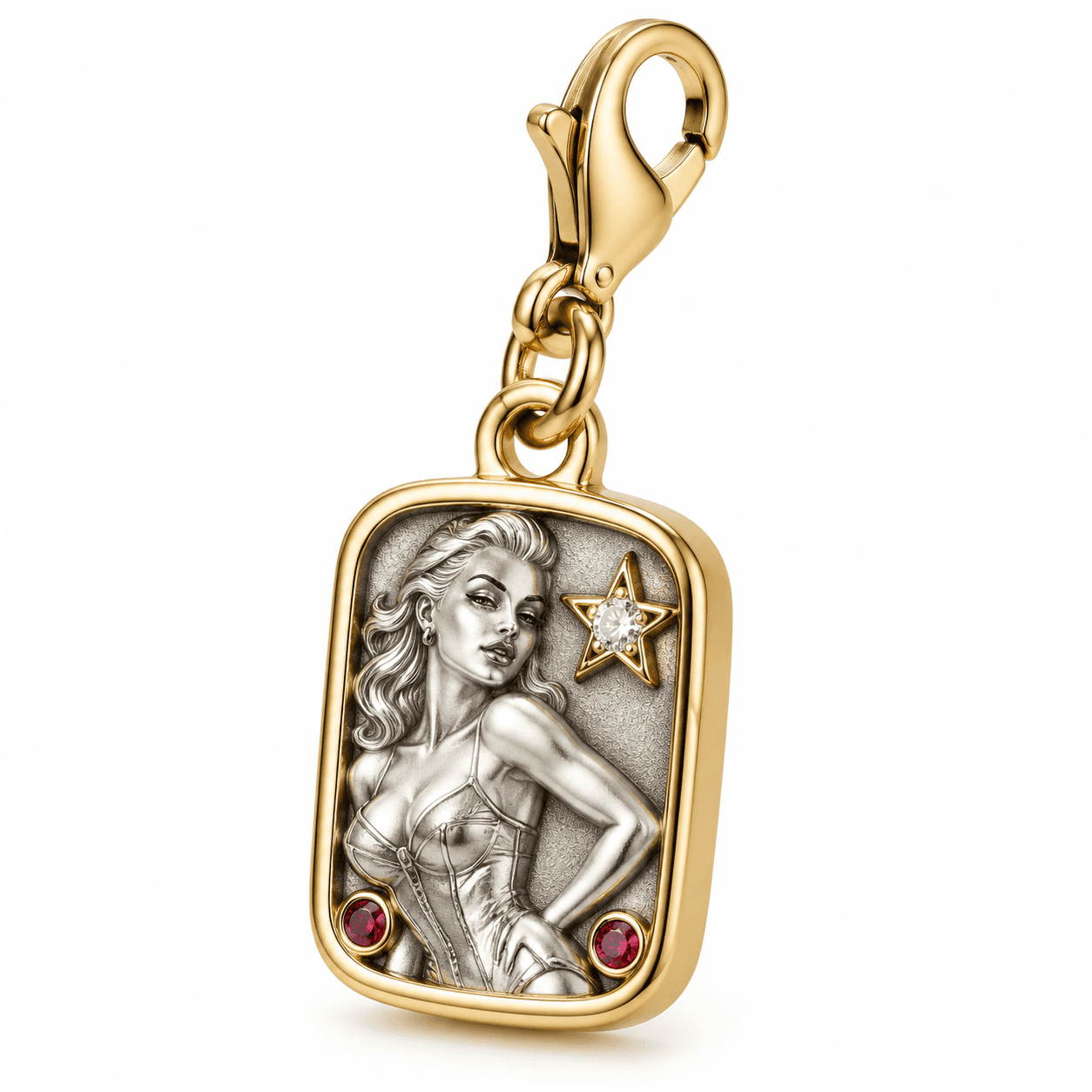
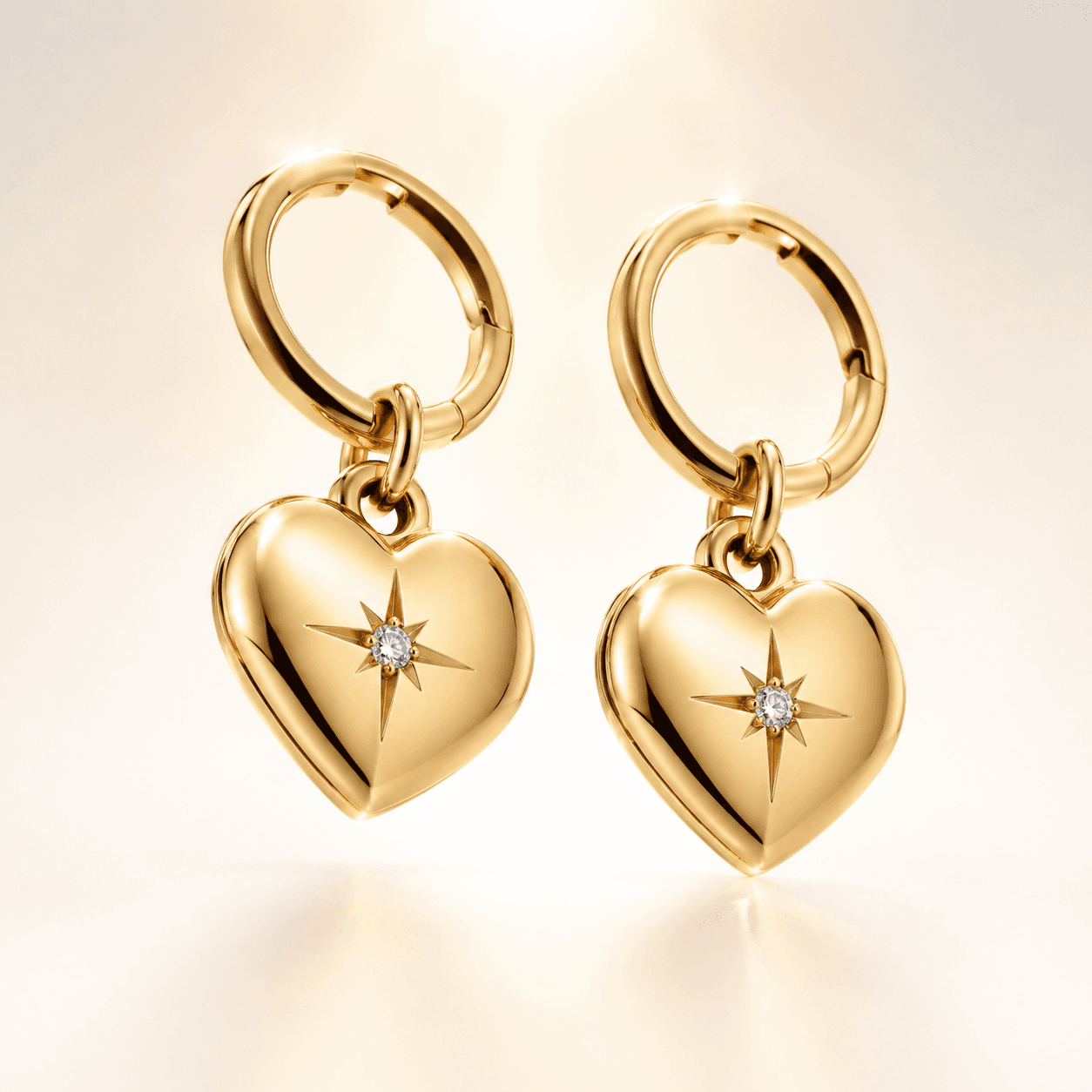
- Reflective detail: Consider crystal inlay where the design provides sufficient seating depth and a secure retention structure.
For the visual gallery, photograph one complete charm per frame against a pure white background, showing the front design, attachment loop, edge profile, and realistic surface finish. Add a separate scale image using a packaging card or neutral ruler grid. Keep the entire silhouette visible, leave clear margins, and avoid showing hardware that does not pass through a real hole or loop. These details help designers assess the product as a manufacturable component rather than an isolated decorative image.
Coordinate Finishes, Enamel, and Crystal Details
Create a finish system before expanding the range
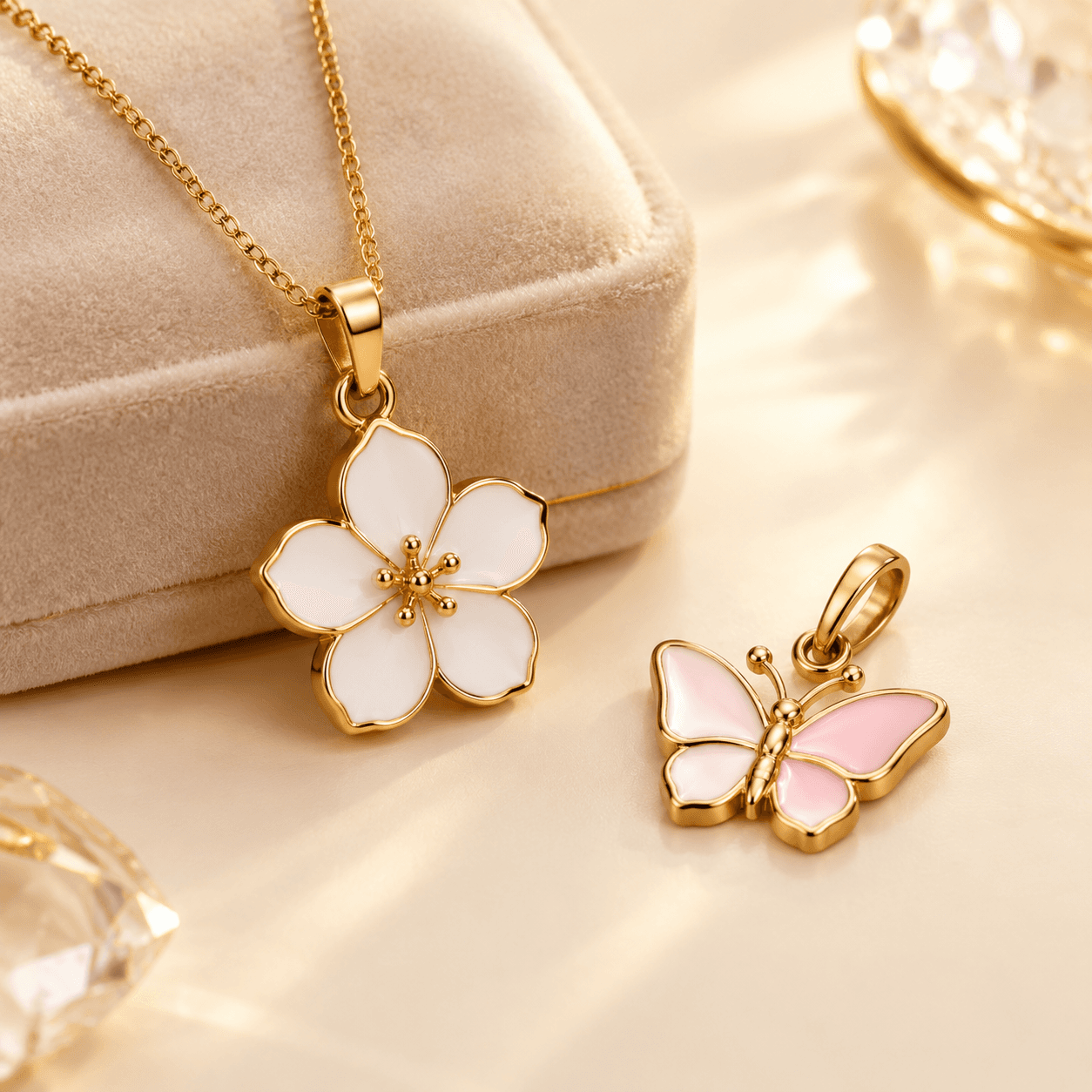
A coordinated finish system makes heart charm clip styling ideas easier to translate into a commercial collection. Begin with one approved 316L stainless steel charm geometry, then evaluate how different surface treatments affect its appearance under consistent lighting. A silver finish emphasizes crisp edges and restrained detailing. PVD gold plating introduces a warmer visual direction, while rose gold plating creates a softer color impression. The underlying design should remain recognizable across these finish variations, allowing buyers to compare options without introducing unnecessary changes to the product silhouette.
Material selection and surface treatment are separate specification decisions. Lancy uses 316L stainless steel as the base material for its charms, while plating, enamel, and crystal inlay provide decorative options. Surface preparation, coating coverage, recess geometry, and process control influence the finished appearance. A deep engraving may retain a dark shadow under angled lighting, while a shallow recess may appear flatter after finishing. For that reason, evaluate the physical sample under both diffuse and directional light instead of approving a finish solely from a digital rendering.
Practical finish combinations
- Silver finish with a polished heart: Prioritize silhouette clarity, edge smoothness, and consistent reflectivity.
- PVD gold plating with restrained engraving: Keep the design simple enough for the logo or decorative linework to remain legible.
- Rose gold plating with a smooth outline: Use a controlled color specification and compare samples under neutral lighting.
- Enamel with a defined border: Specify the color reference, fill boundaries, recess depth, and acceptable surface level.
- Crystal inlay with a focal-point layout: Define the setting geometry, stone position, seating depth, and inspection criteria before production.
When preparing a sample request, identify the base geometry and list each requested finish or decorative treatment as a separate variation. Record approved color references, plating appearance, engraving dimensions, enamel boundaries, and crystal placement in a shared specification. Ask the factory to confirm which features can remain common across the range and which require additional tooling or process adjustments. This approach supports efficient sample development and gives a stainless steel charms manufacturer a clearer basis for consistent repeat orders.
Design Heart Charm Clip Attachments for Reliable Everyday Use
Make the connection part of the design
A heart charm clip must be evaluated as both a decorative object and a functional component. The attachment opening, loop orientation, connector clearance, and charm center of gravity determine how the piece hangs and moves. A loop that is too small may restrict connector movement, while an opening positioned too close to a narrow edge can reduce the available structural material. The designer should specify the intended connection method at the concept stage rather than adding a loop after the decorative shape has been finalized.
For a charm with a closed attachment loop, verify that the jump ring or other specified connector can pass fully through the opening and move without binding. If a clip mechanism is part of the concept, define the opening direction, gate clearance, spring action where applicable, and the points that carry the load. Keep the functional connection visible in technical drawings and sample photographs. Any chain, clasp, or key ring included in a reference image should connect through an actual opening, with no overlapping parts that create an impossible assembly.
Attachment and fit checklist
- Specify overall height and width, including the attachment loop.
- Record loop inner diameter, material thickness, and connector dimensions.
- Confirm that the connector passes through the intended opening without forced deformation.
- Check whether the charm hangs face-forward or naturally rotates during movement.
- Inspect edges and transitions for burrs, sharp points, or interference with moving hardware.
- Test the intended assembly and document any movement, wear, or deformation observed.
For OEM development, a dimensioned drawing should identify the critical attachment measurements and tolerances. A three-dimensional file can help clarify geometry, but it does not replace a physical fit check. During sampling, assemble the charm with the intended connector and verify its movement under realistic handling. Record any change to the loop, edge radius, or charm thickness before approving the production drawing. This step is particularly important when the same heart motif will be used across several sizes or adapted for jewelry charms, bag charms, and gift accessories.
Designers should also separate decorative approval from mechanical approval. A sample may have the correct color and polished surface while still having an unsuitable opening or unstable connection. Document both approval stages, then use the signed-off sample and controlled specification as the reference for wholesale stainless steel charms production.
Plan a Cohesive Heart Charm Collection for Boutique Buyers
Build a range with a clear visual hierarchy
A successful heart charm assortment offers meaningful variety without making the collection difficult to merchandise. Start with a recognizable core silhouette, then create deliberate variations through scale, surface texture, finish, engraving, enamel, and crystal placement. For example, a compact polished heart can anchor an everyday range, an engraved heart can support personalization, and an enamel heart can introduce a controlled accent color. Each design should have a clear role, making it easier for buyers to assemble coordinated displays and for sourcing teams to manage the number of unique specifications.
For a charm bar, establish a consistent visual framework while offering choices that feel personal. Standardize the base outline and attachment geometry where practical, then vary the decorative face or approved finish. For a gift program, prioritize clear design themes, legible personalization areas, and packaging that presents the charm as a finished retail component. For a private-label collection, define which details are fixed across every SKU and which can change by market, seasonal assortment, or customer brief. This structure helps reduce avoidable revisions and keeps creative choices aligned with production requirements.
Example visual gallery sequence
- Image 1 — Core heart: A single polished 316L stainless steel heart charm on a pure white background, with its complete loop visible.
- Image 2 — Finish study: The same approved shape presented in silver finish, PVD gold plating, and rose gold plating as clearly separated options.
- Image 3 — Enamel detail: A close-up showing fill boundaries, the border, and the relationship between color and the heart silhouette.
- Image 4 — Attachment study: A close-up of the real opening and connector, with enough detail to evaluate clearance and movement.
- Image 5 — Retail presentation: One to three coordinated charms arranged neatly on a packaging card or display tray, without unrelated products or visual clutter.
Use consistent camera angles, neutral lighting, and comparable scales across the gallery. Keep the main product centered, show its complete outer silhouette, and use realistic shadows instead of artificial floating effects. When showing more than one design, limit the frame to a small coordinated group so that buyers can distinguish the shapes and finishes. Lifestyle images should support the product story, while the main catalog image should prioritize accurate geometry and surface detail.
For sourcing, a simple assortment matrix can record SKU, dimensions, finish, decorative process, logo requirements, packaging format, and forecast quantity. Lancy Jewelry supports OEM and ODM customization, logo engraving, PVD plating, enamel color filling, crystal setting, private-label packaging, and sample support. Discuss low MOQ requirements and sample development early, since minimum quantities can vary with the selected design, finish, tooling, and production process.
Evaluate 316L Stainless Steel Quality and Production Readiness
Translate visual approval into measurable quality criteria
316L stainless steel is a chromium-containing steel grade with molybdenum, commonly selected for applications where corrosion resistance is important. Its performance depends on the actual material specification, manufacturing condition, surface finish, and service environment. For a heart charm, the grade alone does not guarantee that every finished component will meet a particular performance requirement. Buyers should review material documentation, surface quality, finishing controls, and any applicable test evidence for the specific product and production batch.
Production inspection should cover the complete manufacturing sequence: incoming material verification, dimensional checks, surface preparation, PVD or other specified finishing, enamel filling where applicable, crystal setting where applicable, and final assembly inspection. Critical visual criteria include consistent color, even coating coverage, clean edges, legible engraving, controlled enamel boundaries, secure decorative settings, and the absence of visible dents or deep scratches. Attachment checks should confirm opening dimensions, connector fit, and the absence of sharp edges or malformed loops. Approved samples and written acceptance limits provide a more reliable reference than subjective descriptions such as premium finish alone.
Understand certification and test documentation
SGS-related documentation may include reports addressing RoHS, REACH, EN 1811, or salt spray testing, depending on the product, market, test method, and customer requirement. These references are not interchangeable. RoHS concerns restrictions on certain hazardous substances within its applicable scope, while REACH addresses chemical safety obligations under the relevant European framework. EN 1811 is a test method used to assess nickel release from products intended for direct and prolonged contact with the skin. Salt spray testing evaluates corrosion behavior under defined test conditions and does not by itself establish long-term performance in every real-world environment.
Before accepting a report, check the issuing laboratory, report date, sample description, tested configuration, method, result, and applicable acceptance criteria. Confirm whether the sample represents the finished charm, including its decorative coating and any relevant assembled components. Do not treat a laboratory name or a general statement of compliance as proof that every SKU has been tested. Request current, relevant documentation from the supplier and verify that its scope matches the destination market and the actual order specification. Test availability and applicability should be confirmed for the exact design rather than assumed across an entire collection.
As a factory-direct sourcing practice, request a written quality plan covering sample approval, critical dimensions, finish references, inspection frequency, defect classification, packaging checks, and batch traceability where available. Lancy's production discussions can cover material specifications, PVD plating, enamel, crystal setting, logo engraving, and private-label packaging. Buyers can begin through the OEM manufacturing service and provide their product drawings, target specifications, and compliance requirements before sample approval.
Frequently Asked Questions About Heart Charm Clip Styling
Develop Your Heart Charm Collection With Lancy Jewelry
Turn a styling concept into a production-ready specification
Use your preferred heart charm clip styling ideas as the starting point for a clear, manufacturable design brief. Lancy Jewelry supports custom stainless steel charms development for boutique brands, charm bar retailers, gift companies, distributors, and private-label buyers. Our 316L stainless steel base material can be specified with PVD gold plating, silver finish, rose gold plating, enamel color filling, crystal inlay, and logo engraving according to the approved design and production requirements.
For an efficient RFQ, send your drawing or reference images, target dimensions, attachment details, finish and color requirements, estimated quantities by SKU, packaging specifications, destination market, required compliance documents, and target delivery date. Identify whether you need one sample for design evaluation or a coordinated sample set for multiple variations. If artwork is still being developed, share your preferred silhouette, intended application, and visual direction so the team can review feasible customization options.
Discuss low MOQ requirements, sample development, bulk orders, and private-label packaging before finalizing the assortment. The project quotation can then clarify applicable minimum quantities, sample charges, tooling requirements where relevant, production lead time, packaging costs, and quality documentation. For a direct inquiry, visit Request a Quote or contact the team through Lancy Jewelry Contact. You can also review available designs in the product catalog or explore the OEM service to prepare your next collection.
A well-documented sample approval process helps align creative intent with production feasibility, giving your heart charm collection a consistent visual identity and a clearer route from initial concept to repeatable wholesale supply.
Related resources
Related resources
- Stainless Steel Animal Jewelry Charms Wholesale: Quality Guide
- How to Evaluate 316L Stainless Steel Zodiac Bracelet Charms Wholesale Suppliers
- Custom Stainless Steel Charm Bracelet Tutorial: A Buyer’s Guide to Quality
- The Ultimate ODM stamped 316L stainless steel angel charm customization Buying Guide
- How to Choose Durable Stainless Steel Charms for Cross-Border E-Commerce
- How to Source Minimalist Stainless Steel Charms: Finishing Guide
- Custom OEM/ODM Guide to Stainless Steel African Jewelry Charms Wholesale
- Stainless Steel Inspirational Jewelry Charms Wholesale Guide
- Stainless Steel Interchangeable Charms Jewelry Wholesale: Guide
- Guide to Stainless Steel Lucky Charm Inspirational Jewelry Wholesale