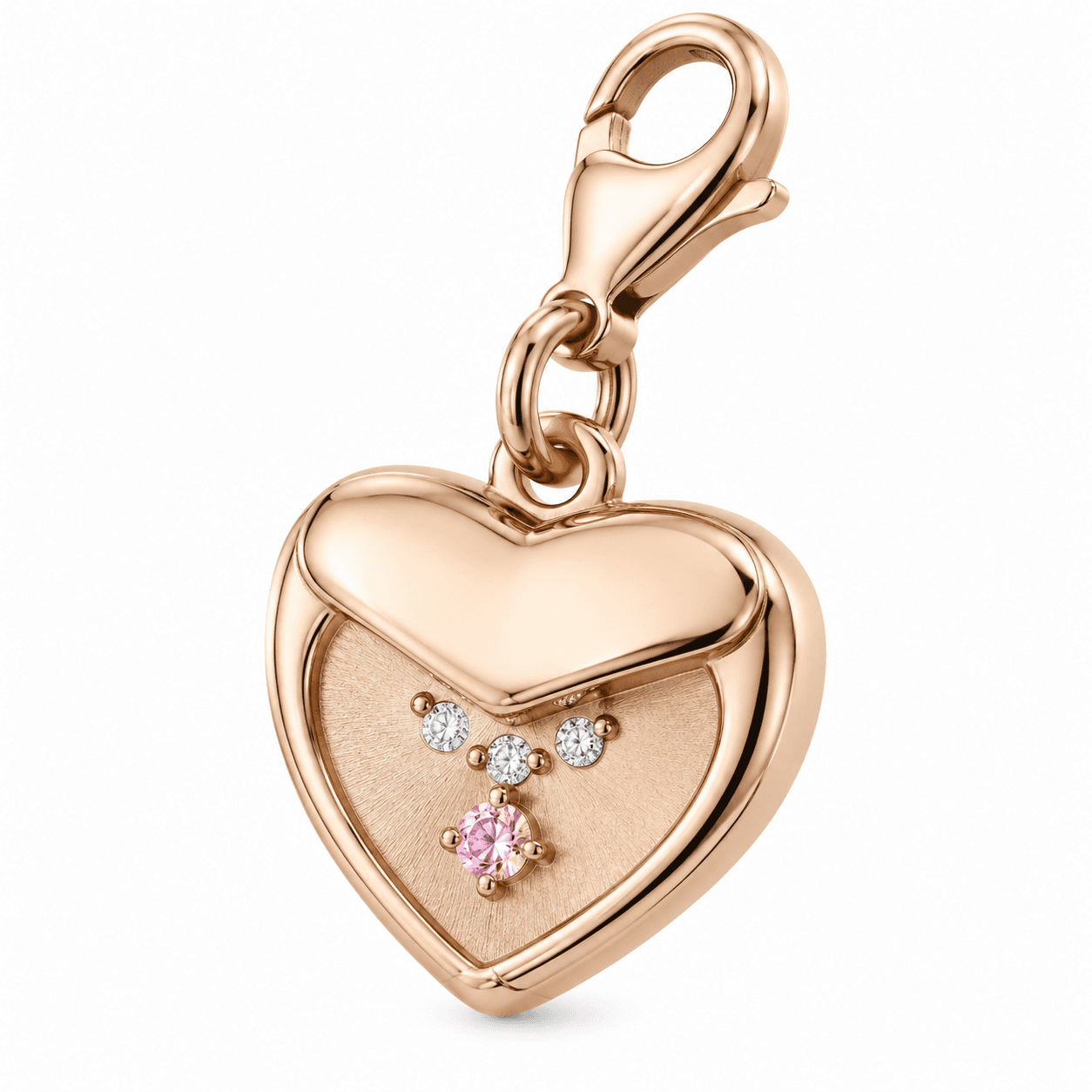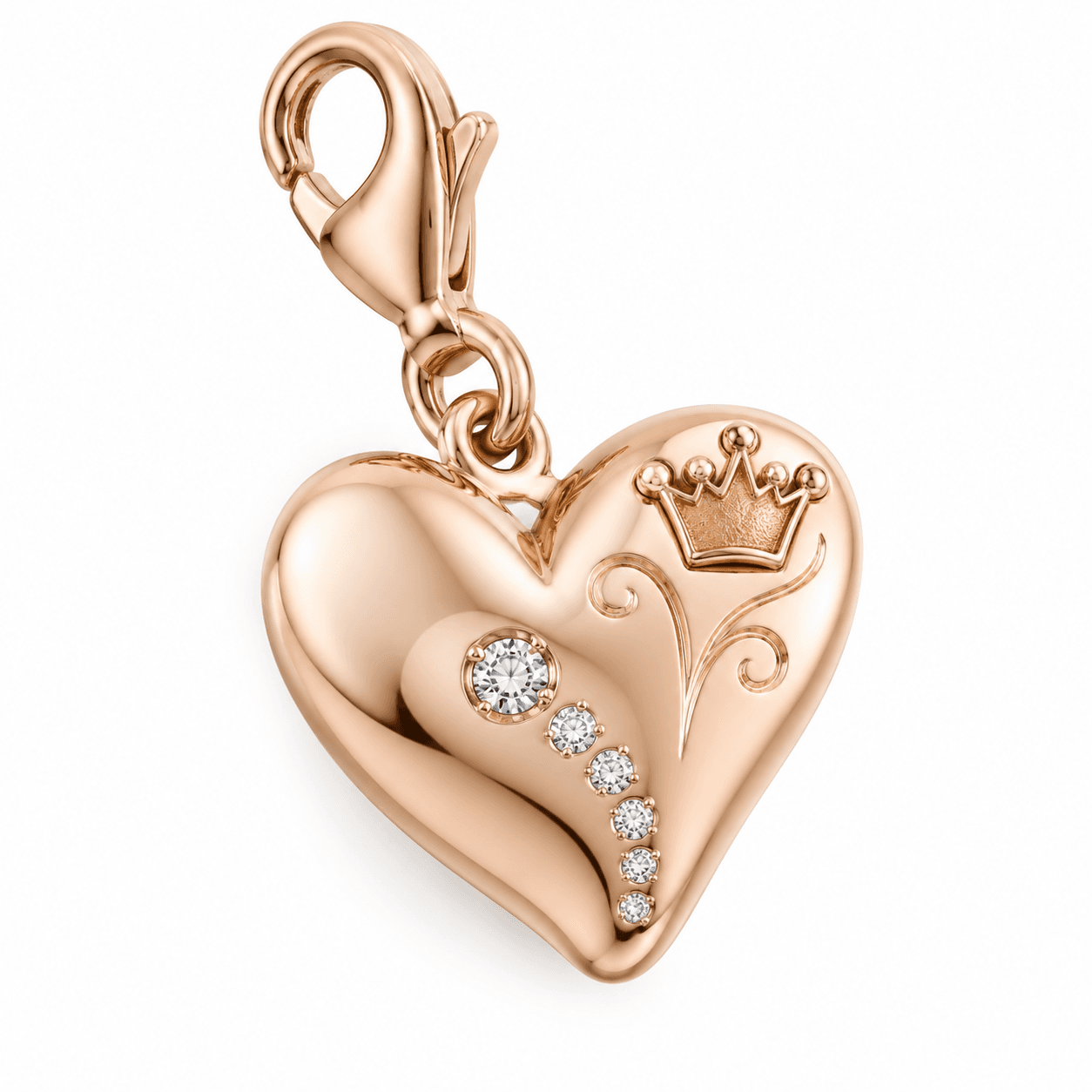
A gold heart charm necklace combines a recognizable romantic motif with the technical decisions that determine appearance, attachment, durability, and production consistency. For jewelry designers developing a commercial collection, understanding the material and finishing system behind each heart charm makes it easier to translate a concept into a manufacturable product. The key considerations include 316L stainless steel composition, surface preparation, PVD gold plating, dimensional tolerances, decorative details, and the geometry of the connecting ring or bail.
Lancy Jewelry focuses on 316L stainless steel charms for OEM and ODM development, supporting custom design, logo engraving, PVD finishes, enamel color filling, crystal inlay, sample development, and private-label packaging. A gold heart charm necklace concept can therefore be approached as a coordinated design specification rather than simply a color or shape selection. This guide explains the underlying material science, the choices designers need to make, and the quality checks that help prepare a design for repeatable production.
For boutique jewelry brands, charm bar retailers, and private-label buyers, a successful development process connects visual intent with practical manufacturing requirements. Whether the heart motif is minimal, textured, engraved, or decorated with enamel, early decisions about dimensions, surface finish, attachment geometry, and inspection criteria can reduce revision cycles and support consistent wholesale production.
Gold Heart Charm Necklace Design: Understanding the Material System
Start with the 316L stainless steel base
A gold heart charm necklace is a finished design system in which the base material, surface treatment, decorative features, and attachment hardware work together. Lancy uses 316L stainless steel as the base material for its charms. This grade is an austenitic stainless steel containing chromium, nickel, and molybdenum. Chromium contributes to the formation of a thin passive oxide film that helps resist corrosion, while molybdenum improves resistance to certain localized corrosion conditions. The actual performance of a finished charm still depends on its grade verification, manufacturing process, surface condition, and intended environment.
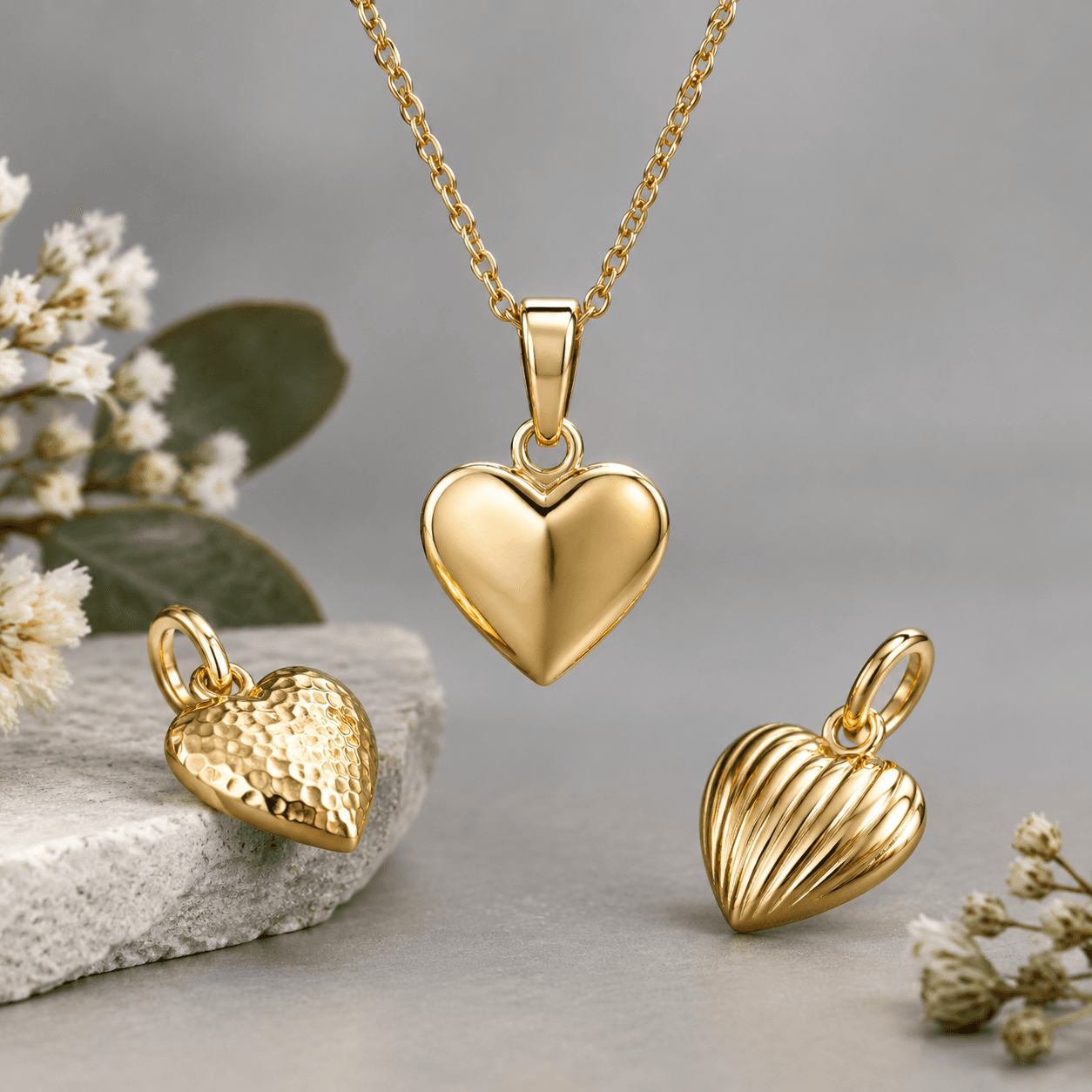
Material selection affects more than corrosion resistance. It influences the feel of the finished component, the achievable edge definition, the stability of small holes and loops, and the preparation required before decorative finishing. For a heart motif, a designer should consider whether the silhouette uses a flat profile, a gently domed face, a recessed center, or sculpted contours. Fine internal curves and narrow points can be difficult to finish uniformly if they are not considered during initial engineering.
Separate the base material from the surface finish
316L stainless steel describes the underlying material, whereas gold plated, silver finish, and rose gold plating describe the appearance of the finished surface. These are different specification categories and should not be treated as interchangeable. PVD, or physical vapor deposition, is a vacuum-based coating process in which material is deposited onto a prepared surface. The final color and performance depend on the coating system, pretreatment, process parameters, and quality controls. Designers should specify the intended finish and acceptance criteria instead of assuming that a color name alone defines a coating.
For technical development, the drawing and purchase specification should identify the base material as 316L stainless steel, the requested surface finish as PVD gold plating where applicable, the critical dimensions, and the inspection requirements. This creates a common reference for design, sampling, and production teams. Explore Lancy's OEM service to understand how custom designs can be developed into production-ready components.
How PVD Gold Plating Affects Color, Surface Quality, and Wear
Surface preparation comes before coating
For a gold heart charm necklace, the perceived quality of the gold finish depends heavily on the surface beneath it. Polishing and other approved surface-preparation steps influence reflectivity, edge definition, and the visibility of fine imperfections. A highly reflective finish makes scratches, uneven transitions, and surface contamination more noticeable than a softly brushed or textured finish. Designers should therefore decide early whether the heart needs a mirror-like face, a satin appearance, recessed detailing, or a combination of polished and matte areas.
PVD is used to deposit a thin functional or decorative coating under controlled vacuum conditions. Its performance is influenced by the substrate condition, pretreatment, coating composition, coating thickness, adhesion, and final handling. PVD gold plating can provide a durable decorative finish, but no coating should be described as immune to wear. Repeated friction, abrasive cleaning, sweat, cosmetics, moisture, and contact with other components may change the appearance over time. Performance should be evaluated against the intended use and an agreed test method.
Define measurable finish requirements
A useful specification records the desired color reference, gloss level, visible surface defects that are unacceptable, and any areas that must remain uncoated. For a two-tone heart, for example, the designer may request a polished gold-colored face with a contrasting recessed detail. The production team then needs to determine whether the geometry and finishing sequence can reproduce that effect reliably. A physical approved sample is often more useful than a verbal color description alone.
Quality planning should include visual inspection under consistent lighting, checks for coating defects, and relevant adhesion or corrosion testing where required. Salt Spray testing can help assess corrosion behavior under specified accelerated conditions, but it does not directly predict every real-world wear scenario. Test duration, acceptance criteria, sample preparation, and the applicable method must be agreed in advance. For repeat orders, retain the approved finish reference and document any changes in the coating process so that subsequent batches can be evaluated against the same standard.
Heart Shape Engineering, Dimensions, and Attachment Geometry
Design the silhouette for manufacturability
The heart silhouette looks simple, but small geometric changes can affect both appearance and production. A deep cleft at the top, a narrow lower point, thin outer edges, and tight internal radii each create different manufacturing considerations. A designer should establish the overall height and width, body thickness, edge profile, and the minimum material around any hole or loop. These dimensions help the factory assess whether the design will retain its shape and provide enough strength for its intended application.
For a small jewelry charm, a useful starting range is approximately 8–18 mm, with the final size determined by the intended use and visual proportions. A delicate bracelet charm may benefit from a compact profile, while a necklace focal charm may use a larger face or more pronounced relief. The size of the connecting hardware should be planned at the same time as the charm body. A visually attractive heart can become difficult to use if its hole is too small, its bail is too bulky, or the connector restricts movement.
Make every connection physically plausible
The attachment method should be clearly defined in the design drawing. A jump ring must pass through a real hole or closed loop, and a bail must provide adequate clearance for the intended connection. If the charm will be displayed on a chain, the designer should specify the required opening dimensions and the relevant chain-link or connector measurements. If it will be used in a charm bar or gift program, the attachment system should also support the expected handling and assembly process.
Prototype evaluation should check rotation, clearance, edge comfort, balance, and the tendency of the charm to turn away from its intended front-facing position. A sample should be handled in the actual proposed configuration rather than inspected only as a loose component. Record any changes to the hole position, ring diameter, body thickness, or surface finish before approving the sample. For coordinated product development, Lancy's 316L stainless steel clasps and 316L stainless steel jewelry chains provide relevant categories to review when planning attachment requirements.
Customization Options for a Gold Heart Charm Necklace
Translate the creative concept into a production specification
Customization is most efficient when the visual concept is separated into clearly defined production features. The heart outline, face relief, surface finish, logo placement, decorative color, and attachment point should each be described independently. This allows a design team to explore alternatives without changing every part of the specification. Lancy supports OEM and ODM development for 316L stainless steel charms, including logo engraving, PVD plating, enamel color filling, crystal inlay, and private-label packaging, subject to design feasibility and sample approval.
Logo engraving can add brand identification to the front or reverse of a heart charm. The available area, engraving depth, line width, and contrast against the selected finish determine legibility. Fine typography and intricate symbols should be evaluated at the actual production size, because details that look clear on a large screen may merge or become difficult to read on a small component. Designers should submit vector artwork where available and identify the preferred position, orientation, and minimum readable detail.
Use decorative features with a defined purpose
Enamel color filling can introduce a controlled accent or distinguish a seasonal variation. The designer should define the color reference, placement, recess geometry, and acceptable surface level. Crystal inlay can create a focal point, but the setting needs sufficient surrounding material and a practical retention structure. Neither decorative method should be treated as a substitute for sound structural design. The sample should be inspected for alignment, clean boundaries, secure setting, and consistency with the approved visual reference.
Color planning should also account for the relationship between the base surface, PVD gold plating, and decorative details. A collection may use a shared heart silhouette with different engraving, enamel, or crystal configurations, allowing a retailer to offer variety without introducing unnecessary changes to the core geometry. When multiple finishes are proposed, each should be approved separately because color appearance and surface behavior may vary across process settings. This approach supports coherent collection development while preserving practical control over sample revisions and production specifications.
Sample Development, Quality Verification, and Certification Interpretation
Build a documented route from concept to approval
Sample development is the stage where design intent is tested against real manufacturing conditions. A useful RFQ package includes a drawing or reference image, target dimensions, required 316L stainless steel base material, requested PVD gold plating or other approved finish, decorative details, attachment requirements, estimated order quantity, packaging needs, and target delivery schedule. Buyers should also state which dimensions are critical and which visual characteristics are essential to the design. This helps the factory identify technical questions before the sample is prepared.
When the first sample is available, inspect the overall silhouette, thickness, edge quality, hole placement, connector movement, surface color, and any engraved, enamel-filled, or crystal-set features. Use a documented checklist and record deviations with measurements or annotated photographs. If a change is needed, identify the specific feature and the desired correction instead of requesting a general improvement. Once the sample meets the agreed requirements, preserve an approved reference and ensure that production documentation reflects the final version.
Interpret testing evidence in context
SGS is an independent testing and inspection organization that may be engaged for relevant product or material assessments. Depending on the market and product requirements, buyers may request evidence relating to RoHS, REACH, EN1811, or Salt Spray testing. These references do not all measure the same property. RoHS addresses restrictions on specified hazardous substances within its applicable scope; REACH covers chemical safety obligations and restrictions under the relevant European framework; EN 1811 is a test method associated with nickel release from certain products intended for direct and prolonged contact with the skin; and Salt Spray testing evaluates corrosion behavior under defined laboratory conditions.
Do not assume that one test report certifies every product, finish, batch, or market requirement. Verify the report issuer, sample identity, tested configuration, method, date, results, and stated scope. A report for an uncoated component may not establish the performance of a finished PVD gold-plated charm. Likewise, the relevance of a nickel-release assessment depends on the product's intended skin-contact configuration and applicable requirements. Ask the supplier which evidence is available and whether additional testing is needed for the exact design. For commercial sourcing, written acceptance criteria and traceable sample approval are essential complements to laboratory documentation.
MOQ Planning, Wholesale Production, and Private-Label Readiness
Plan the collection around shared specifications
Commercial planning for a gold heart charm necklace should consider more than the unit price. Minimum order quantity, tooling or setup requirements, decorative complexity, finish selection, packaging configuration, inspection level, and order timing can all affect the economics of a project. Lancy supports low MOQ discussions and custom sample development, with final feasibility and quantities confirmed against the specific design. Buyers should request a clear quotation that distinguishes sample charges, production pricing, any setup costs, packaging, testing, and shipping assumptions where applicable.
For a boutique range, a practical approach is to establish one core heart design and then assess which variations can share its underlying dimensions. Finish or decorative variations may create a wider assortment, but each variation can introduce additional sampling, quality-control, and inventory considerations. Consolidating compatible requirements may simplify purchasing, while excessive variation can increase the risk of inconsistent specifications and slow-moving stock. Buyers should confirm how the MOQ applies to each design, finish, and order configuration rather than assuming a single quantity covers every variation.
Prepare packaging and production controls early
Private-label readiness includes the charm itself, its presentation, identification, and final packing requirements. Packaging artwork should be reviewed for print dimensions, logo placement, product protection, and consistency with the brand's intended retail presentation. If packaging cards or display trays are required, specify their dimensions, materials, finish, and quantities separately. Confirm whether packaging is included in the quotation and how it will be packed for transit. Clear approval procedures help avoid last-minute changes after the production schedule has been established.
Wholesale stainless steel charms production benefits from a controlled specification, an approved reference sample, and a written inspection plan. Agree on the sampling approach, defect categories, measurement tolerances, finish acceptance criteria, and any required test documentation before bulk production begins. At incoming inspection, buyers can compare representative units against the approved reference and review order records for traceability. To discuss commercial requirements, browse the Lancy product catalog, review the OEM and ODM service, or contact the team through the contact page.
Gold Heart Charm Necklace: Technical Questions Answered
Build a Consistent Gold Heart Charm Collection
Connect design consistency with retail flexibility
A well-planned collection uses recognizable design features while allowing meaningful variation. A heart charm can serve as a core shape across a romantic gifting range, a personalized jewelry assortment, or a curated charm bar selection. Shared dimensions and attachment requirements can simplify collection planning, while controlled changes to the surface finish, engraving, enamel color, or crystal placement create distinct options. The objective is not to make every product identical in appearance, but to establish a repeatable production framework that keeps the assortment coherent.
Start by identifying the design elements that must remain consistent: the heart outline, body thickness, connector position, overall proportions, and quality requirements. Then identify the variables that may change, such as PVD gold plating, silver finish, rose gold plating, engraving, or approved decorative details. Create a separate specification for each variation and ensure the sample review includes the differences that matter to customers. A finish approved on one geometry should not automatically be assumed to perform identically on a substantially different shape or surface profile.
Use a controlled design review cycle
For each new version, maintain the drawing revision, approved sample reference, finish designation, inspection criteria, and packaging requirements. When feedback is received from a buyer or product development team, translate it into measurable revisions where possible. For example, a request for a cleaner edge can be clarified by identifying the affected contour and acceptable finish; a request for a more readable logo can specify its location and minimum legible detail. This makes communication more efficient across design, engineering, sampling, and production teams.
Designers can explore related motifs within Lancy's heart collection, alongside complementary options such as the alphabet series for initial-based personalization and the special symbols collection for additional decorative themes. These links provide starting points for assortment planning, while the final product configuration should be confirmed through sample review. A disciplined development process helps turn an individual gold heart charm necklace concept into a coordinated range that is easier to specify, inspect, replenish, and present under a private label.
Common Development Mistakes and How to Prevent Them
Resolve technical questions before bulk production
One frequent mistake is specifying only a color and motif without defining the actual product geometry. A gold heart charm necklace concept still needs dimensions, thickness, attachment details, finish requirements, and decorative specifications. Without these, the supplier may interpret the brief differently from the designer, increasing the risk of repeated revisions. A dimensioned drawing, clear visual references, and a written requirement list create a stronger starting point than a color name or inspiration image alone.
A second mistake is treating the first sample as a general visual preview rather than a production reference. The sample should be evaluated for physical details, including whether the connector passes through the intended hole, whether the heart hangs correctly, and whether the coating and decorative details meet the specification. If the design changes after approval, the revised sample or affected characteristics should be reviewed again. Written records help distinguish approved changes from production deviations and support consistent repeat orders.
Keep testing and commercial assumptions explicit
Another risk is assuming that a single laboratory report proves every quality attribute or covers every finished variation. Material composition, nickel release, restricted-substance compliance, and corrosion behavior are different questions and may require different methods or evidence. Confirm which tests are relevant to the intended market, the exact product configuration, and the buyer's compliance program. Likewise, avoid assuming that a quotation includes every sample, finish, packaging, inspection, and freight cost. Request a clear cost breakdown and confirm the applicable MOQ and delivery assumptions in writing.
Finally, do not postpone packaging and inspection planning until the production run is complete. Retail presentation, logo placement, product identification, and protection during transit can affect the buyer's final acceptance. Define packaging quantities and artwork approvals before the order is released, and agree on the inspection process for dimensions, surface finish, attachment quality, and decorative details. By managing technical, compliance, and commercial questions together, jewelry designers can reduce uncertainty and establish a more reliable process for custom stainless steel charms development.
Start Your Gold Heart Charm Development With Lancy Jewelry
Turn your design concept into a production-ready specification
If you are developing a gold heart charm necklace for a boutique collection, charm bar, gifting program, or private-label range, prepare a concise RFQ so the Lancy Jewelry team can assess the design and its manufacturing requirements. Include your drawing or reference images, target dimensions, 316L stainless steel base-material requirement, preferred PVD gold plating or other approved finish, logo artwork, enamel or crystal details, and attachment geometry. Indicate the target quantity, expected MOQ, packaging requirements, intended sales market, requested compliance evidence, and preferred sample and delivery timeline.
For sample development, identify the features that require the closest attention, such as heart proportions, coating color, engraving legibility, connector clearance, or decorative placement. If you have a physical reference sample, describe the measurable characteristics you need to preserve without assuming that an image alone communicates the full specification. The team can review feasibility, clarify missing information, and discuss available OEM or ODM options, sample arrangements, quality checks, and private-label packaging.
Explore the product catalog for design directions, review OEM and ODM manufacturing services for customization support, or contact Lancy through the sales contact page to discuss your project. For a formal inquiry, use the RFQ and inquiry route. A clearly documented brief helps establish realistic expectations for sampling, quotation, inspection, and bulk production before your collection moves forward.
Related resources
Related resources
- 316L Stainless Steel Custom Enamel Sterling Charms: A Buyer’s Guide
- Gold-Tone Finish ODM Stamped 316L Steel Angel Charm: Buyer Guide
- Custom Stainless Steel Charm Bracelet Tutorial: A Buyer’s Guide to Quality
- Stainless Steel Animal Jewelry Charms Wholesale: Quality Guide
- Antique Distressed Finish on Stainless Steel Charms: A Buyer’s Guide to Durability
- Stainless Steel Custom Enamel Pins With Charms: Sourcing Guide
- 316L Steel Guide to Custom Enamel Charms Manufacturing for Buyers
- How to Evaluate 316L Stainless Steel Zodiac Bracelet Charms Wholesale Suppliers
- The Ultimate ODM stamped 316L stainless steel angel charm customization Buying Guide
- How to Source Minimalist Stainless Steel Charms: Finishing Guide