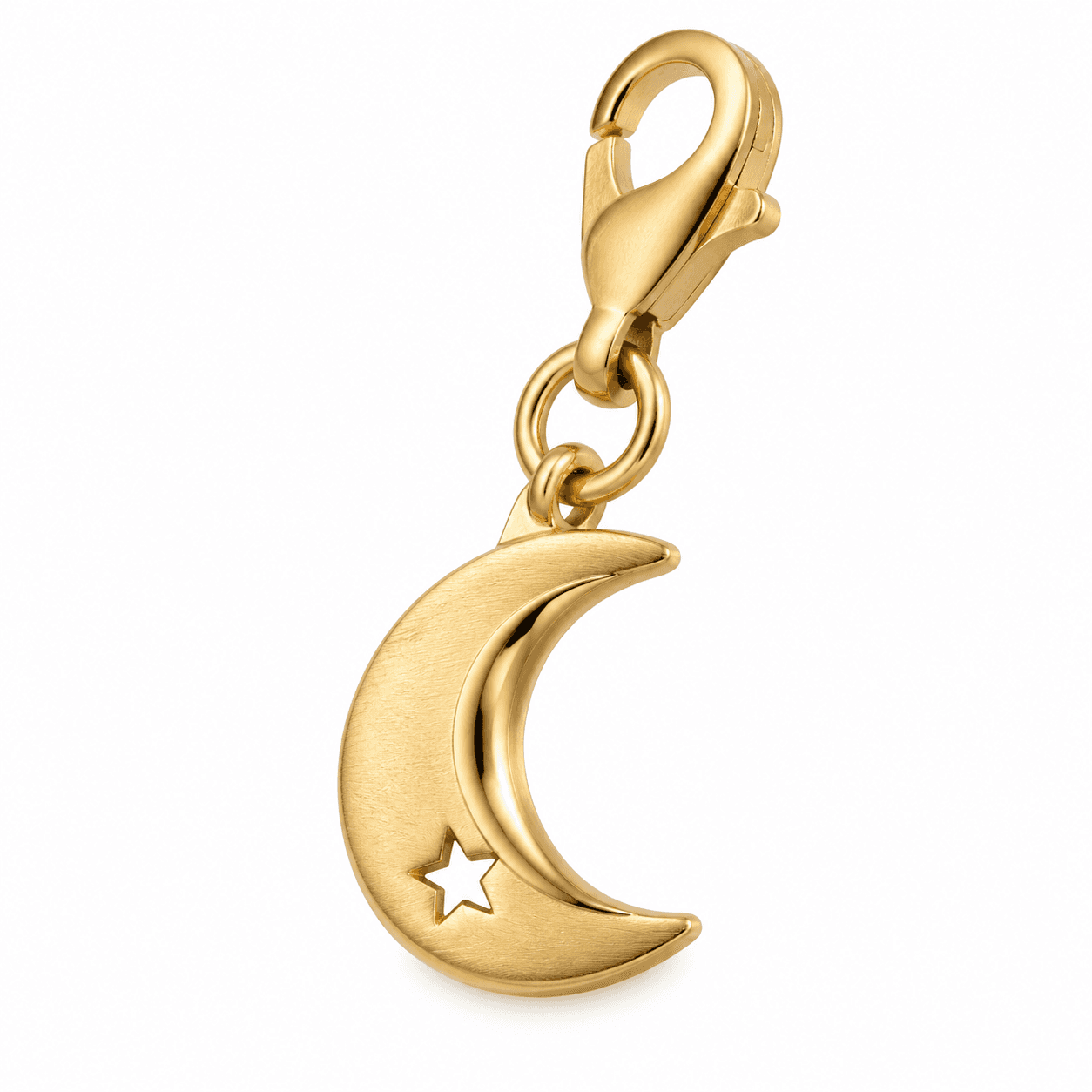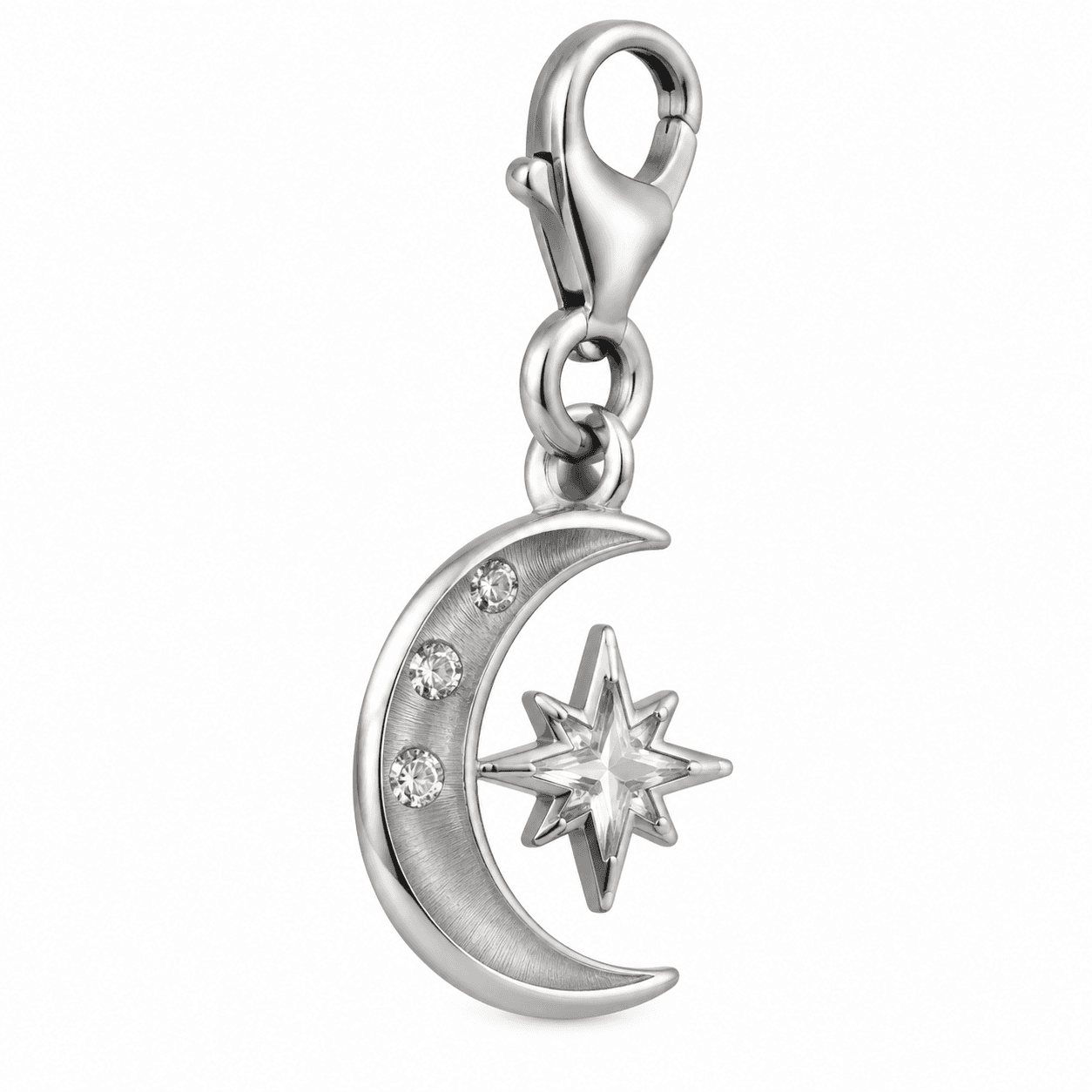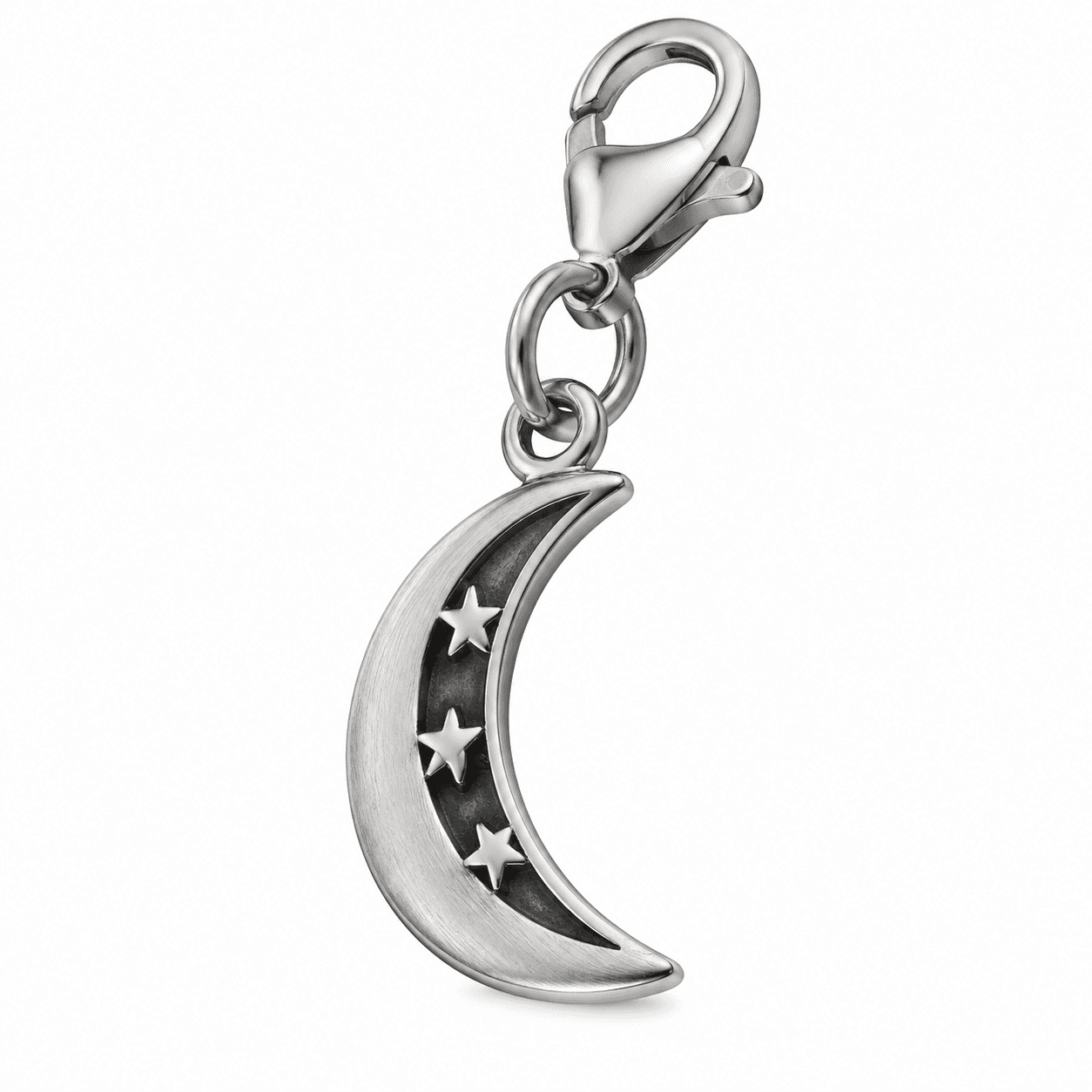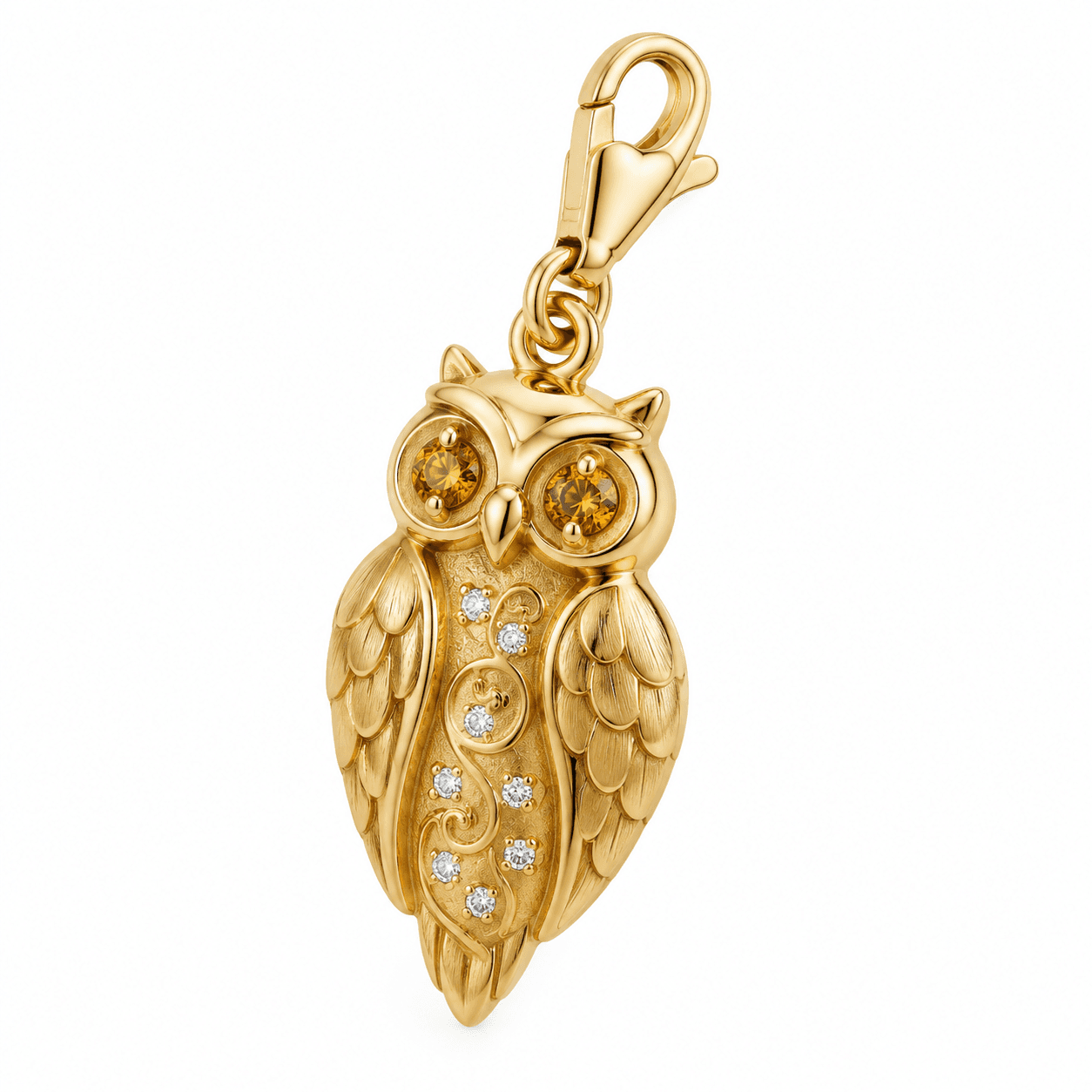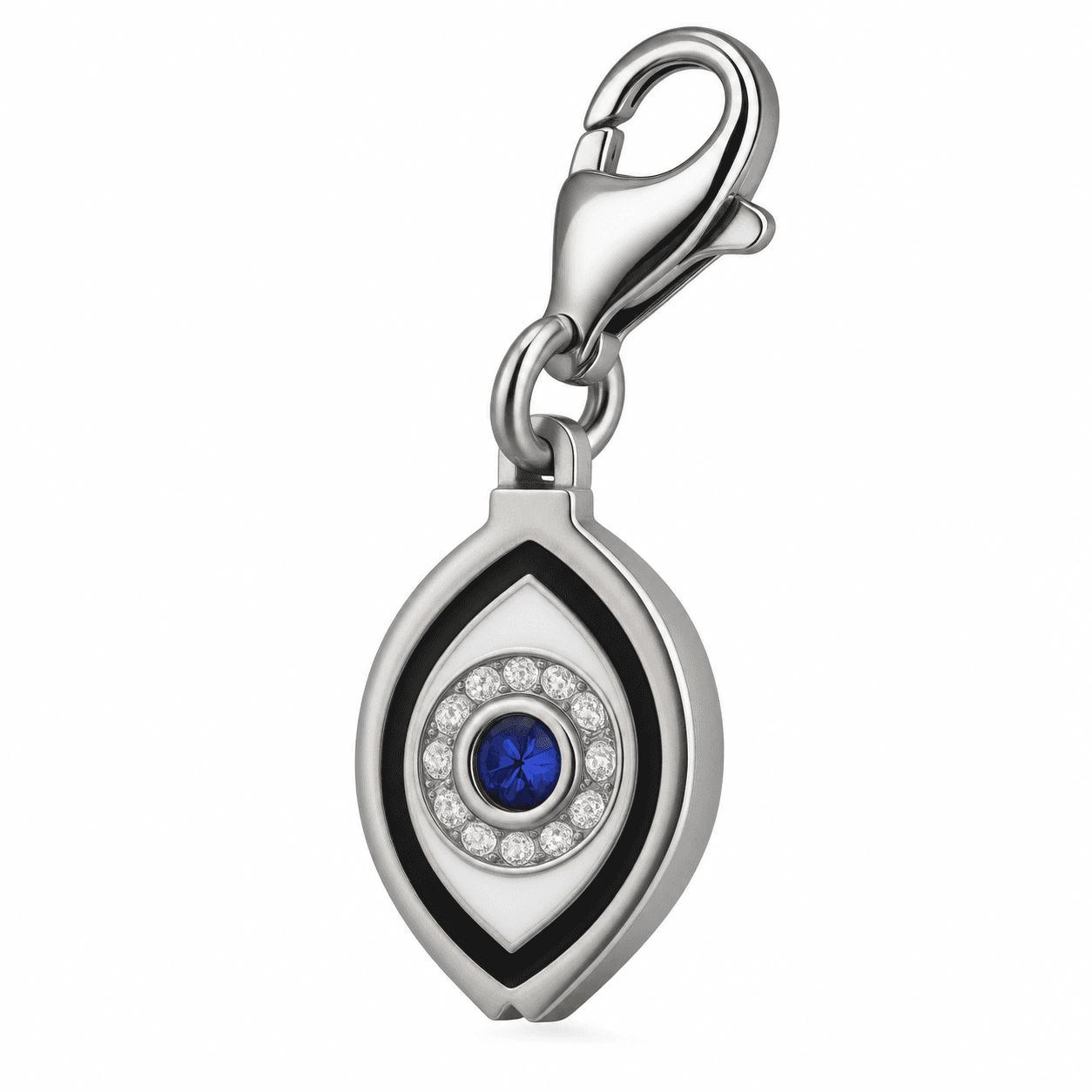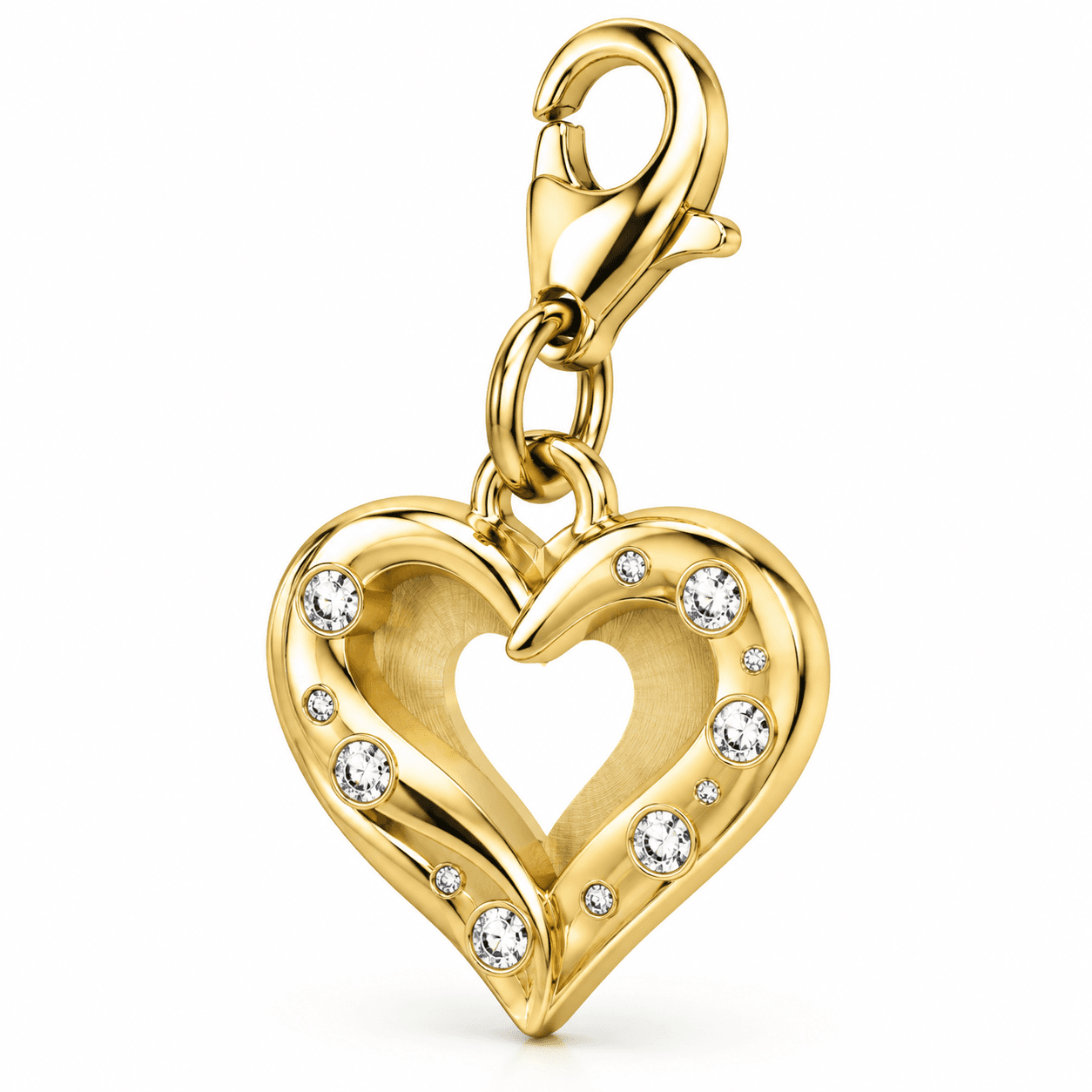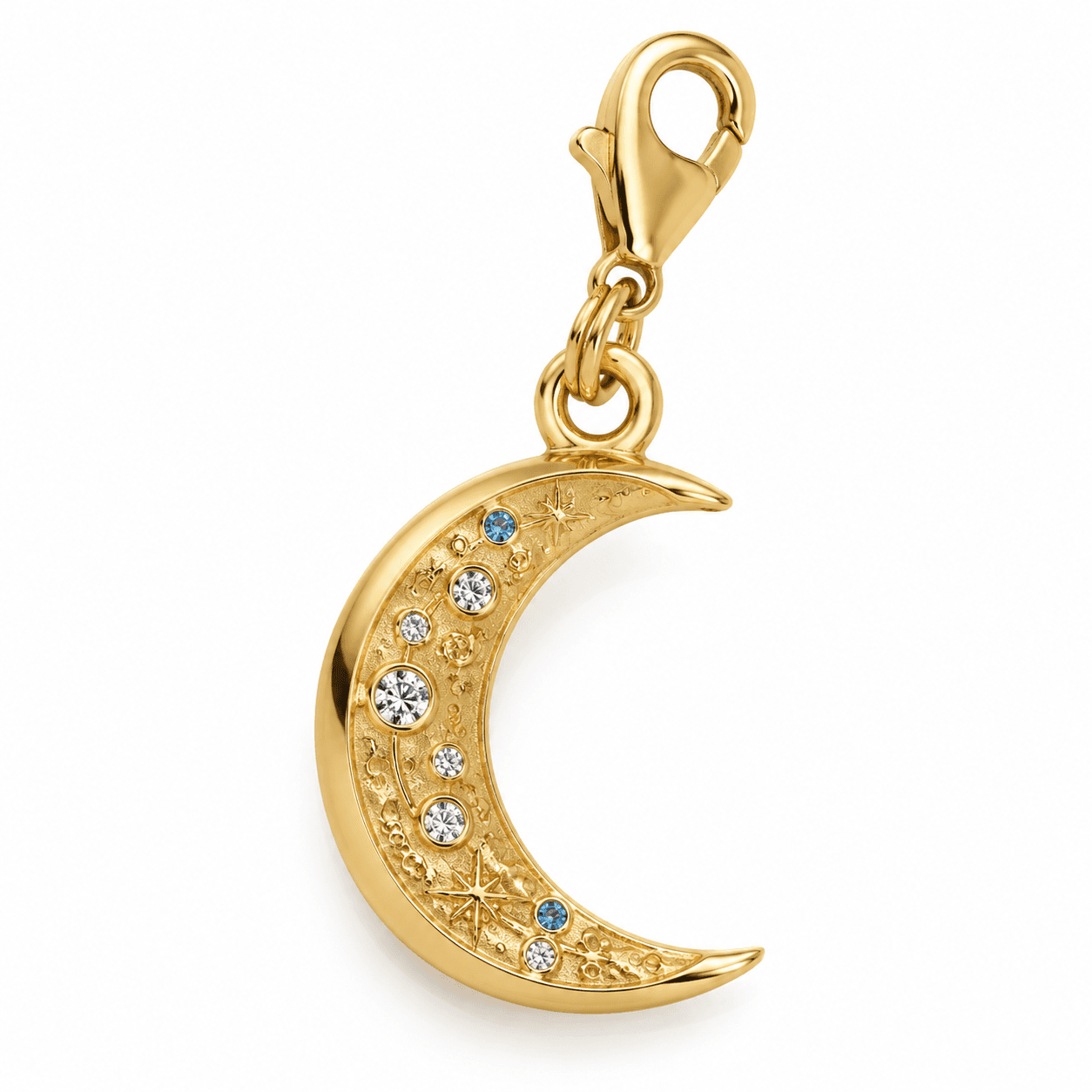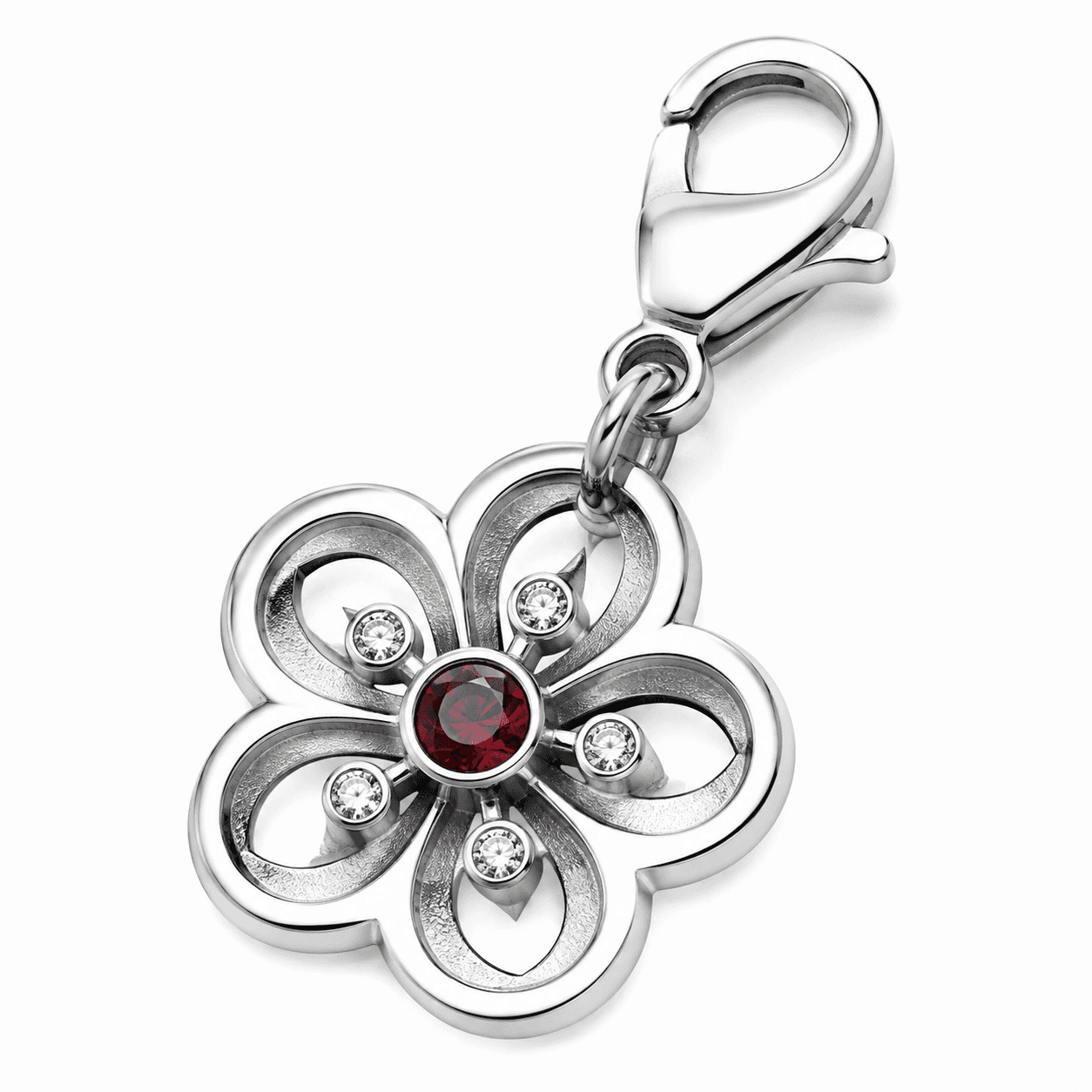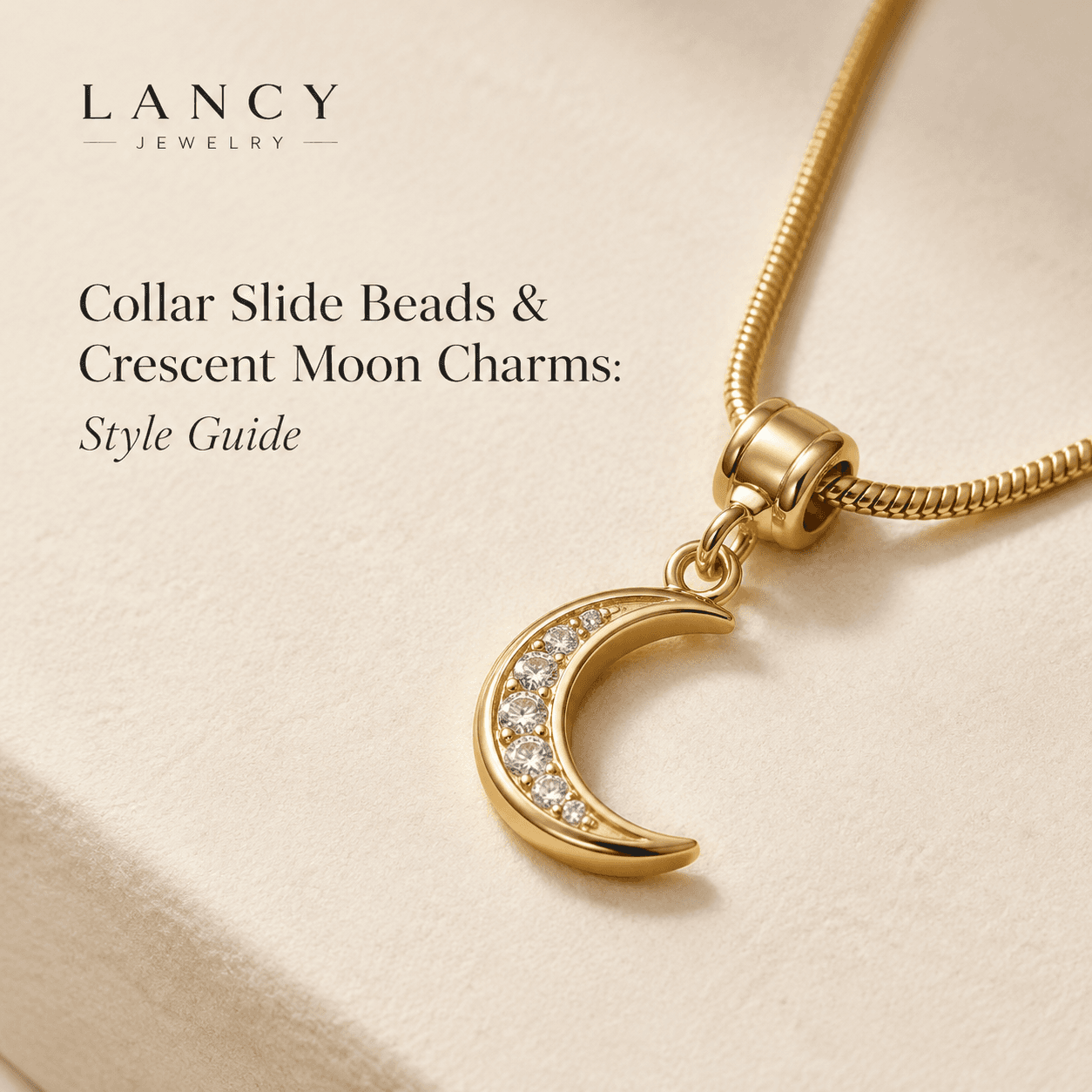
Designers exploring collar slide beads charms crescent moon concepts can use crescent silhouettes as a strong visual anchor for coordinated jewelry programs. The most useful approach is to treat the crescent moon charm as the focal element while planning proportion, surface finish, color accents, attachment geometry, and the surrounding collar-slide layout as one system.
For B2B development, 316L stainless steel provides a consistent base for prototyping and repeat production. Lancy Jewelry supports OEM and ODM development, PVD finishing, enamel color filling, crystal inlay, logo engraving, sample development, and private-label packaging, allowing designers to move from a visual concept to a production-ready charm specification.
How to Style Crescent Moon Charms in Collar Slide Designs
When planning collar slide beads charms crescent moon designs, begin with the crescent silhouette rather than the surrounding accessories. A slim crescent creates a lighter, more refined visual rhythm, while a wider crescent gives the design greater presence. For most commercial charm programs, keeping the main charm within an appropriate small-to-medium scale helps preserve detail without making the charm visually oversized. The bail or jump ring should be designed as part of the silhouette, with the opening positioned so the attachment point remains mechanically clear and visually balanced.
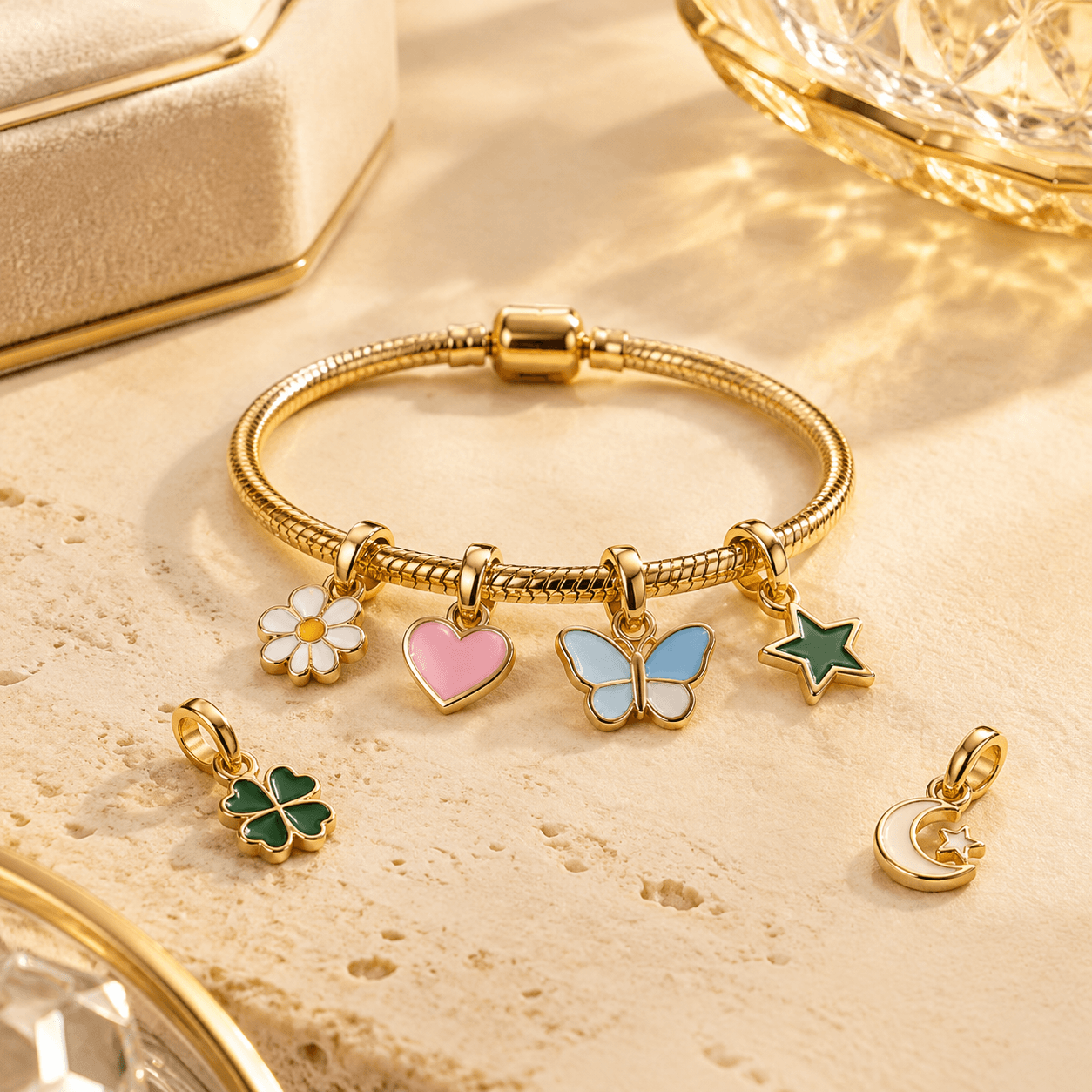
Next, establish a simple hierarchy between the crescent, any moon-and-star details, and the collar-slide layout. A polished silver finish can emphasize sculpted contours, while gold plated or rose gold plating can create a warmer visual direction. PVD finishing is particularly useful when a collection needs a repeatable surface appearance across multiple charm designs. Enamel can be placed selectively in recessed areas, while crystal inlay can provide a controlled highlight without overwhelming the crescent shape.
For designers preparing an OEM charms manufacturer brief, specify the charm dimensions, front relief depth, hole or loop location, desired finish, color areas, and acceptable surface tolerances. This information makes sample development more efficient and helps the factory evaluate whether the intended visual effect can be reproduced consistently at production scale.
Material and Finish Choices for 316L Stainless Steel Crescent Charms
316L stainless steel charms are well suited to B2B charm programs where designers need a stable base material and repeatable finishing. From a material-science perspective, 316L stainless steel is an austenitic stainless steel containing chromium, nickel, and molybdenum. Its corrosion resistance and durability make it practical for small decorative components that may experience handling, storage, packaging, and repeated use. The material also provides a consistent foundation for polishing, PVD finishing, engraving, enamel application, and crystal setting.
Finish selection should follow the geometry of the crescent. Polished areas can highlight curved edges and raised details, while a controlled PVD surface can establish a consistent gold plated or rose gold plating appearance across a series. Enamel is useful when the design requires a defined color field, especially inside recessed moon, star, or symbolic details. Crystal inlay can be positioned as a focal accent, but the setting geometry should leave enough surrounding material for secure retention and practical inspection during production.
Quality documentation should also be considered during development. Lancy can work with buyer requirements involving SGS-related documentation and testing references such as RoHS, REACH, EN1811, and Salt Spray. Buyers should confirm which reports or test records are required for their destination market and product program, because certification or test scope can vary by specification, finish, and order requirements. This approach connects visual design decisions with measurable sourcing requirements instead of treating compliance as an afterthought.
From Visual Concept to Production-Ready Charm Specification
A strong prototype begins with a complete design brief. For collar slide beads charms crescent moon concepts, provide the intended overall dimensions, artwork or vector file, front-face details, hole or loop dimensions, target finish, enamel colors, crystal placement if applicable, and the intended use context. If the charm will be displayed alongside other decorative components, also provide their approximate proportions so the crescent does not become visually dominant or too small after manufacturing tolerances are applied.
During prototyping, review the physical sample for more than appearance. Check the complete outer silhouette, edge definition, attachment mechanism, surface uniformity, engraving depth, enamel fill, crystal positioning, and the relationship between the charm and the collar-slide layout. A mechanically plausible jump ring or bail should pass through a real hole or loop and remain fully closed where applicable. This is especially important for wholesale stainless steel charms because production consistency depends on translating the approved sample into repeatable tooling and finishing processes.
Lancy's factory workflow can support sample development before bulk production, allowing designers and sourcing teams to confirm visual details before committing to larger quantities. For programs with multiple crescent variations, an organized sample set can compare finishes, enamel colors, surface textures, and proportions while keeping the underlying 316L stainless steel specification consistent. This makes it easier to build a coordinated private-label series rather than evaluating every charm as an isolated product.
Building a Boutique-Ready Crescent Moon Charm Series
A successful charm series usually works because its designs share a recognizable construction language. For a crescent moon theme, that language can come from consistent charm thickness, repeatable attachment dimensions, controlled finish selection, and a limited set of accent techniques. One design might use a clean crescent silhouette, another could combine the moon with small stars, and another could use enamel or crystal inlay for a more decorative treatment. Keeping these variations within a defined technical framework helps buyers create a collection that feels coordinated while still offering visual variety.
For a private label charms program, packaging and merchandising should be considered alongside the product specification. A packaging card can communicate the intended styling direction, while a display tray can help buyers evaluate scale and finish during sampling. Lancy supports private-label packaging as part of its OEM/ODM capabilities, so sourcing teams can align charm specifications, presentation requirements, and production quantities in one development process. Low MOQ support can also be useful when a new series needs market testing before larger bulk orders.
When planning the commercial assortment, group designs by clear customer use cases and visual roles rather than simply increasing the number of SKUs. A focused crescent moon group can include several sizes, finishes, and accent treatments while maintaining the same 316L stainless steel base. Buyers can review the full catalog through All Products, explore custom manufacturing through OEM Service, and prepare an RFQ when the specifications are ready. This creates a practical path from inspiration and prototyping to repeatable B2B production.
Frequently Asked Questions About Crescent Moon Charm Development
Start Your Crescent Moon Charm Development
Turn your collar slide beads charms crescent moon concept into a production-ready specification with Lancy Jewelry. For an RFQ or sample request, send your artwork or reference drawing, target charm size, 316L stainless steel requirement, preferred PVD or other finish, enamel or crystal details, logo engraving requirements, estimated quantity, packaging needs, and destination market. If you are planning a multi-SKU program, indicate which designs should be sampled first and whether you need low MOQ support.
For custom manufacturing, visit OEM Service at /oem to review the development route, browse All Products at /products for additional design references, or use Request a Quote at /cart to begin an RFQ. Providing complete technical information at the start helps the factory assess sample development, finishing, quality requirements, and bulk order planning more efficiently.
Related resources
Related resources
- Custom OEM/ODM Guide to Stainless Steel African Jewelry Charms Wholesale
- Stainless Steel Animal Jewelry Charms Wholesale: Quality Guide
- Guide: stainless steel flute charms for jewelry making wholesale
- Custom Stainless Steel Charm Bracelet Tutorial: A Buyer’s Guide to Quality
- How to Source Minimalist Stainless Steel Charms: Finishing Guide
- stainless steel jane austen charms jewelry wholesale Quality Guide
- How to Choose Stainless Steel Enamel Cat Charms Wholesale Suppliers
- How to Choose Stainless Steel Enamel Charms Wholesale UK Suppliers
- Stainless Steel Small Enamel Charms Bulk: A Finishing Guide
- Guide to Stainless Steel Lucky Charm Inspirational Jewelry Wholesale