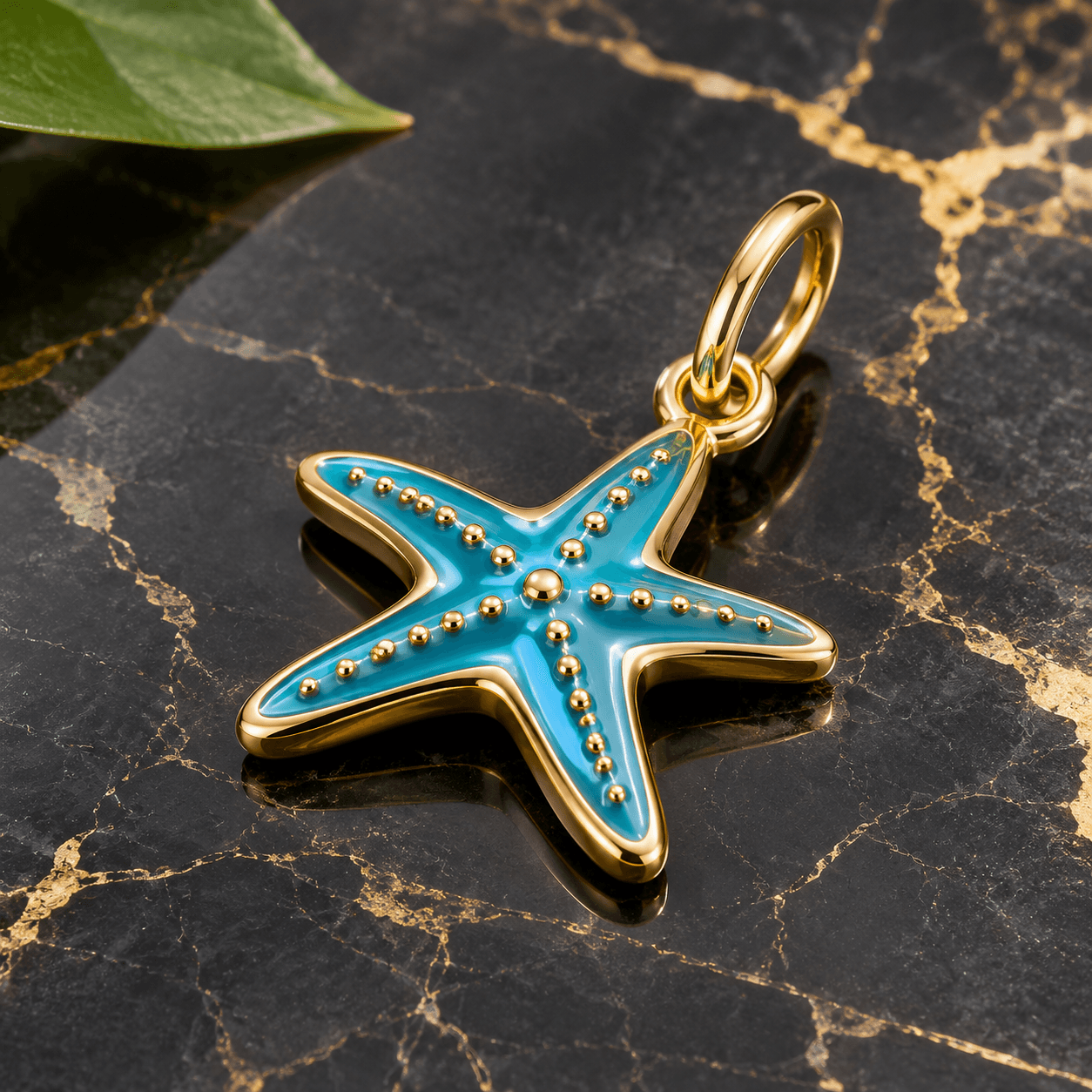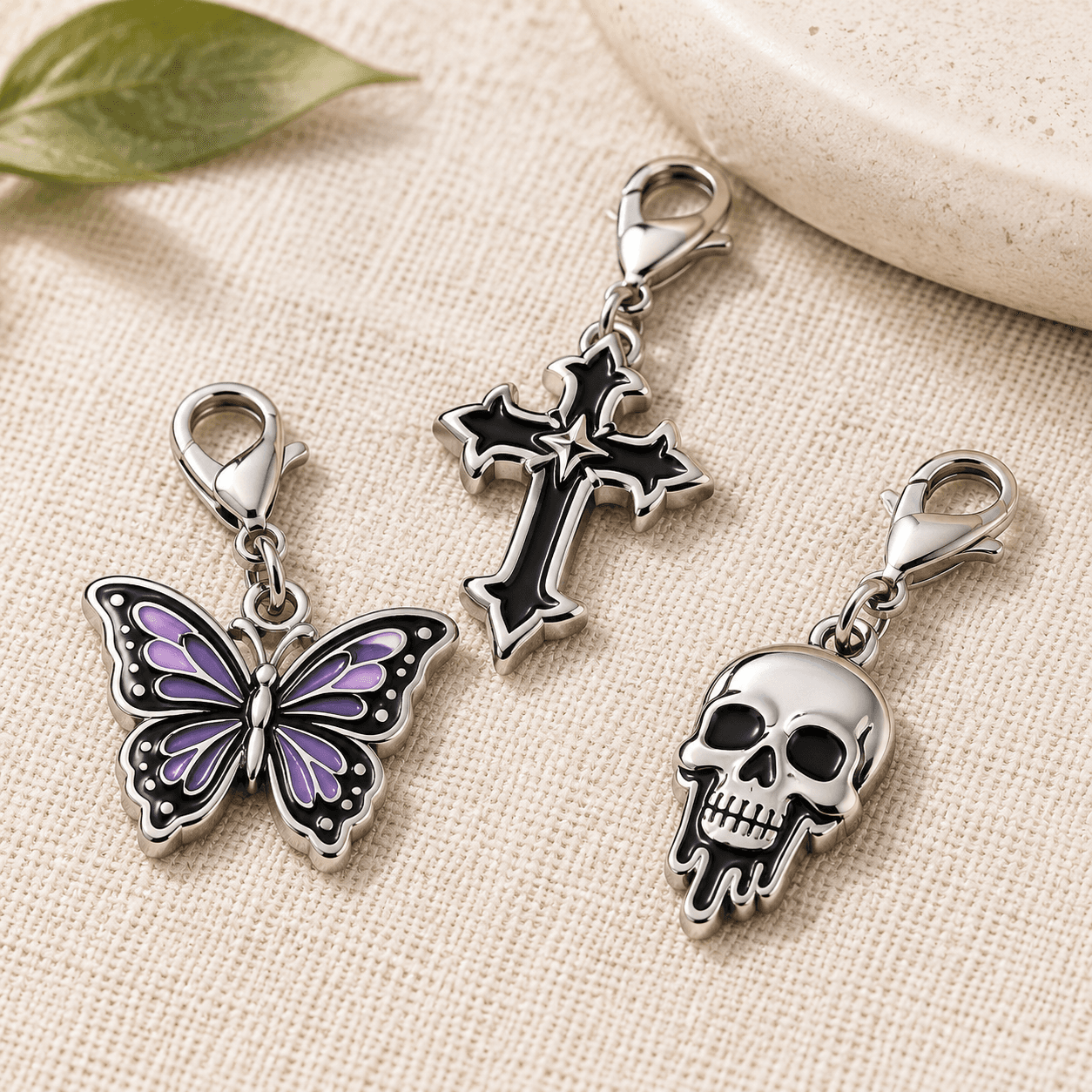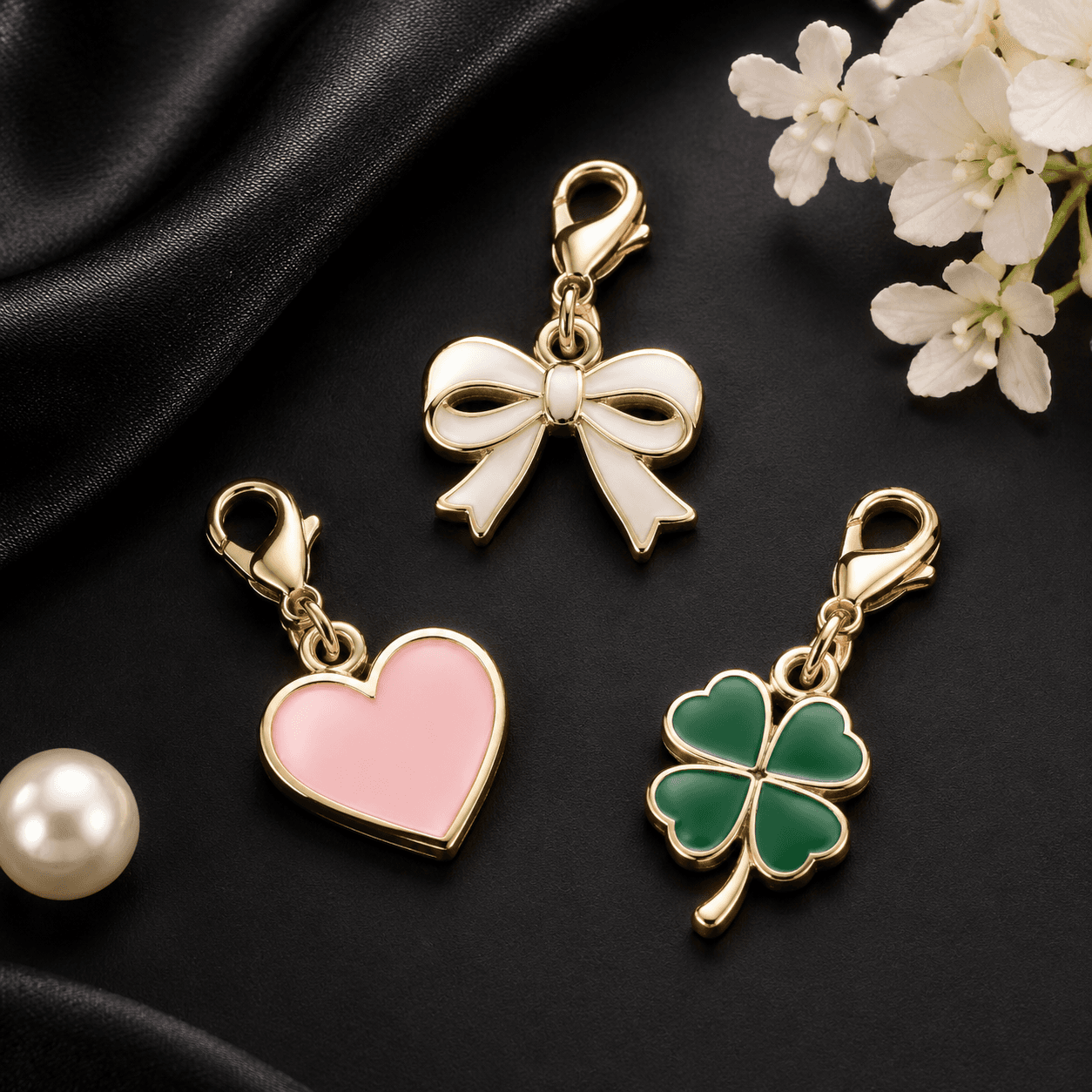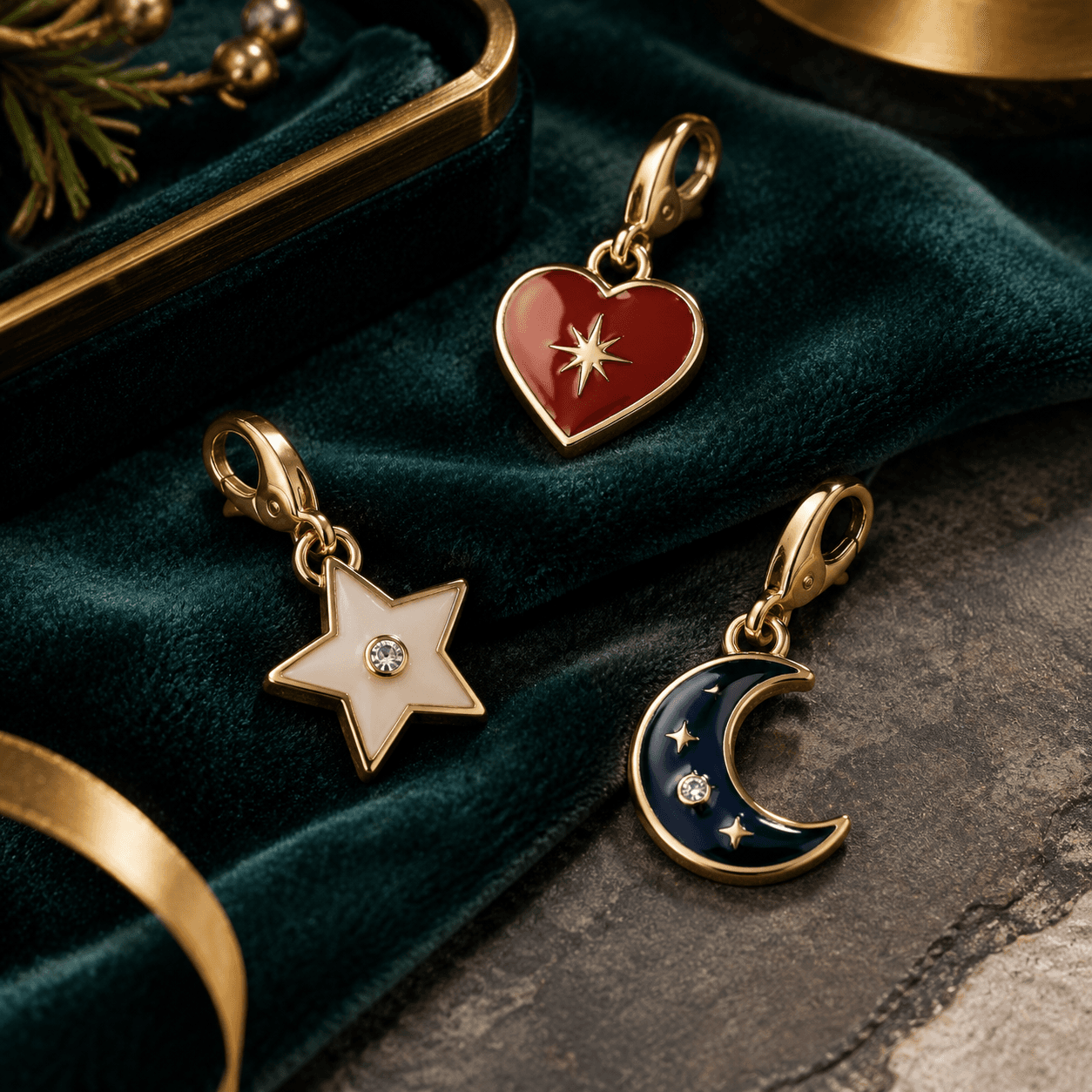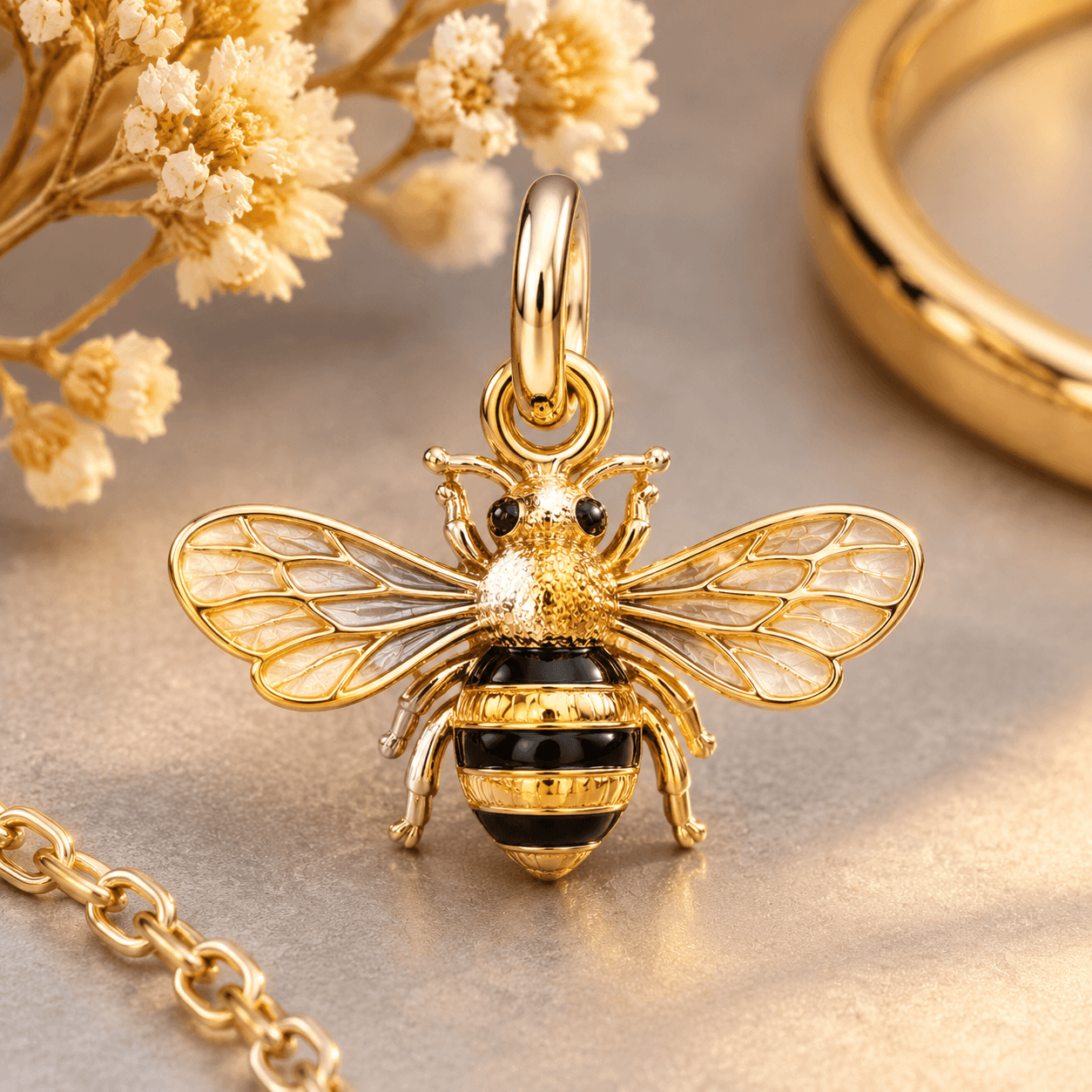
A bumble bee charm combines recognizable natural symbolism with intricate decorative details, making it an interesting design project for jewelry designers, boutique collections, and private-label accessory programs. From the shape of the wings and body to the definition of the antennae, surface texture, and color placement, every design decision influences the finished charm's appearance and manufacturing requirements.
For professional production, material selection is the starting point. Lancy Jewelry focuses exclusively on 316L stainless steel charms, offering OEM and ODM development with PVD gold plating, silver finish, rose gold plating, enamel color filling, crystal inlay, and custom logo engraving. Understanding how these processes work helps designers translate a creative bumble bee concept into a technically practical product.
This guide explores the material science, surface treatments, decorative possibilities, prototyping considerations, and quality verification involved in developing a custom bumble bee charm. It is intended for jewelry designers and sourcing professionals evaluating a stainless steel charms manufacturer for wholesale collections, boutique launches, and private-label projects.
Understanding 316L Stainless Steel for Bumble Bee Charm Design
Why material selection matters
A successful bumble bee charm starts with a material that supports the intended geometry, surface finish, and everyday handling requirements. 316L stainless steel is an established engineering-grade stainless steel containing chromium, nickel, and molybdenum. Its composition contributes to corrosion resistance and makes it suitable for detailed jewelry components that require consistent surface quality. The low-carbon designation helps reduce the risk of sensitization during certain welding-related processes, although the finished product still requires appropriate manufacturing and inspection controls.
Chromium contributes to the formation of a thin, protective passive oxide layer on the metal surface. This layer helps resist corrosion under normal conditions. Molybdenum further improves resistance to certain corrosive environments. These properties make 316L stainless steel a practical base material for bumble bee charms intended for jewelry, gift accessories, and decorative collections. However, material grade alone does not guarantee performance: polishing, finishing, cleaning, and storage also influence the final result.
How material properties affect design
Designers should consider the relationship between charm dimensions, metal thickness, relief depth, and attachment geometry. A bumble bee silhouette with raised wings, a defined abdomen, and small antenna details requires sufficient structural support. Excessively thin features may become vulnerable to deformation, while overly deep recessed areas can complicate polishing and finishing. A balanced design preserves the recognizable insect silhouette without creating fragile projections or inaccessible finishing areas.
- Corrosion resistance: Helps maintain the underlying stainless steel surface under appropriate use and care conditions.
- Structural stability: Supports compact decorative forms and carefully designed raised details.
- Surface consistency: Provides a suitable foundation for polished, brushed, and plated appearances.
- Manufacturing repeatability: Supports standardized production when material specifications and process controls are maintained.
For custom stainless steel charms, designers should specify the intended application, target dimensions, preferred finish, and decorative details before prototype development. Lancy Jewelry can review these requirements through its OEM manufacturing service, helping establish a practical specification for the proposed bumble bee charm.
Bumble Bee Charm Construction: Shape, Relief, and Mechanical Details
Translating an insect illustration into a manufacturable charm
A bumble bee design typically contains several recognizable visual elements: a central body, segmented abdomen, two or four visible wing outlines depending on the illustration, antennae, and optional facial or surface details. The first development step is to simplify the artwork into a manufacturing-ready silhouette. Designers should distinguish the primary outline from secondary decorative features and determine which elements require raised relief, recessed engraving, or enamel color filling.
Planning the main design geometry
The body and wings should remain visually balanced at the selected charm size. For a medium decorative charm, a proposed size of approximately 10–16 mm can provide a useful starting point, subject to the complexity of the artwork. The wings can use smooth raised contours or recessed outlines to create separation from the body. The abdomen may feature alternating color zones, engraved segment lines, or a combination of polished metal and enamel. Antennae and leg details should be simplified where necessary to preserve durability and maintain clean production edges.
Relief depth should be designed with finishing access in mind. Deep recesses can create attractive shadow effects but may retain polishing residue or make uniform color application more difficult. Rounded transitions generally help improve finishing consistency. Sharp decorative points should be assessed for comfort, handling, and possible snagging when the charm is used on jewelry or gift accessories.
Attachment engineering
The bail or jump ring is an essential functional component rather than an afterthought. A bumble bee charm intended for a necklace, bracelet, or charm bar should include a clearly specified attachment opening. Its dimensions must accommodate the intended connector while preserving the charm's visual proportions. The attachment loop should be structurally integrated into the design, and any jump ring shown in a prototype should pass through a real hole or loop with adequate clearance.
- Confirm the overall silhouette and attachment position before detailed tooling.
- Specify body thickness and relief depth to avoid weak decorative sections.
- Maintain sufficient clearance around the attachment hole.
- Review rounded edges and recessed areas for finishing accessibility.
- Check the finished charm from front, rear, and side views.
These engineering checks help reduce revisions during sample development and provide a more reliable foundation for bulk charm orders. A well-documented technical drawing is particularly useful when a boutique collection includes several coordinated bee designs in different sizes or finishes.
PVD Gold Plating and Surface Finish Options for Bumble Bee Charms
Understanding decorative surface treatments
Surface finish determines much of a bumble bee charm's visual character. A polished silver finish can emphasize the sculptural outline, while gold plated details create a warmer appearance. Rose gold plating provides another tonal direction for collections built around soft, contemporary color palettes. These finishes are applied to the same 316L stainless steel base, allowing designers to develop coordinated variations without changing the fundamental material specification.
How PVD technology works
Physical Vapor Deposition (PVD) is a vacuum-based coating technology in which material is vaporized and deposited onto a prepared surface. Before coating, the stainless steel component requires appropriate cleaning and surface preparation. The quality of the final coating depends on multiple variables, including substrate condition, pretreatment, coating composition, deposition parameters, and post-process handling. PVD gold plating can provide a consistent decorative appearance when these stages are controlled.
Designers should understand that PVD is a surface treatment rather than a change to the base material. Coating thickness, adhesion, color consistency, and wear performance need to be evaluated against the intended product specification. Small features such as wing edges, engraved body segments, and attachment loops should receive particular attention because their geometry can influence coating uniformity.
Choosing a suitable finish
- Gold plated: Useful for warm, high-contrast bumble bee designs and coordinated decorative series.
- Silver finish: Highlights sculptural definition and creates a clean metallic appearance.
- Rose gold plating: Offers a softer metallic tone for romantic or seasonal product concepts.
- Mixed surface effects: Selected polished and recessed areas can create visual contrast without introducing additional base materials.
For an effective development brief, identify the preferred color reference, desired gloss level, areas requiring contrasting finishes, and expected usage conditions. A PVD plated stainless steel charms project should also include a defined inspection standard for color variation and coating appearance. Lancy Jewelry can review finish requirements during OEM development and prepare samples for evaluation before wholesale production.
Enamel Color Filling and Crystal Inlay for Bumble Bee Details
Using color to define the bee's identity
Color is one of the most recognizable features of a bumble bee charm. Yellow and black body segmentation provides an immediately understandable visual reference, while the wings can be represented through polished metal contours, enamel color filling, or carefully planned decorative contrast. For designers, the challenge is to achieve clear color separation at a compact scale without sacrificing the structural definition of the charm.
Planning enamel applications
Enamel color filling involves applying colored material into prepared recessed areas of the stainless steel design. The recessed geometry helps define the boundaries between colors and supports a clean visual result. For a bumble bee, the abdomen can be divided into individual segments, with selected recesses filled in yellow or contrasting dark tones. The wings may remain metallic to provide a visual distinction from the body. Color selection should account for the charm's overall size, recess dimensions, and intended finish.
Designers should avoid overly narrow color channels and complicated micro-patterns that are difficult to fill consistently. The artwork should provide sufficient separation between individual enamel zones. Rounded recess boundaries and consistent depths can improve production repeatability. Sample approval should include inspection of color coverage, surface leveling, edge definition, and the transition between filled and unfilled areas.
Crystal inlay as a decorative feature
Crystal inlay offers another approach to creating visual highlights. A small crystal detail can be incorporated into a wing or central decorative area when the design geometry supports a secure setting. The setting should be engineered around the selected crystal dimensions, retention method, and available metal thickness. Designers should consider whether the crystal adds meaningful visual value or makes the overall design unnecessarily complex.
- Use enamel to create recognizable abdomen segmentation.
- Keep individual color zones large enough for consistent application.
- Use raised metal borders where appropriate to separate adjacent color areas.
- Specify crystal dimensions and setting positions before sample production.
- Inspect decorative details for secure retention and clean finishing.
For custom stainless steel charms, the most effective approach is to establish a visual hierarchy: the bee silhouette first, body segmentation second, and optional decorative accents third. This helps preserve recognizability while keeping the manufacturing process manageable. Lancy Jewelry supports enamel color filling and crystal setting as part of its OEM and ODM development capabilities.
Prototype Development and Design Validation for Custom Bumble Bee Charms
From concept artwork to production-ready sample
Prototype development allows jewelry designers to evaluate whether a bumble bee charm performs as intended before committing to a production order. The process should begin with a clear design brief containing reference artwork, dimensions, material grade, surface treatment, color requirements, attachment specifications, and estimated order quantity. A professional 316L stainless steel charms supplier should review these details before confirming the manufacturing approach.
Step 1: Artwork and technical review
Submit vector artwork or high-resolution reference images showing the front design and any important rear details. Identify the areas requiring engraving, raised relief, enamel filling, or crystal inlay. Specify the intended charm size and attachment mechanism. The manufacturer can then assess whether the proposed details are practical at the requested dimensions and recommend adjustments where necessary.
Step 2: Prototype specification
Confirm the stainless steel grade, proposed thickness, outline, relief depth, finish, and decorative details. If the design includes multiple finish variations, identify whether they should be evaluated as separate samples. A written specification prevents misunderstandings about color, gloss, geometry, and attachment requirements.
Step 3: Physical sample evaluation
Once a prototype is available, inspect the actual product rather than relying solely on digital images. Check the charm's silhouette, body proportions, wing definition, enamel coverage, coating appearance, and attachment opening. Evaluate the back surface and edge transitions as well as the front decoration. If the charm will be used in a coordinated collection, assess whether its proportions and finish match the other proposed designs.
Step 4: Revisions and approval
Record any required changes in a structured revision document. Useful feedback includes exact dimensions, marked-up photographs, color references, and descriptions of any unacceptable finishing details. The approved sample should become the reference standard for subsequent production inspection. Changes made after approval should be documented and confirmed before production continues.
- Artwork approval establishes the intended design.
- Technical approval confirms manufacturing feasibility.
- Sample approval establishes the physical quality reference.
- Production approval confirms the final specifications and inspection criteria.
Lancy Jewelry provides sample development support for OEM and ODM projects. Buyers planning low MOQ charm production should discuss sampling requirements, available production arrangements, and the relationship between prototype approval and the final order quantity when requesting a quotation.
Quality Control, SGS Testing, and Certification Interpretation
Evaluating quality beyond visual appearance
Professional sourcing decisions should consider material identification, surface quality, coating performance, decorative workmanship, and applicable regulatory requirements. A bumble bee charm may look attractive in a photograph but still require further verification before commercial distribution. Quality control should therefore combine incoming material checks, in-process inspection, finished-product evaluation, and appropriate third-party testing.
Understanding common testing references
SGS is an independent testing, inspection, and certification organization. Buyers may request relevant SGS testing documentation covering specific regulatory or performance requirements. The scope and outcome of each report must be reviewed carefully because a test result applies to the tested sample, methods, and stated parameters rather than automatically covering every product in a collection.
- RoHS: Evaluates restrictions on specified hazardous substances in applicable electrical and electronic equipment contexts. Buyers should confirm whether the relevant product and market require this assessment and whether the report scope is appropriate.
- REACH: Relates to chemical registration, evaluation, authorization, and restriction requirements in the European market. Relevant obligations depend on the product, its substances, and the applicable regulatory provisions.
- EN 1811: Provides a reference test method for nickel release from products intended for direct and prolonged contact with the skin, where applicable. Results should be interpreted according to the relevant product category and regulatory requirements.
- Salt Spray: Evaluates corrosion behavior under a specified artificial salt spray exposure. Test duration, method, sample preparation, and acceptance criteria must be stated before results can be compared.
Factory quality standards for decorative charms
For bumble bee charms, inspection should include overall dimensions, material documentation, surface finish, plating color consistency, enamel coverage, crystal retention, engraving definition, and attachment integrity. Particular attention should be given to small details such as antenna edges, wing outlines, recessed color boundaries, and jump ring openings. These areas can reveal manufacturing inconsistencies that are not obvious in a general product photograph.
Buyers should request reports that identify the sample, test date, testing method, and applicable acceptance criteria. A certificate or laboratory report should never be interpreted as universal approval for every market or every production batch. Lancy Jewelry can discuss relevant documentation and testing requirements during the RFQ process, helping buyers establish an appropriate verification plan for their intended sales regions.
Planning a Bumble Bee Charm Collection for Boutique and Private-Label Programs
Building a coordinated product series
A single bumble bee charm can become the foundation of a broader decorative collection when its visual language is planned consistently. Jewelry designers can develop a coordinated series using variations in body segmentation, wing contours, surface textures, decorative engraving, and finish. The objective is to create recognizable design relationships while giving each product a distinct function within the collection.
Developing useful design variations
One option is a minimalist bee silhouette with a polished metal surface and engraved wing lines. A second version may feature enamel-filled abdomen segments to create a more colorful appearance. A third version can introduce a small crystal inlay as a focal detail. These variations retain a common insect-inspired theme while allowing different retail positioning and price architecture. The same artwork family can also be adapted to different charm dimensions, provided the smaller versions retain adequate detail and structural strength.
Finish planning should consider the wider collection. Gold plated versions may serve as the warm metallic option, while silver finish and rose gold plating provide additional choices. Consistency across the series is more important than adding unnecessary decorative treatments. A limited, well-coordinated assortment is often easier to merchandise, photograph, package, and replenish than a large collection of unrelated designs.
Commercial planning for wholesale production
Before requesting production pricing, prepare a product matrix identifying each design variation, size, finish, color specification, estimated quantity, and packaging requirement. This allows the manufacturer to understand the complete project rather than pricing individual design concepts without their commercial context. If the collection includes multiple SKUs, clarify whether quantities are shared across designs or allocated separately to each variation.
- Establish a consistent design language across the series.
- Use a manageable number of finish and enamel variations.
- Document each SKU with its own approved specification.
- Confirm MOQ expectations and sample costs before order placement.
- Plan private-label packaging and product identification early.
As an OEM charms manufacturer, Lancy Jewelry supports custom development, logo engraving, PVD plating, enamel color filling, crystal setting, and private-label packaging. Buyers can explore the complete product catalog to review the wider range of decorative charm categories before planning a coordinated bumble bee program.
Design Brief Checklist and Common Manufacturing Mistakes
Preparing a complete bumble bee charm specification
A detailed specification improves communication between the designer and the manufacturing team. It also reduces the risk of unexpected changes during sample production. The most useful briefs combine visual references with measurable technical requirements. Instead of relying on descriptions such as small, shiny, or detailed, provide dimensions, finish references, color codes, and marked-up drawings wherever possible.
Information to include in the design brief
- Product identity: Bumble bee charm, intended application, and proposed SKU name.
- Material: 316L stainless steel base material.
- Dimensions: Overall height, width, thickness, and attachment opening dimensions.
- Artwork: Front and rear views, silhouette, engraving details, and relief requirements.
- Finish: PVD gold plating, silver finish, or rose gold plating, with a visual reference.
- Decoration: Enamel color placement, crystal dimensions, and setting positions if required.
- Hardware: Bail or jump ring dimensions, orientation, and intended attachment method.
- Commercial details: Target quantity, MOQ expectations, packaging, and delivery destination.
Common problems and how to prevent them
One frequent problem is excessive detail in a design that is too small to reproduce consistently. Designers can prevent this by simplifying tiny lines, increasing the spacing between decorative areas, and reviewing a dimensioned technical drawing before sampling. Another issue is insufficient thickness around the attachment loop. The attachment point should be treated as a structural feature and assessed independently from the decorative silhouette.
Uneven enamel boundaries may result from narrow recesses or poorly defined color zones. Designers should use clearly separated areas and request sample photographs that show the finished filling. Inconsistent coating appearance can be reduced through defined color references, consistent surface preparation, and agreed inspection criteria. Finally, unclear artwork revisions can result in different interpretations of the approved design. Every change should be recorded and linked to a specific drawing or sample revision.
These precautions are especially valuable for private-label charms and repeat production. They help the design team maintain a reliable reference standard and give the manufacturer clear criteria for evaluating finished goods. For assistance with technical specifications and production planning, visit Lancy Jewelry's OEM and ODM service page.
Bumble Bee Charm Manufacturing: Frequently Asked Questions
Develop Your Custom Bumble Bee Charm With Lancy Jewelry
Ready to turn your bumble bee concept into a production-ready 316L stainless steel charm? Lancy Jewelry supports boutique brands, charm bar retailers, gift companies, distributors, and private-label buyers with OEM and ODM manufacturing, sample development, and coordinated decorative finishing.
To receive a useful project assessment and RFQ, send the following information:
- Design files: Vector artwork, sketches, reference images, and front or rear views.
- Product dimensions: Target height, width, thickness, and attachment opening measurements.
- Material specification: 316L stainless steel base material.
- Finish preference: PVD gold plating, silver finish, or rose gold plating.
- Decoration: Enamel color references, crystal inlay requirements, and engraving details.
- Quantity: Estimated sample quantity, target MOQ, and expected bulk order volume.
- Packaging: Private-label packaging, logo requirements, and retail presentation preferences.
- Market requirements: Intended destination markets and applicable testing or documentation requests.
Our team can review your specifications, assess manufacturing feasibility, and discuss sample development, finishing options, and production planning. You can also explore all available product categories or learn more about custom OEM and ODM manufacturing.
For project pricing and technical discussions, submit your RFQ or contact Lancy Jewelry. A clear design brief is the first step toward a consistent, boutique-ready bumble bee charm collection.
Related resources
Related resources
- Materials & Finishes
- OEM / ODM Services
- How to Source Minimalist Stainless Steel Charms: Finishing Guide
- Stainless Steel Animal Jewelry Charms Wholesale: Quality Guide
- Guide: stainless steel flute charms for jewelry making wholesale
- 316L Stainless Steel Custom Enamel Sterling Charms: A Buyer’s Guide
- How to Evaluate Stainless Steel Custom Enamel Charms Suppliers
- 316L Stainless Steel Custom Enamel Pins with Charms: A Buyer’s Guide
- How to Choose Stainless Steel Enamel Charms Wholesale UK Suppliers
- 316L Guide to Stainless Steel Best Wholesale Charms for Jewelry