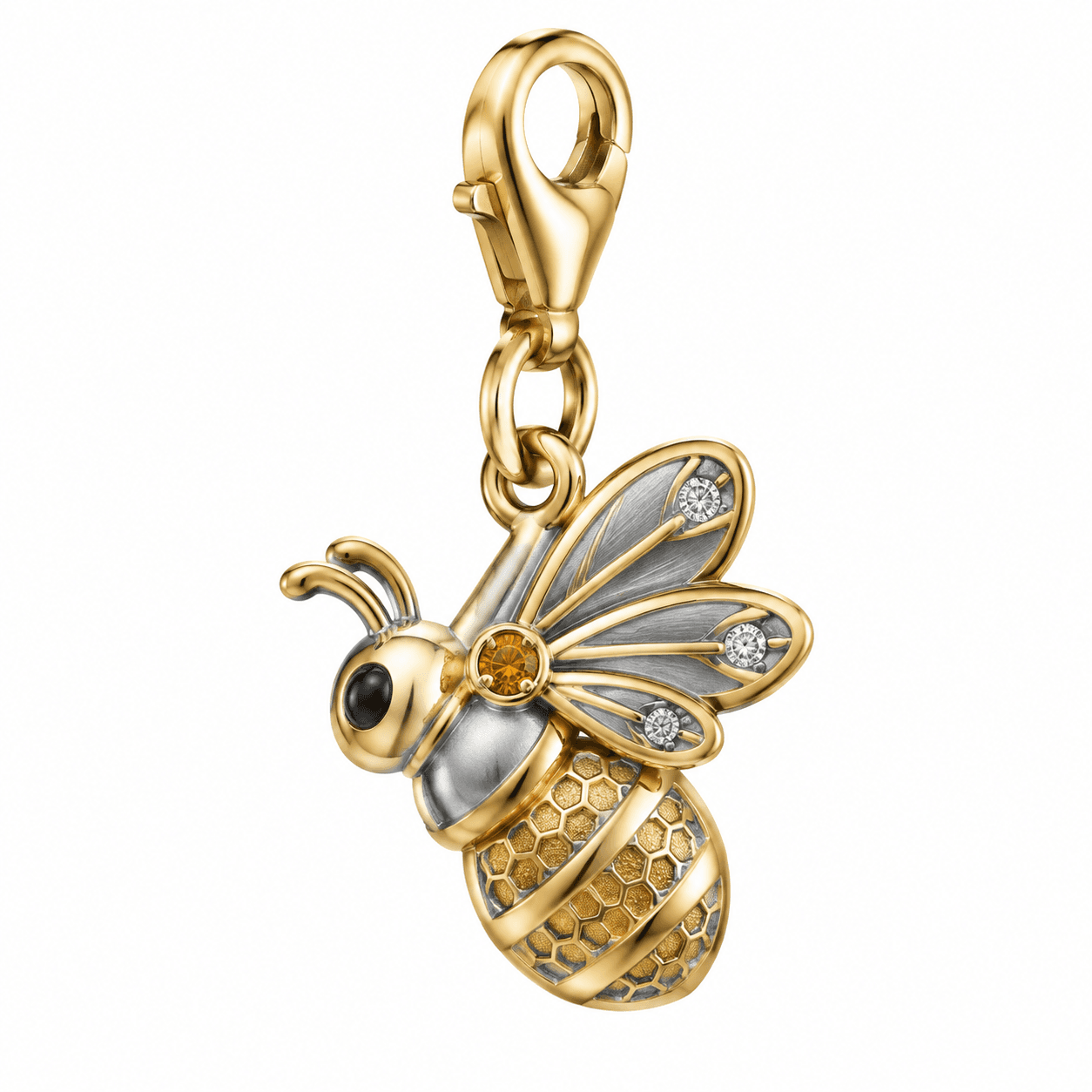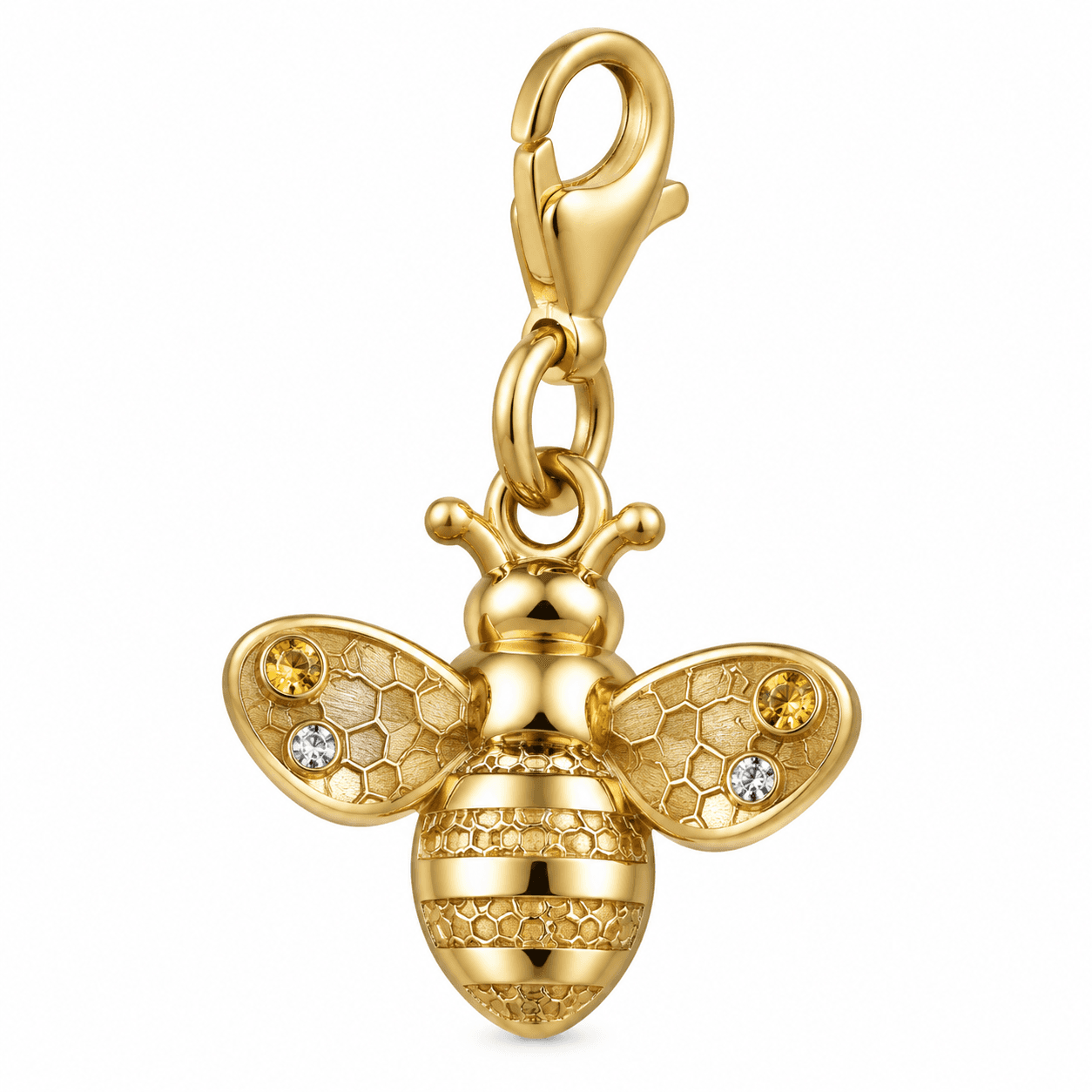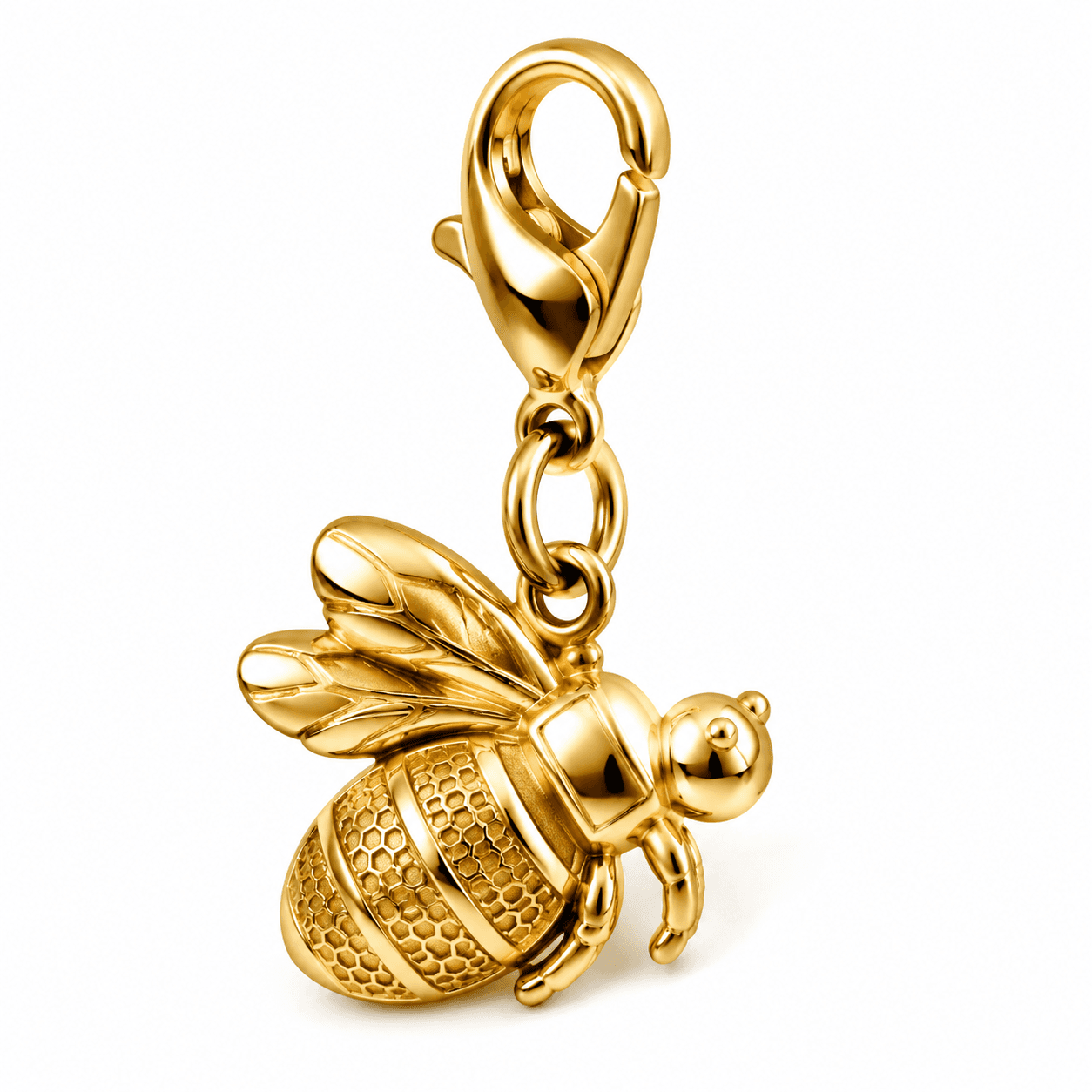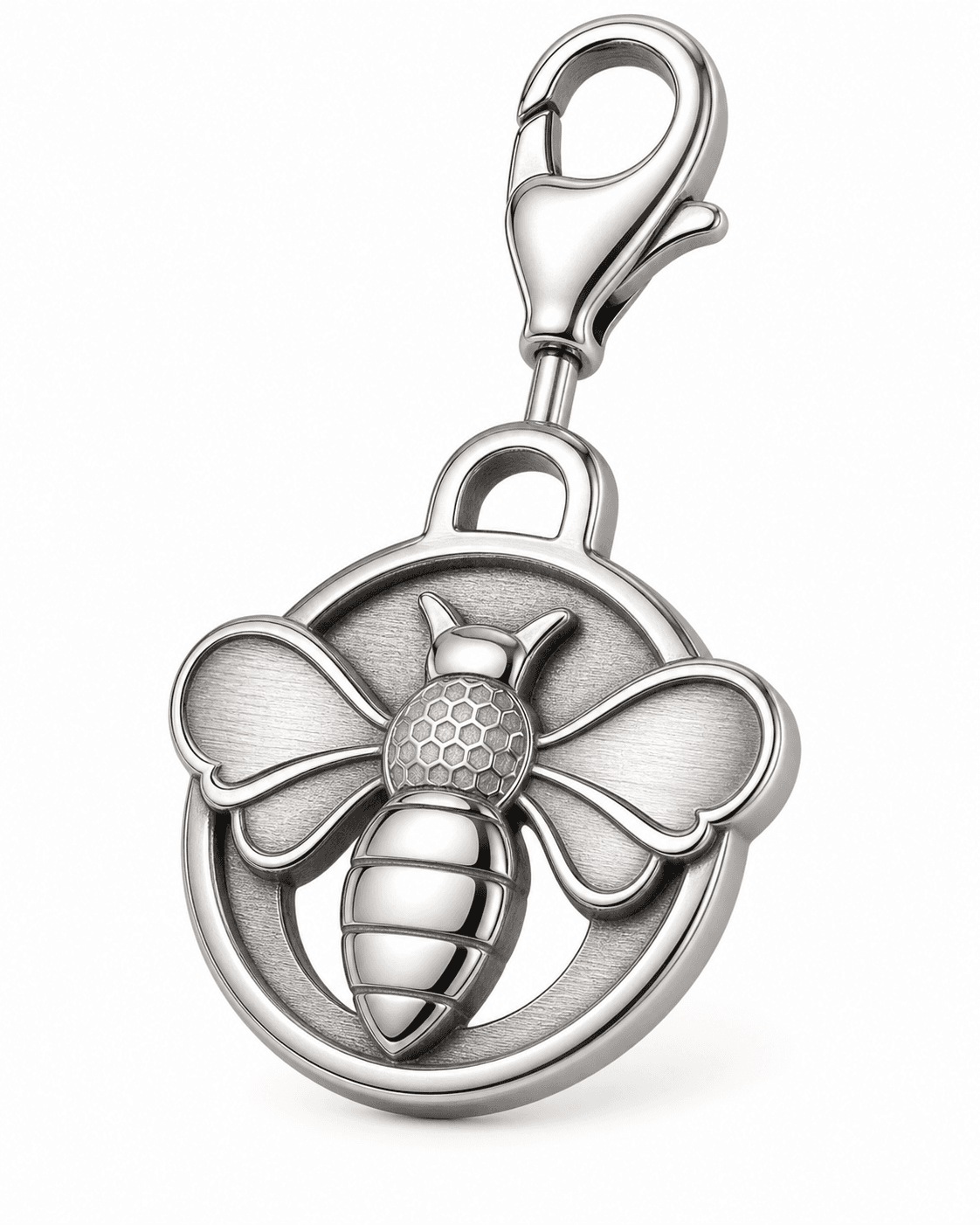
Bee charms combine a recognizable natural motif with unusually rich opportunities for surface detail, enamel color, texture and dimensional modeling. For jewelry designers developing a professional collection, the material decision affects not only appearance but also edge definition, plating consistency, corrosion resistance, sampling accuracy and repeat production. This guide explains how 316L stainless steel supports bee-themed charm development from concept through finished production.
For B2B projects, Lancy Jewelry focuses on 316L stainless steel charms and provides OEM and ODM development for boutique brands, private-label buyers and sourcing teams. The process can include logo engraving, PVD plating, enamel color filling, crystal inlay, sample development and private-label packaging, allowing designers to evaluate both creative execution and production feasibility before committing to bulk orders.
Why 316L Stainless Steel Works Well for Bee Charms
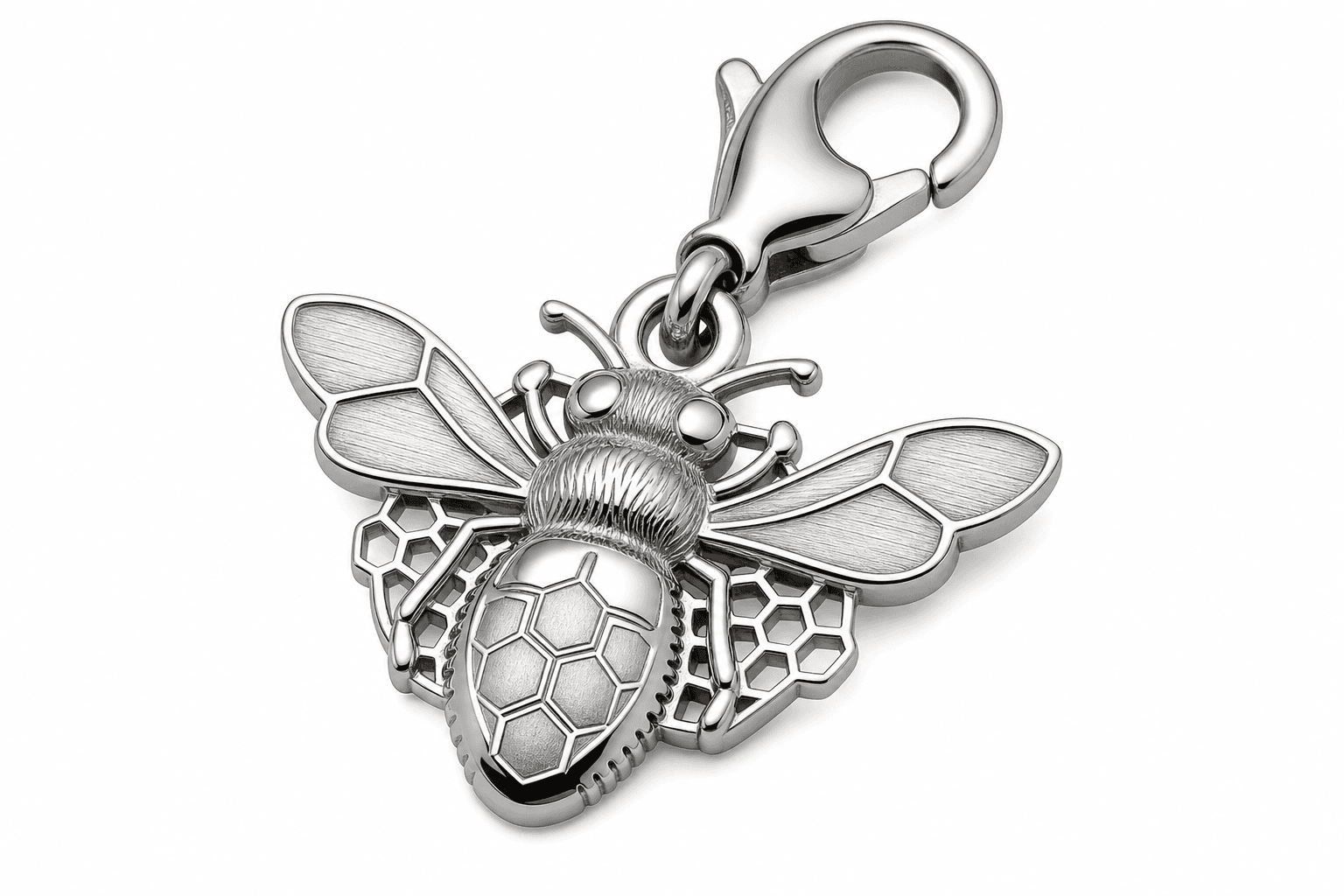
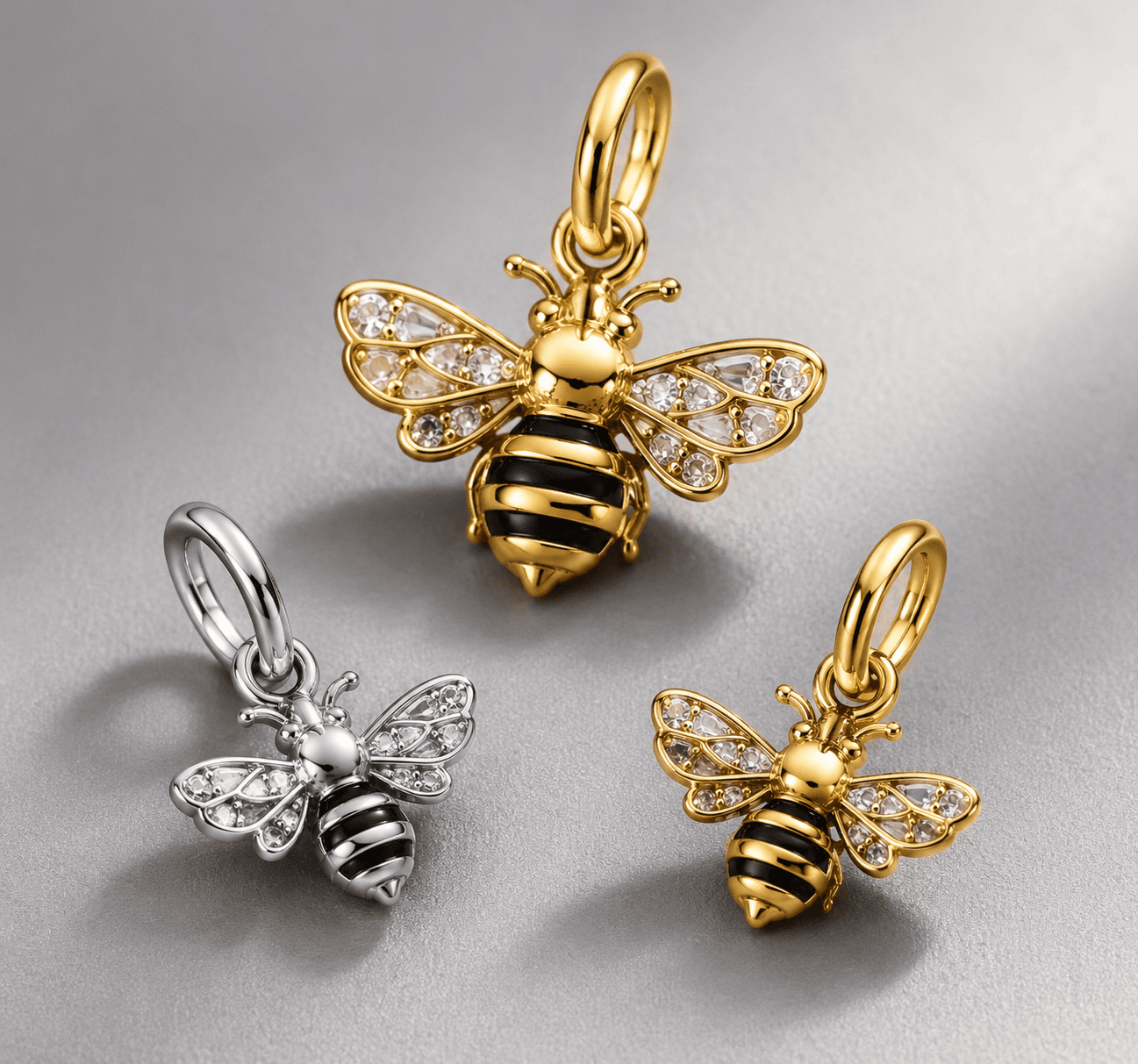
The structure of a bee charm typically contains several visual zones: wings, body segments, antennae, honeycomb geometry and sometimes a small loop or bail. 316L stainless steel is well suited to this type of detailed component because controlled forming, machining and finishing can preserve relatively fine outlines while providing a durable foundation for repeated handling. Designers should assess the smallest features at the prototype stage, especially narrow wing sections, tiny openings and recessed areas where finishing material can accumulate.
Material behavior also influences how a design should be engineered. A practical charm should have enough structural strength around its attachment hole or bail to reduce distortion during normal use. Corners should be evaluated for smooth finishing, and deep recesses should be designed with production access in mind. For a stainless steel charms manufacturer, these engineering considerations are important because a visually attractive digital drawing may require modification before it can become a consistent physical product.
For buyers planning a collection rather than a single SKU, 316L stainless steel also creates a useful foundation for visual consistency. A coordinated bee series can use the same general thickness, attachment logic and finishing approach while varying wing shapes, honeycomb patterns, enamel placement or engraved details. This makes collection planning more efficient and supports repeatable production across multiple designs.
Surface Finishes, Enamel and Dimensional Detail
Bee motifs are particularly effective when the surface treatment reinforces the structure of the design. PVD can provide a durable decorative finish such as gold plated or rose gold plating, while a silver finish can emphasize a clean technical appearance. The finish should be selected together with the geometry because polished raised areas, recessed backgrounds and engraved lines interact differently with light. A designer should therefore evaluate the complete sample rather than selecting a finish from color alone.
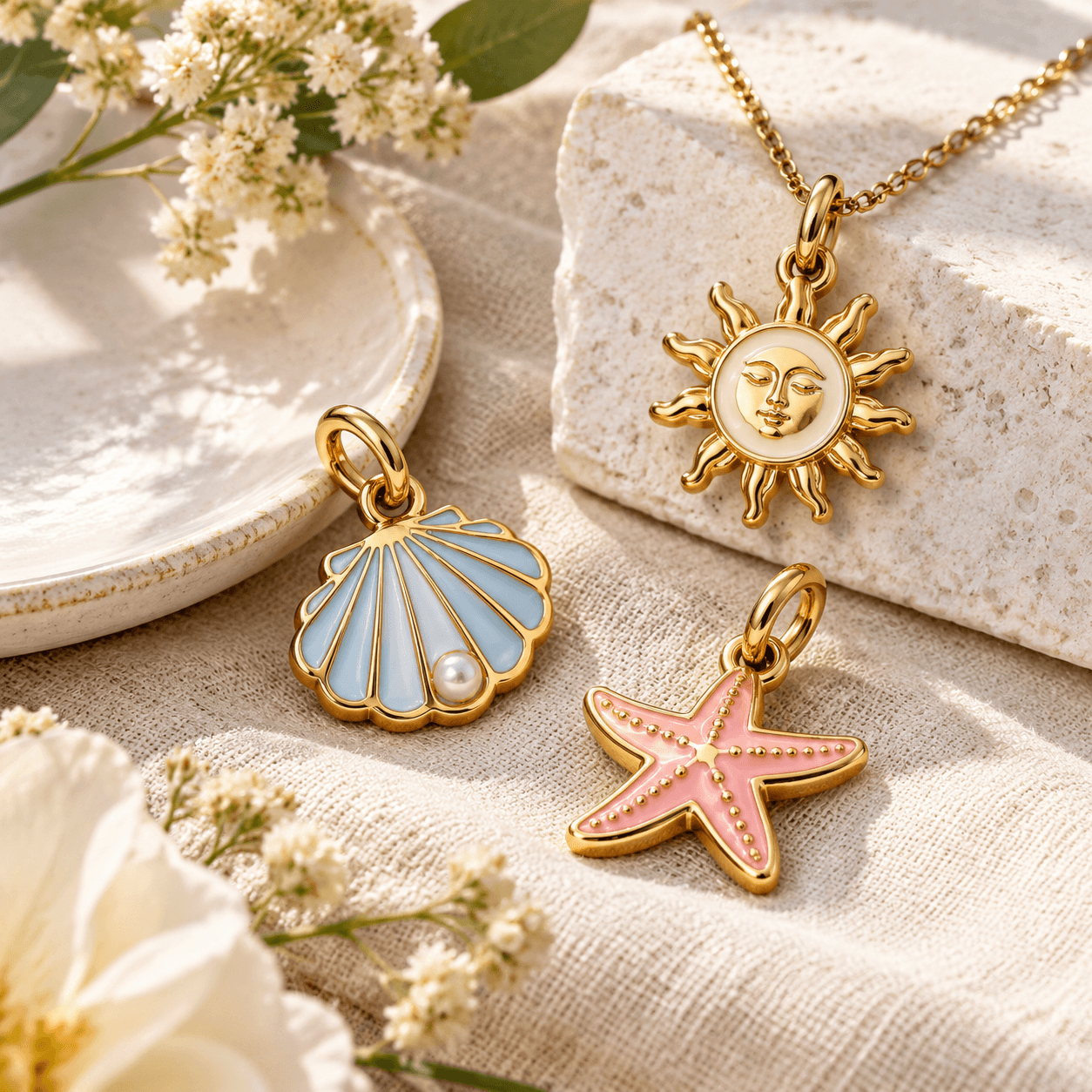
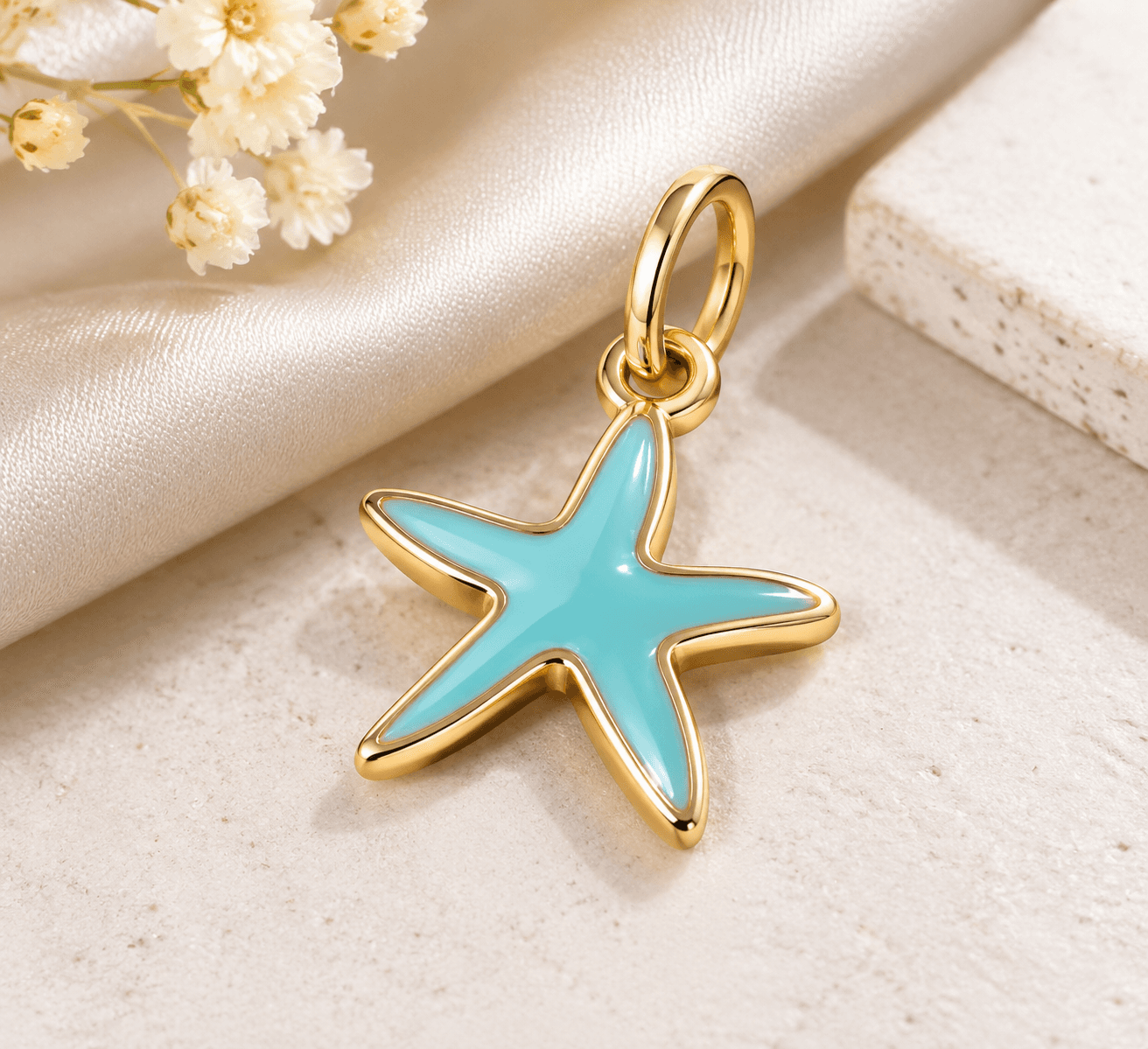
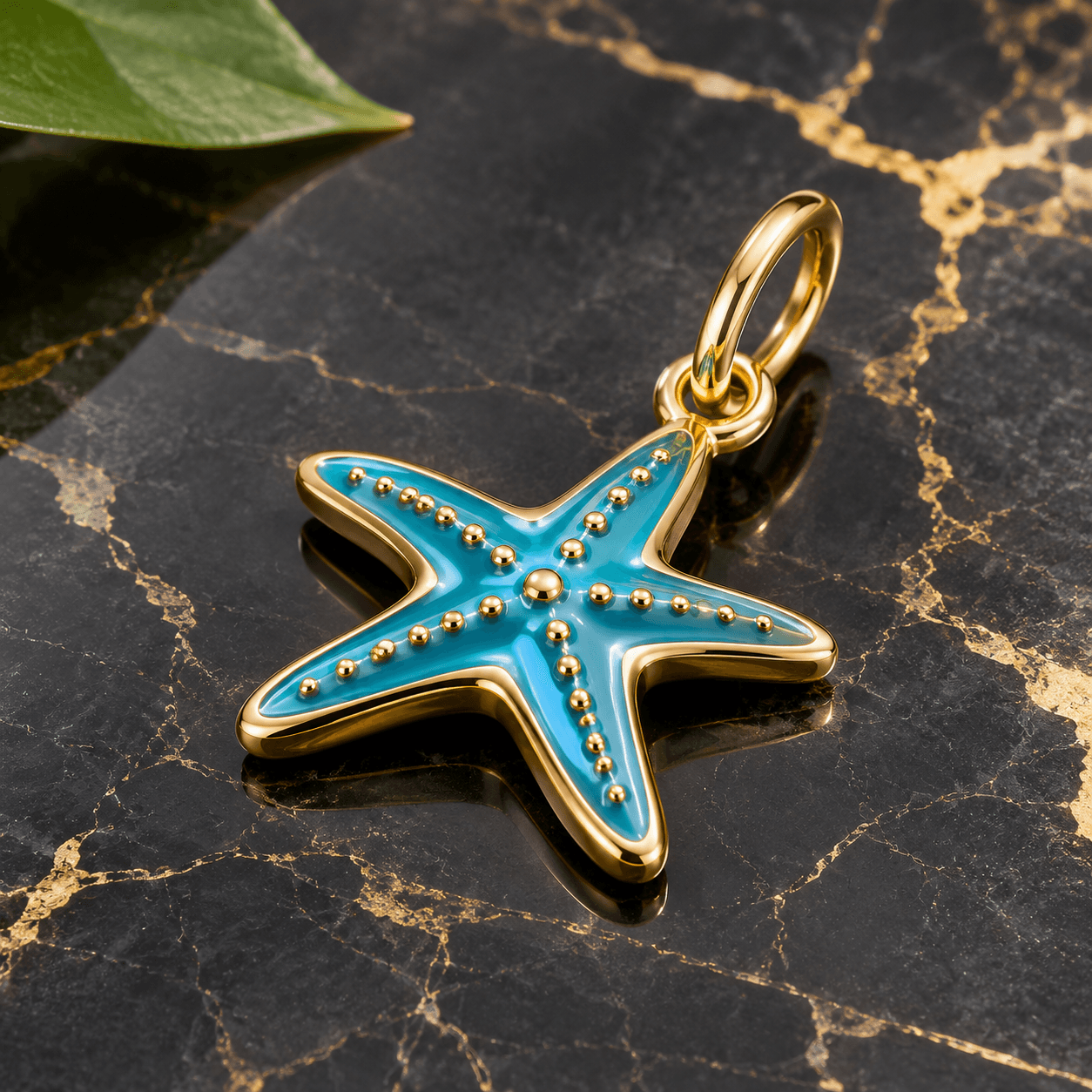
Enamel is another important design tool for bee charms. Color filling can visually separate the body, wings or honeycomb areas and create a stronger hierarchy between raised and recessed surfaces. For reliable production, the artwork should identify each color zone clearly and avoid unnecessarily narrow channels. Color boundaries, fill depth and the relationship between enamel and surrounding metal should be checked during sample development before final approval.
Crystal inlay can add a controlled highlight to selected areas, but it should remain subordinate to the main bee silhouette when the goal is a scalable collection. Lancy can combine PVD plating, enamel color filling, crystal inlay and logo engraving within an OEM or ODM development workflow. This allows designers to explore multiple visual directions while keeping the base material consistent across the range.
Designing Bee Charms for Prototyping and Production
A successful prototype starts with production-aware artwork. Supply the desired overall dimensions, front-view artwork, preferred finish, enamel colors, logo requirements and attachment method. For bee charms, also specify whether the wings should appear flat, layered or dimensional, whether the honeycomb should be engraved or raised, and how much negative space should remain around delicate details. These decisions give an ODM charm supplier enough information to identify practical manufacturing constraints early.
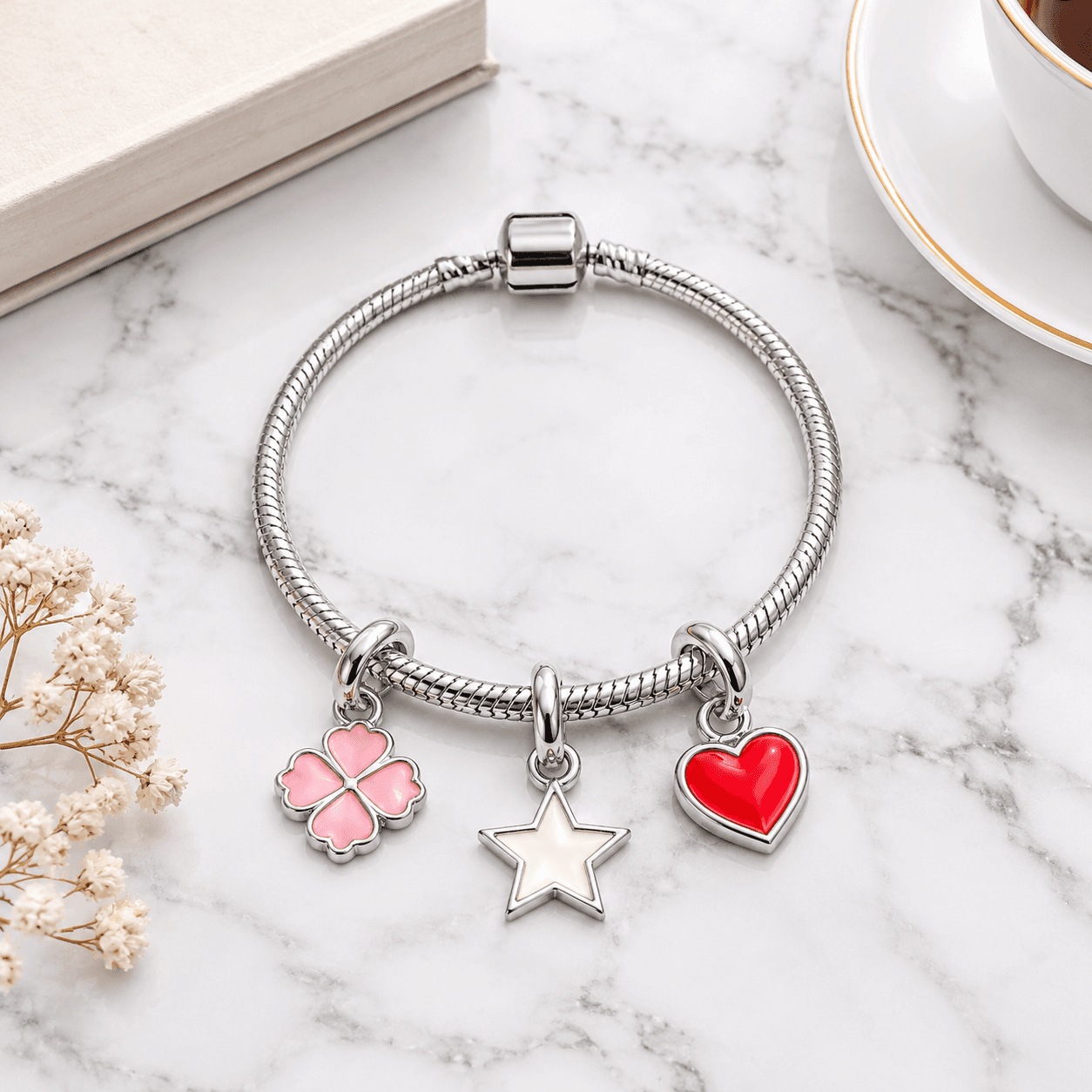
The attachment mechanism deserves particular attention. The bail or jump ring must pass through a real hole or loop and remain mechanically plausible after finishing. Hole diameter, material thickness and edge clearance should be reviewed together rather than independently. If the charm will be displayed in a jewelry or charm-bar program, consistent attachment geometry across a series can simplify merchandising and reduce handling problems.
For new designs, sample development is the most useful checkpoint for resolving these details. The prototype should be reviewed for silhouette, dimensional balance, edge quality, plating coverage, enamel boundaries, engraving legibility and attachment strength. Once the approved sample becomes the production reference, the same specifications can be used to support more consistent repeat orders and collection expansion.
Quality Standards and Certification Interpretation
Material documentation should be interpreted as part of a broader quality-control process rather than treated as a substitute for product inspection. Buyers may request relevant SGS documentation covering areas such as RoHS, REACH, EN1811 and Salt Spray testing. Each document should be checked for its scope, tested sample, applicable standard, date and product relationship. A certificate or test report is useful only when the documentation can be meaningfully connected to the material and finished product being sourced.
For bee charms with decorative finishes, visual inspection remains important because a compliance document does not by itself describe every aspect of appearance. Production checks should consider plating uniformity, color consistency, surface scratches, burrs, enamel coverage, crystal setting and the integrity of the attachment point. Repeat production should be compared against the approved reference sample so that acceptable tolerances are defined before larger quantities are manufactured.
Lancy's factory-oriented workflow combines material selection, sample review and production inspection for 316L stainless steel charms. Buyers can discuss required documentation, testing expectations and quality checkpoints during the RFQ process. This is especially valuable for international sourcing because different markets and customer programs may require different documentation or internal acceptance criteria.
Planning a Coordinated Bee Charm Collection
A single bee charm can become more commercially useful when it is planned as part of a coordinated design family. Designers can create variations around honeycomb geometry, botanical elements, wing patterns, geometric outlines or symbolic details while maintaining common dimensions and attachment standards. Keeping the underlying 316L stainless steel construction consistent helps the series feel intentional even when individual surface treatments differ.
Collection planning also makes OEM development more efficient. Instead of submitting unrelated concepts one by one, buyers can provide a design direction with a prioritized SKU list, target dimensions, finish requirements and packaging expectations. Lancy can then review which details should remain standardized and which can vary. This approach is particularly useful for boutique brands that need a distinctive assortment without creating unnecessary production complexity.
When preparing for wholesale stainless steel charms, buyers should also separate must-have specifications from optional enhancements. A defined base shape and attachment system may be fixed, while PVD color, enamel combinations, engraving or crystal inlay can be tested across selected samples. This gives designers a structured way to compare concepts, control development costs and make a confident transition from prototype approval to bulk orders.
From Technical Artwork to Repeatable Production
Technical artwork should communicate manufacturing intent, not simply visual appearance. A useful specification sheet identifies dimensions, thickness, hole positions, surface finish, enamel areas, engraving locations and any crystal-setting requirements. Vector artwork with clearly separated design layers can reduce interpretation errors, while reference images can explain three-dimensional features that are difficult to communicate through a flat drawing alone.
For repeat production, the approved sample should become the physical reference for key visual characteristics. Buyers can establish acceptable ranges for dimensions, finish appearance and color before production begins. Where multiple bee designs share a common construction, standardizing these parameters can make future OEM development faster and help maintain a coherent assortment across seasonal updates.
Designers should also consider packaging early when the product is intended for a private-label program. Card dimensions, individual protection, SKU identification and final presentation can influence the production schedule. Lancy supports private-label packaging as part of its factory-direct service, allowing product development and packaging requirements to be coordinated rather than handled as disconnected steps.
Frequently Asked Questions About Bee Charms
A Practical Sourcing Checklist for Bee Charms
Before requesting an RFQ, prepare a concise technical brief covering the bee silhouette, dimensions, material specification, attachment method and decorative treatment. Confirm whether the design needs PVD, enamel, crystal inlay or logo engraving, and identify which elements are essential to the concept. If several SKUs are planned, group them into a collection and indicate which dimensions or construction details should remain standardized.
Next, define the commercial requirements that affect production planning: estimated quantity, target launch timing, packaging format and preferred sample sequence. Buyers seeking low MOQ charm production should state the expected initial quantity and whether successful samples may lead to repeat orders. This gives the supplier better context for discussing sampling, production planning and scalable collection development.
Finally, request the information needed for internal approval, including material specifications, relevant SGS documentation, sample photographs or physical samples, finish references and packaging details. A structured review at this stage can prevent avoidable changes after production begins and gives designers a clearer basis for approving a finished bee charm series.
Partner With Lancy Jewelry
Ready to turn a bee charm concept into a production-ready specification? Send Lancy Jewelry your artwork or design reference, target dimensions, preferred 316L stainless steel finish, enamel or crystal requirements, logo details, estimated quantity and packaging expectations. If compliance documentation is required, include the relevant market and your requested SGS documentation such as RoHS, REACH, EN1811 or Salt Spray testing.
For an efficient RFQ, also indicate your target sample timing, expected MOQ, priority SKUs and whether the project is OEM, ODM or private label. Lancy can review the design, develop samples and help establish a practical production specification before bulk orders. Explore the Animal Collection, review OEM Service, browse All Products, or submit an inquiry through Request a Quote.
Related resources
Related resources
- 316L Stainless Steel Custom Enamel Sterling Charms: A Buyer’s Guide
- Stainless Steel Custom Enamel Charms: A Buyer’s Quality Guide
- Stainless Steel Animal Jewelry Charms Wholesale: Quality Guide
- 316L Stainless Steel Chinese Zodiac Charms Wholesale: A Finishing Guide
- How to Source Minimalist Stainless Steel Charms: Finishing Guide
- How to Choose a Stainless Steel Custom Enamel Bracelet Charms Supplier
- 316L Steel Guide to Custom Enamel Charms Manufacturing for Buyers
- How to Choose Stainless Steel Enamel Charms Wholesale UK Suppliers
- How to Evaluate 316L Stainless Steel Zodiac Bracelet Charms Wholesale Suppliers
- Antique Distressed Finish on Stainless Steel Charms: A Buyer’s Guide to Durability