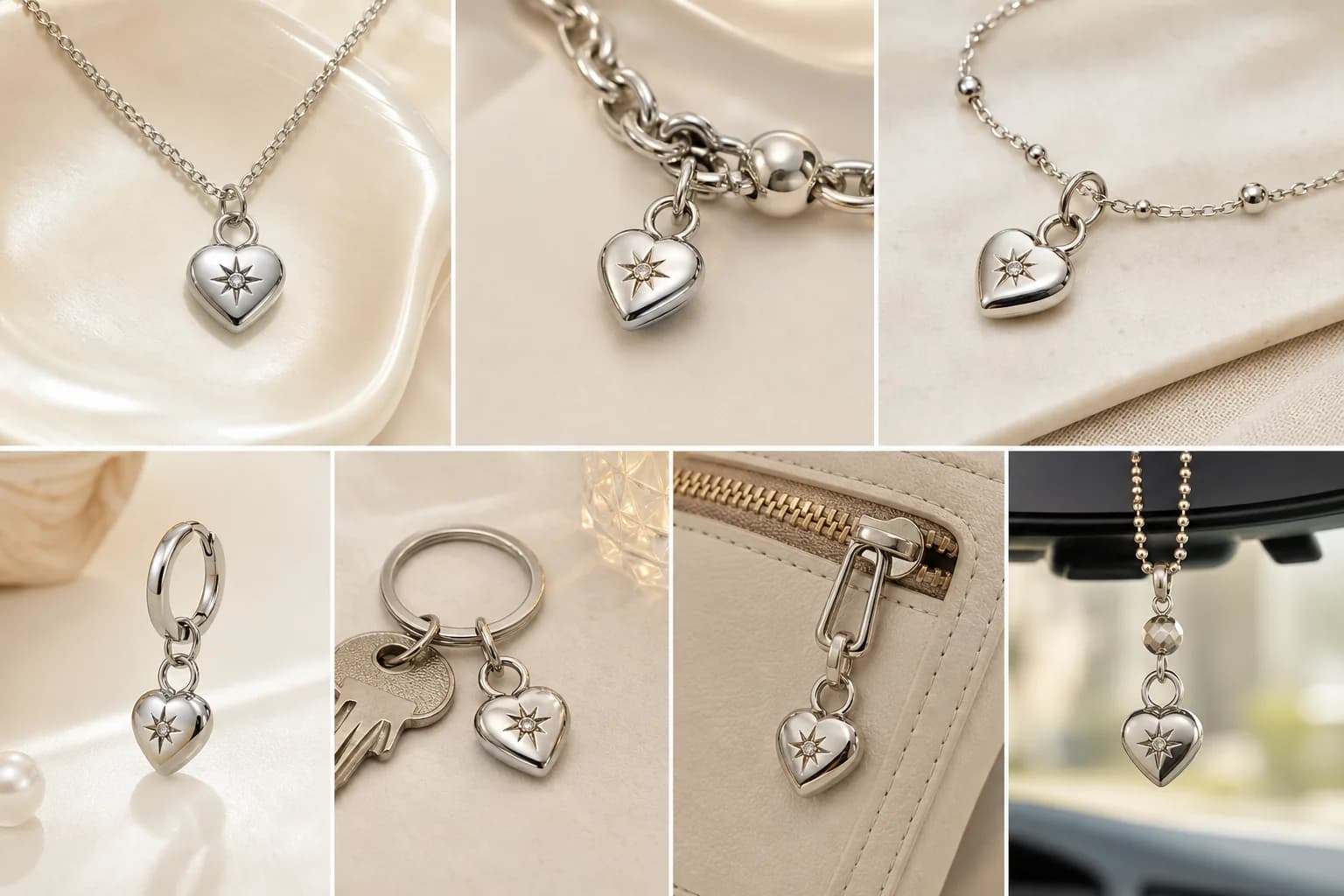
How to use stainless steel charms across jewelry, keychains, bags, and car accessories.
Plan a complete charm program from one 316L stainless steel charm platform. Use charms on necklaces, bracelets, anklets, earrings, key rings, bag accessories, car charms, and retail charm bars while keeping the product story, component choice, and RFQ brief clear for your buying team.
One charm can support multiple sellable products when the components are planned correctly.
Lancy focuses on stainless steel charms as the main product, then supports the program with practical component choices such as chains, clasps, key rings, jump rings, packaging cards, and gift presentation. This guide helps buyers decide where each charm should be used before requesting samples or bulk pricing.
For Lancy, chains, clasps, and key rings are maintained as fixed-stock accessory components. They help complete the finished product, but AI-generated product creation should remain focused on stainless steel charms.
Where can stainless steel charms be used?
Use the same charm collection across different retail stories. The key is to treat necklace, bracelet, keychain, bag, and car terms as use contexts unless the product itself is intentionally a finished component set.
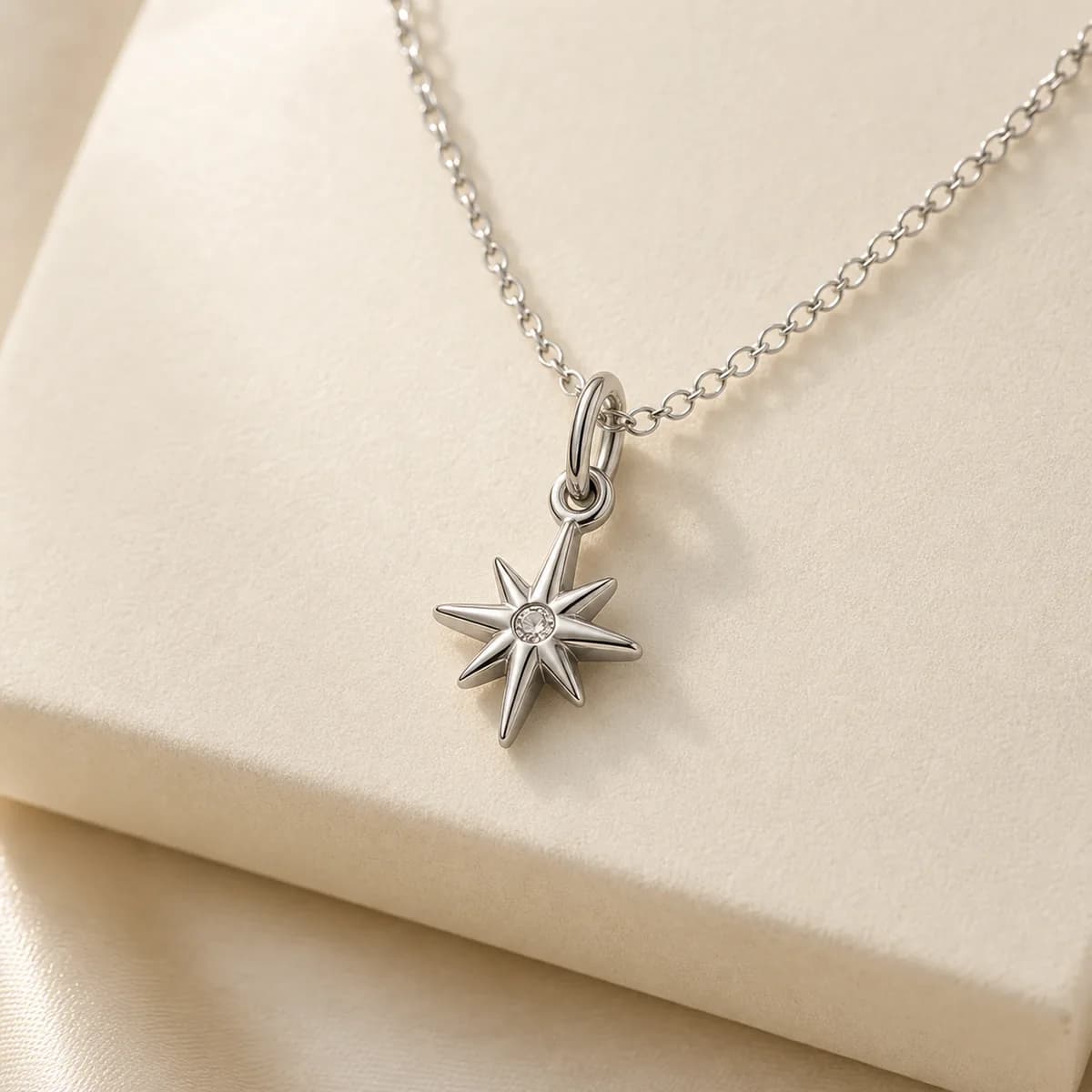
Pendant-style charm necklaces
Pair a charm with a chain or pendant base for giftable necklace programs and boutique personalization bars.
Use with chains
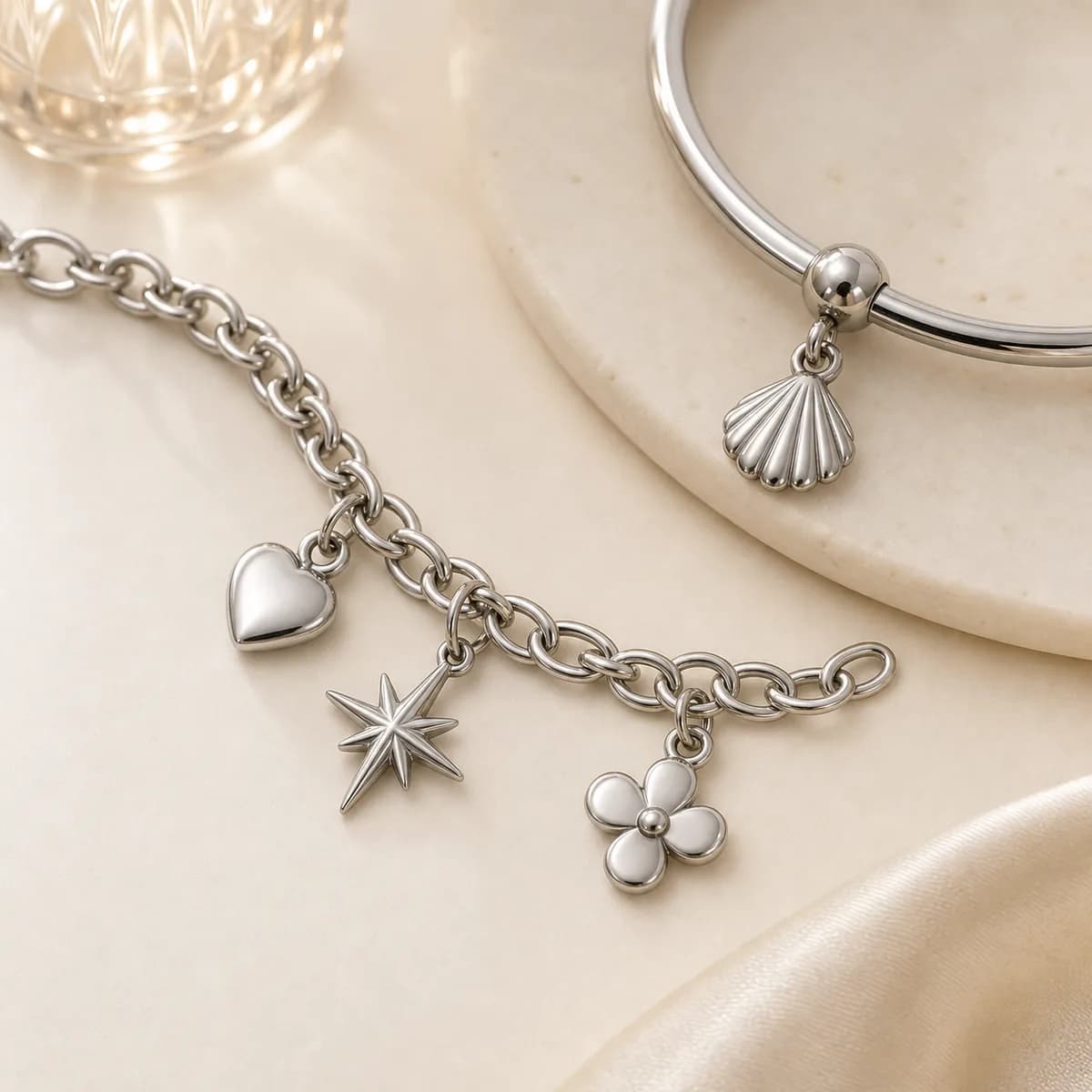
Components that make charms easier to sell as finished products.
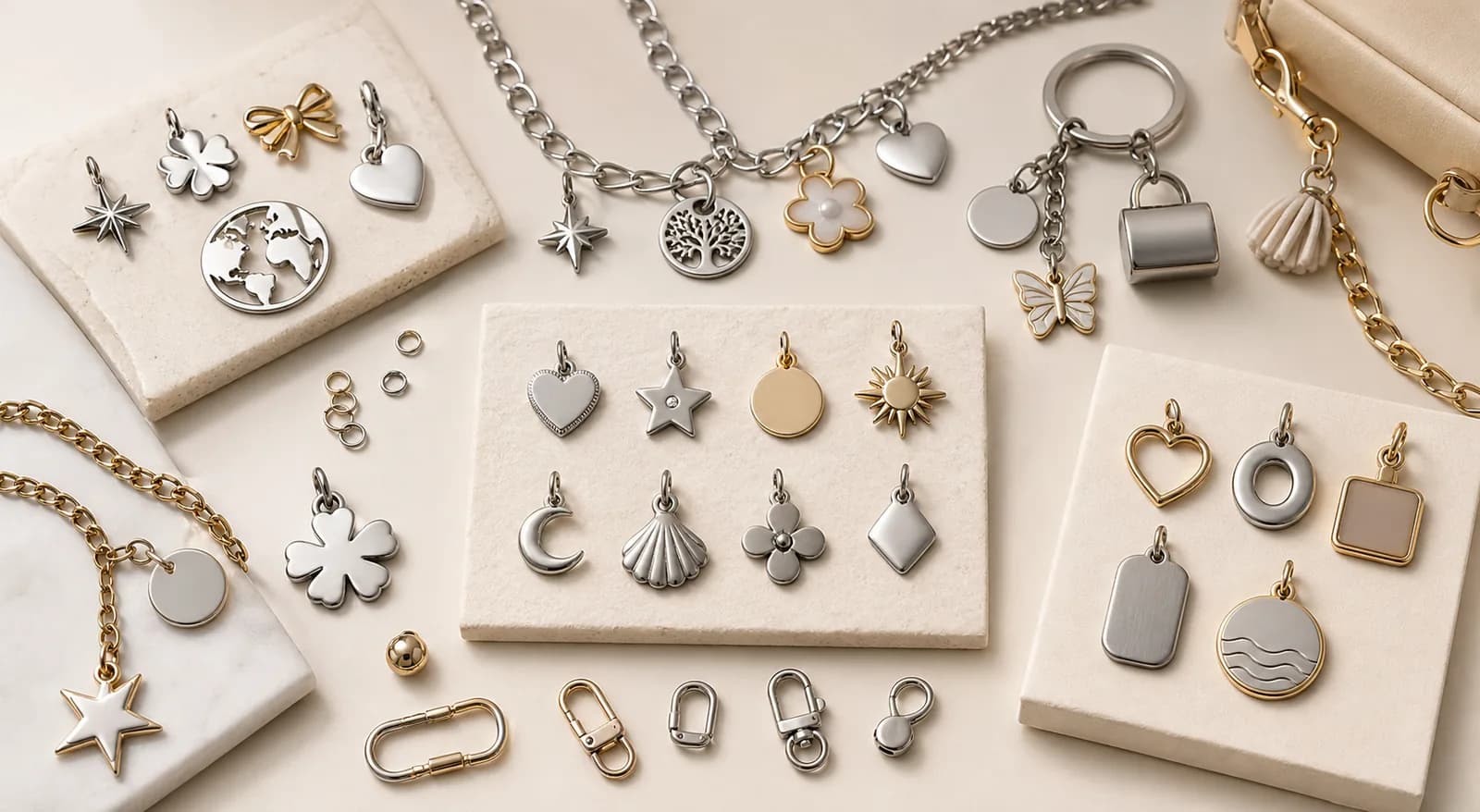
Keep charms as the hero product, then use fixed-stock components to complete the buyer experience. These components should be uploaded and maintained manually because they are stable stocked items.
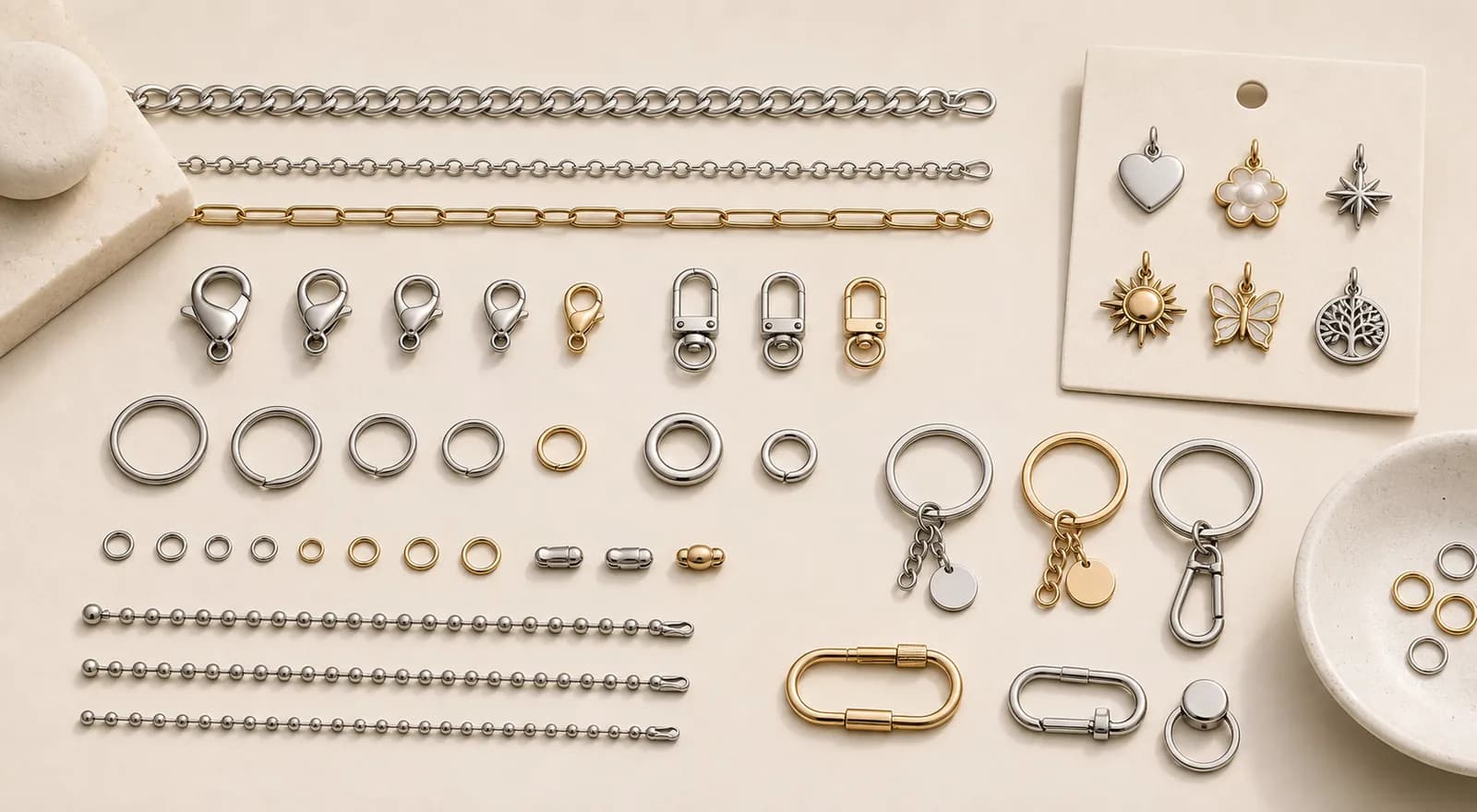
Use chain length, finish, and clasp style to turn a charm into a necklace-ready SKU.
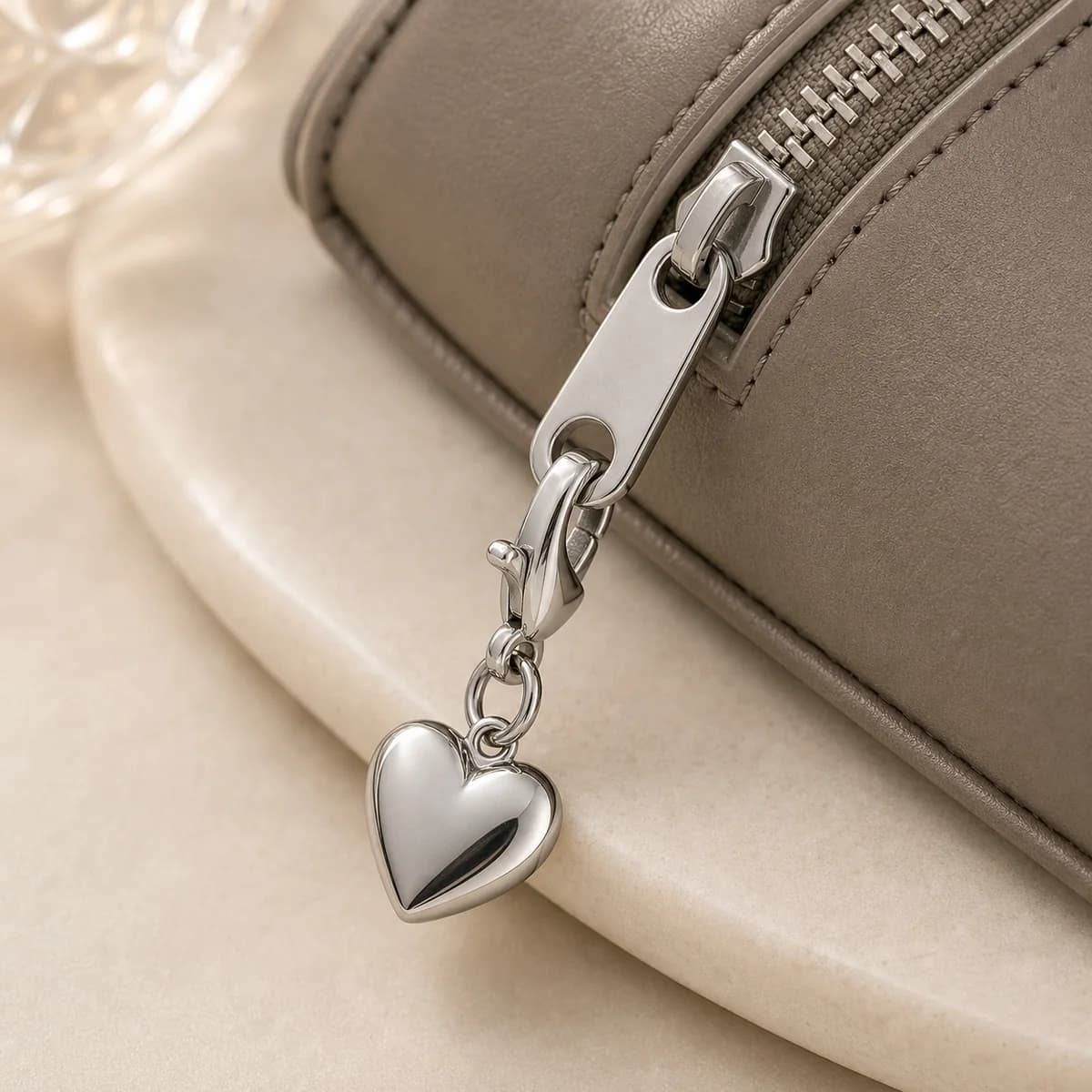
Select lobster clasps, connectors, and related findings to support bracelet, anklet, and accessory use.
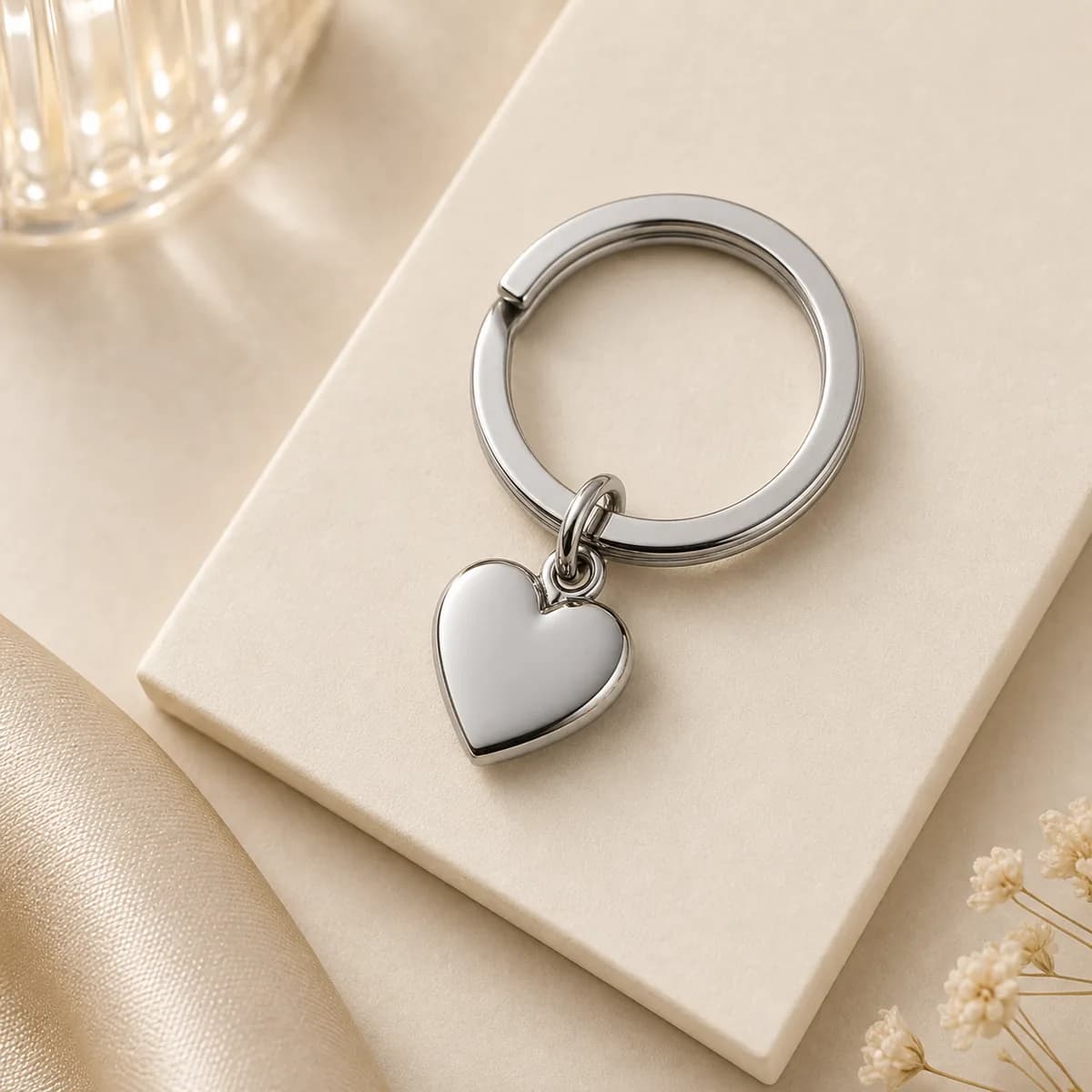
Use split rings and key rings when the charm program targets souvenirs, gifts, or branded accessories.
A practical step-by-step flow for buyers and merchandisers.
Use this workflow when building a charm bar, private-label gift set, or finished accessory program from stainless steel charms.
Choose the charm story
Start with the retail story: birthstone, alphabet, zodiac, animal, cross, ocean, heart, nature, or custom symbol.
Choose the application context
Decide whether the charm will be used on a necklace, bracelet, anklet, earring, key ring, bag charm, car charm, or charm bar.
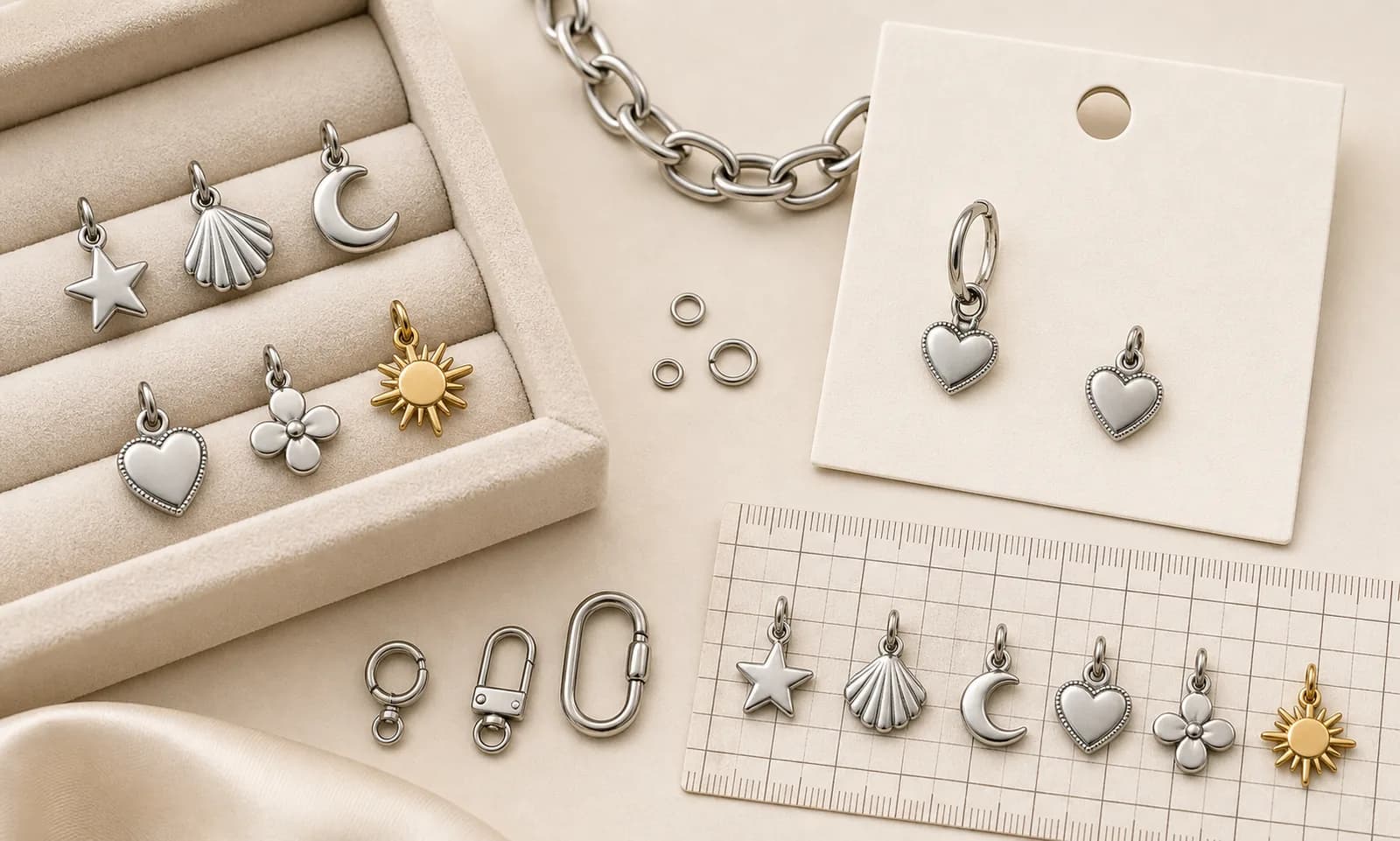
Keep the finished product premium, practical, and size-accurate.
Small charms should not be photographed or merchandised like oversized pendants unless that is the intended product. Keep the real size, connector detail, and application context aligned from the first sample request.
What to include when requesting charm program pricing.
A clear RFQ reduces back-and-forth and helps the factory quote the right charm, component, finish, packaging, and production route from the start.
Product and application context
List the charm series or product links, then explain whether the charm will be used for jewelry, keychains, bag charms, car charms, or retail charm bars.
Finish, quantity, and packaging
Share target quantity, finish direction, carding, gift box, label, barcode, and any private-label requirements.
Ready to match stainless steel charms with the right components and packaging?
Send your preferred charm series, application context, component needs, finish direction, quantity target, and packaging notes. Lancy will help turn the idea into a practical sourcing plan.