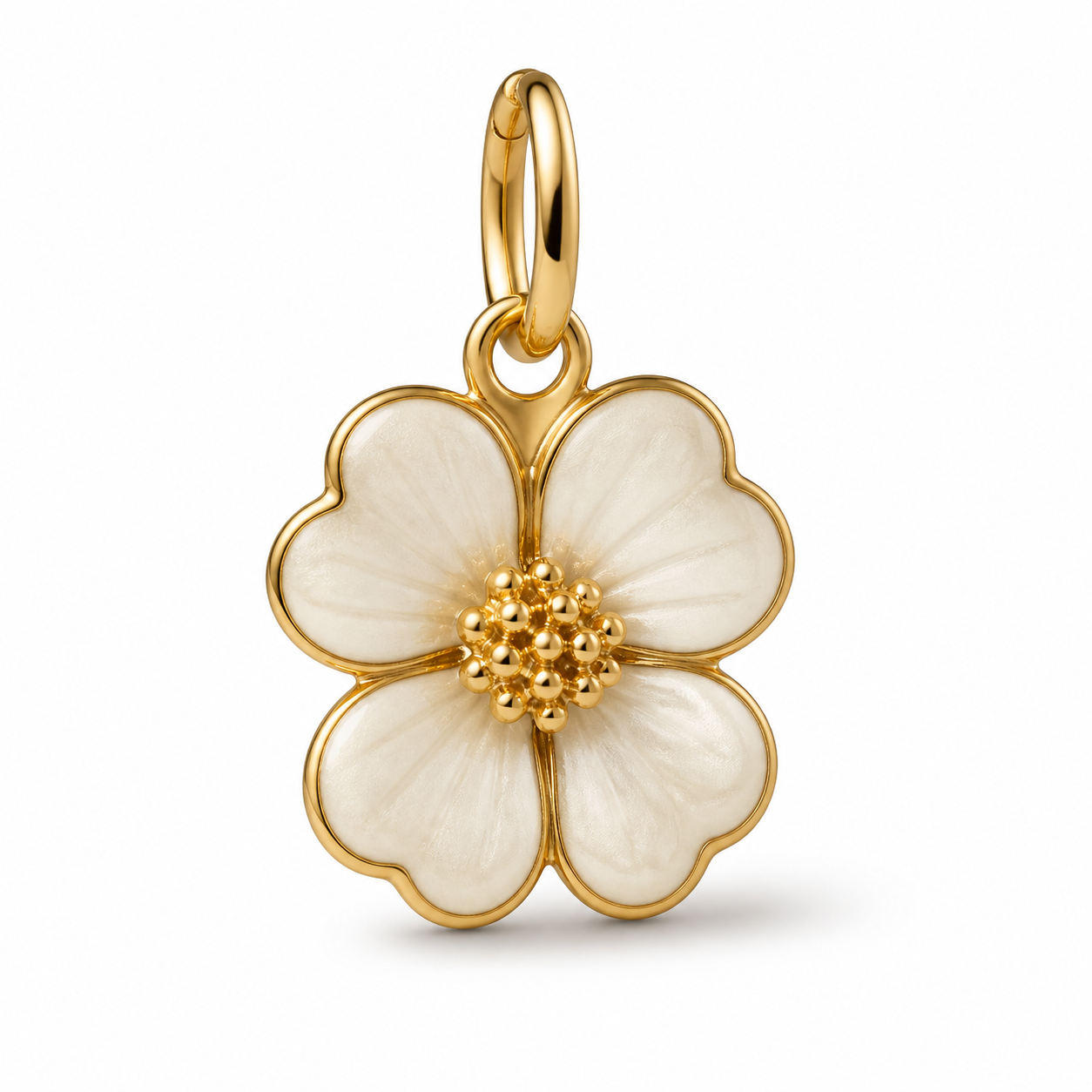
Stainless Steel Enamel Flower Charms: An Advanced Guide
\nFor designers working with boutique brands or private‑label programs, 316L stainless steel enamel flower charms deliver durability, a wide range of finish options, and flexible production. This guide covers material science, enamel color filling, and manufacturing workflows that support reliable charm programs at scale. You will learn how 316L stainless steel interacts with enamel pigments, how PVD finishes influence color stability, and how to structure OEM/ODM projects that meet global sourcing standards while preserving design intent.
\nAs a stainless steel charms manufacturer, Lancy Jewelry supports complex customization—from geometry and engraving to logo marking, enamel color filling, and private-label packaging. Our facility features CNC machining, laser cutting, laser marking, welding, and precision polishing to deliver consistent quality across high‑volume orders and low MOQs. This guide is designed for experienced designers seeking to optimize material choices, finishing options, and supply‑chain planning for enamel flower motifs.
\nAcross markets including the US, EU, UK, AU, CA, and beyond, this article offers practical considerations for cross‑market production and universal design approaches that translate well. We reference quality systems and emphasize how material chemistry and surface treatment influence longevity, colorfastness, and aesthetic consistency in your line.
\n\nStainless Steel Enamel Flower Charms: Core Focus
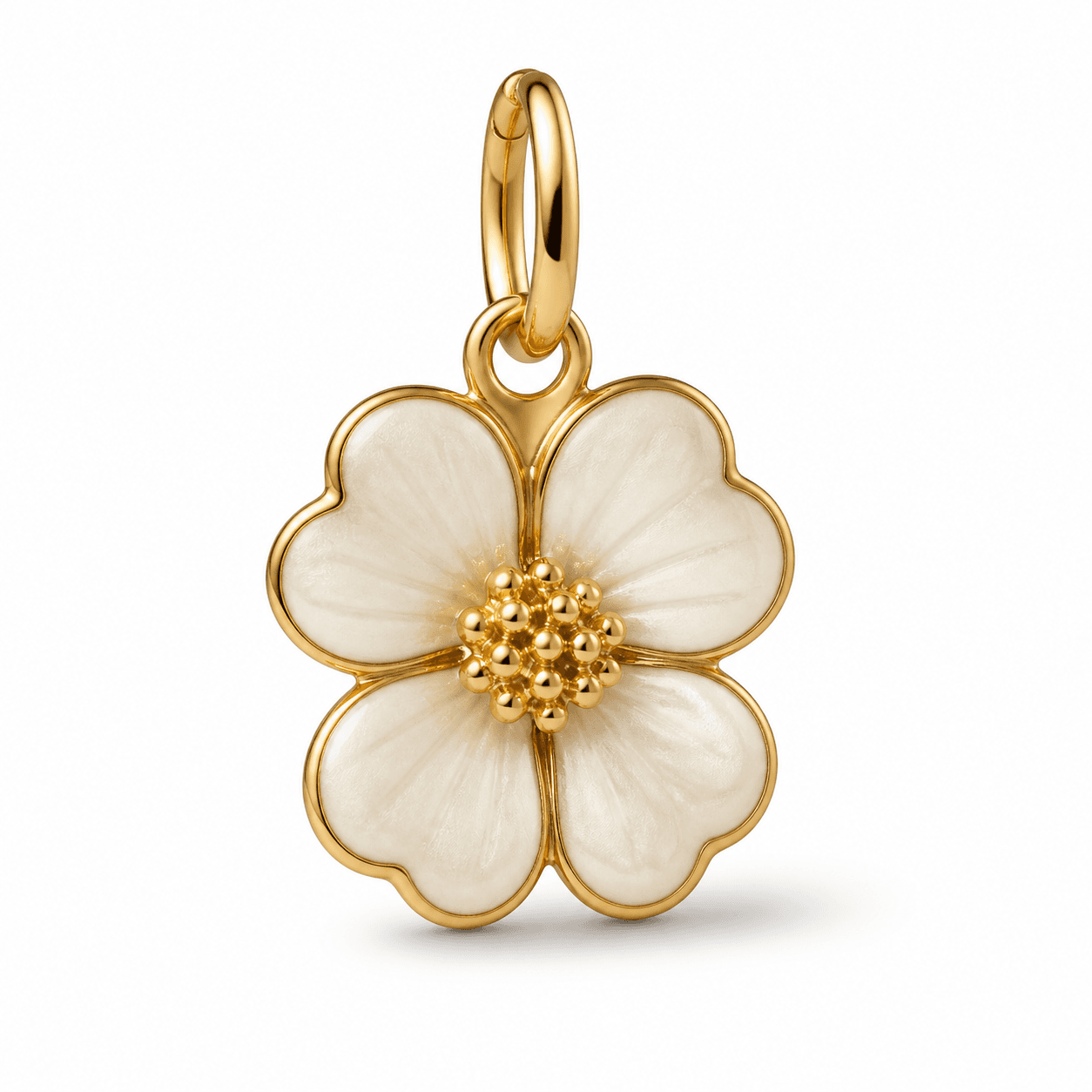
\nThe emphasis here is the combination of 316L stainless steel as the base material with enamel color filling on flower-inspired charm forms. This pairing supports durable surfaces, broad color palettes, and reliable plating compatibility for wholesale programs. In practice, design teams should consider alloy chemistry, enamel adhesion, pigment behavior under firing or curing, and the long‑term performance of plated finishes when worn daily and exposed to oils and environmental conditions.
\nKey capabilities from a manufacturer/supplier perspective include OEM and ODM development, logo engraving, PVD plating, enamel color filling, crystal inlay, private-label packaging, and rapid sample development. For buyers, these capabilities translate into predictable lead times, scalable production, and consistent plating quality—critical factors when negotiating with private-label partners or distributors. The sections below outline how to optimize the material system and processing steps to achieve boutique-ready results at scale while maintaining cross‑market compliance.
\n\nMaterial Science Foundations: 316L Alloy Chemistry and Why It Matters
\n316L stainless steel is an austenitic alloy with low carbon content that supports corrosion resistance and robust weldability during CNC, laser cutting, and welding operations. Typical composition includes iron with chromium around 16–18%, nickel around 10–14%, and molybdenum around 2–3%. The low carbon level reduces carbide precipitation, helping preserve toughness during fabrication. For enamel charm applications, this chemistry supports reliable enamel adhesion, balanced thermal expansion, and strong surface integrity through cleaning, degreasing, and firing cycles used in enamel filling or kiln‑formed processes.
\nFrom a sourcing standpoint, 316L provides a stable baseline for color consistency and mechanical performance across batches. It also supports a wide range of surface finishes, including silver-tone, PVD gold, rose gold, and modern metallic appearances. The alloy’s nickel and chromium content are factors in regulatory compliance and sensory tolerances, which is why testing and nickel‑release considerations are relevant when positioning these charms in regulated markets globally.
\n\nEnamel Color Filling: Chemistry, Firing, and Colorfastness
\nEnamel color filling on 316L charms blends material chemistry with precision deposition. Traditional enamel systems rely on glass-like frits that bond to metal surfaces during controlled heating. Modern practice often combines enamel with ceramic‑like formulations designed for adhesion, dye stability, and wear resistance. Critical variables include pigment chemistry, binder compatibility, and firing temperature profiles tuned to the substrate to avoid cracking, peeling, or color migration.
\nWhen pairing enamel with 316L, manufacturers pay attention to the metal’s oxide layer, surface roughness, and pre‑treatment coatings. Pre-cleaning, degreasing, and micro‑etching steps enhance mechanical interlock between enamel and metal. Colorfastness—resistance to UV exposure, perspiration, and body oils—depends on pigment stability and binder choice. For designers, this means selecting enamel colors with stable inorganic pigments and ensuring the firing cycle is market-relevant any underlying plating. It also means planning color families with cross‑market appeal, including matte and glossy finishes, to suit different boutique aesthetics and packaging programs.
\n\nFinish Options and PVD Compatibility: Plating, Tones, and Wear
\n316L charms open a wide range of finishing paths. PVD plating enables durable gold, rose gold, or silver tones with excellent wear resistance. PVD coatings can be matched with enamel colors to preserve contrast and longevity. When combined with 316L, PVD plating shows good adhesion and color stability under typical consumer use. Silver finishes maintain a bright look, while gold tones can offer warmer aesthetics that complement enamel hues. For designers, the choice of finish should align with the enamel palette and the target market’s fashion sensibilities, as well as the lifecycle of the product line.
\n\nDesign Considerations for Enamel Flower Motifs
\nFlower motifs bring organic curves and intricate petal shapes, which pose challenges for enamel filling. Petal relief depth, edge definition, and recessed areas influence how pigments settle and how maintenance scratches may occur over time. Designers should favor motif geometries that maintain structural integrity during finishing and assembly with jump rings or bail attachments. Consider built‑in channels or barriers to keep colors from bleeding into adjacent zones. A well‑considered geometry also simplifies logo engraving, a common requirement for private-label programs and OEM projects.
\nWhen integrating a flower motif into 316L charms, anticipate potential release or separation during firing and plan for appropriate support structures for even pigment distribution. For private-label buyers, aligning motif scale with typical charm dimensions—8 to 18 mm as standard—helps maintain visual impact without compromising yield. In practice, collaborating with a trusted OEM charms manufacturer ensures tolerances align with line‑wide standards and branding remains legible after enamel filling and finishing.
\n\nManufacturing Workflow: From Concept to Private-Label Packaging
\nThe journey from concept to finished product for enamel flower charms unfolds in stages. A modern facility supports end‑to‑end development: concept refinement, CAD modeling, tooling, CNC or laser-cutting trials, sample engraving, enamel filling, curing, and final assembly with hardware. Private-label packaging is designed to complement the product’s aesthetic and streamline the buyer’s retail experience. A typical workflow includes:
\n- \n
- Concept and geometry finalization with BOM and tolerances. \n
- Prototype creation via CNC milling or laser cutting, including test engravings for logos or branding. \n
- Logo engraving and identity validation on sample parts, with feedback to the design team. \n
- Enamel color filling trials, color matching, and firing/curing cycle optimization. \n
- Finishing options selection (PVD plating thickness, passivation, cleaning). \n
- Quality testing and certification checks (including nickel‑release testing and salt spray testing). \n
- Private-label packaging design and labeling, with SKU assignment and packaging mockups. \n
- Full‑scale production planning, MOQ discussions, and RFQ initiation. \n
Throughout this workflow, offering sample development and low MOQs is essential for boutique brands evaluating multiple concepts. Lancy’s capability set—CNC, laser cutting, laser marking, welding, and polishing—enables rapid iteration without compromising precision. For buyers pursuing wholesale or private-label programs, these capabilities translate into a reliable pipeline for consistent output across varied color families and finish options. To explore your private-label or OEM requirements, view our OEM/ODM service and initiate a quote via the Request a Quote channel or RFQ channels. For direct inquiries, our sales team is reachable via the Contact page.
\n\nBenefits and Why It Matters for Designers and Buyers
\nKey Benefits: Material Confidence, Consistency, and Compliance
\nChoosing 316L stainless steel as the base material for enamel flower charms yields predictable mechanical performance, corrosion resistance, and color stability. This material basis supports long-term wear in a range of environments and ensures enamel colors remain vibrant after repeated handling. For designers seeking cross‑market appeal, 316L provides a familiar substrate that pairs well with a wide spectrum of enamel colors and plating finishes. Moreover, working with a factory that features modern CNC and finishing capabilities reduces risk during tooling and scale‑up, a critical factor when moving from prototype runs to wholesale production.
\nFrom a regulatory standpoint, certified processes help reassure buyers across regions. RoHS and REACH compliance, nickel‑release safety testing, and salt spray durability provide a safety and durability baseline that resonates with private-label buyers and distributors looking for robust, market-ready products. This compliance backdrop supports a smoother global go‑to‑market process and reduces friction when expanding into new territories.
\n\nWhy It Matters for OEM/ODM Programs
\nFor OEM and ODM projects, a reliable material system combined with scalable finishes and branding options is essential. 316L stainless steel enamel flower charms allow design teams to experiment with motif scale, color families, and branding elements while preserving consistent performance across production lots. By choosing a partner with private-label packaging capabilities, buyers can align packaging and labeling to regional requirements, improving shelf presentation and reducing post‑launch logistical complexity. The ability to offer low MOQs, robust sample development, and predictable lead times strengthens negotiations with retailers and supports longer-term private-label engagements.
\n\nPractical Guide: Turning Theory into Production‑Ready Charms
\nStep 1: Define Specs and Private‑Label Goals
\nBegin with clear design specifications: charm diameter, petal geometry, bail or jump ring integration, and the intended finish. If the design includes logo engraving, specify the logo size and placement. For enamel, outline primary color families and any gradient considerations. The OEM/ODM pathway requires alignment on minimum order quantities, sample development timelines, packaging requirements, and branding rights. A well-defined spec sheet reduces iteration cycles and accelerates RFQ clearance.
\n\nStep 2: Material and Surface Treatment Strategy
\nMaterial selection starts with 316L stainless steel tolerances and corrosion targets. Surface treatment decisions—silver finish, PVD gold, or rose gold plating—must account for enamel’s thermal and chemical compatibility. PVD coatings provide durable color and good adhesion with enamel, but coating thickness and heat tolerance must be coordinated with firing profiles used for enamel filling. Work with the supplier to establish coating targets and confirm color stability across batches. Consistency in surface finish is vital for multi‑model lineups and cross‑market branding.
\n\nStep 3: Enamel Color Strategy and Colorfastness
\nColor strategy should emphasize long‑term stability. Prioritize pigments with high UV resistance and chemical stability. Plan for color matching across production lots to maintain uniformity. Validate colorfastness through accelerated aging tests and environmental exposure simulations. If multiple colors are used within a single motif, ensure thermal expansion compatibility with the substrate and underlying plating to reduce the risk of color migration.
\n\nStep 4: Finishing, Plating, and Assembly
\nFinal finishing touches—select PVD tones, post‑plating polishing, and final cleaning—determine perceived quality. Ensure plated surfaces are clean of residue before enamel filling to maximize adhesion. Assembly considerations, including the orientation of the charm relative to a chain, influence how the bail or jump ring integrates with the final product. A well‑planned assembly step reduces post‑production touchups and maintains a stable supply chain for wholesale and private‑label buyers.
\n\nStep 5: Quality Assurance, Testing, and Certification
\nQuality assurance should combine dimensional checks, visual inspection, and functional tests. RoHS and REACH compliance, nickel‑release safety, and salt spray durability should be leveraged. Regular QC sampling, process controls, and traceability enable confidence for wholesale partners and distributors, particularly for multi‑country private‑label programs. Documentation supporting certifications and test results should be readily available for audits or RFQs.
\n\nStep 6: Private‑Label Packaging and Branding
\nPackaging design is integral to the buyer experience. Coordinate packaging artwork, hangtags, and labeling with the OEM/ODM partner to ensure regulatory compliance and branding integrity. Private‑label packaging should be designed for efficient SKU handling, retail display, and protection during transit. Embedding packaging decisions early minimizes rework and ensures a cohesive line identity across markets.
\n\nStep 7: Sample Development, Lead Times, and MOQ Considerations
\nSmart sample development strategies are essential for advancing concepts toward production. A well‑coordinated sample program enables geometry validation, color fidelity, and branding in parallel with tooling. Low MOQs can accelerate concept validation for boutique brands, while more complex color families or larger production runs may require higher MOQs. A trusted partner provides transparent timelines, clear cost schedules, and staged approvals aligned with launch calendars.
\n\nStep 8: Global Launch Readiness and Cross‑Market Adaptation
\nGlobal readiness requires alignment on technical specs, regulatory expectations, and packaging standards that vary by region. A consistent baseline of 316L stainless steel, enamel color strategies, and plating options must be maintained while allowing for market‑specific packaging. A centralized production and QA framework enables a uniform product experience worldwide while preserving regional customization options for small‑batch launches and private‑label programs.
\n\nFAQ: Frequently Asked Questions
\n1) What makes 316L stainless steel ideal for enamel flower charms?
\n316L offers corrosion resistance, low carbon content for weldability, and strong compatibility with enamel color filling. This combination supports long‑term wear, stable enamel adhesion, and reliable performance across markets with varying humidity and temperature. The material’s compatibility with PVD finishes also enables a broad palette of durable, boutique‑ready appearances.
\n2) What is the typical lead time for an OEM enamel charm project with private‑label packaging?
\nLead times vary with design complexity, tooling needs, and order volume. A typical OEM/ODM project includes concept review, prototype samples, color‑matching, and final production. A standard private‑label packaging program can be aligned with a structured timeline, and our team can provide a detailed schedule after RFQ. A phased approach with early‑stage samples and then full production helps manage risk and align with retail calendars.
\n3) What certifications does Lancy provide for enamel charms?
\nLancy maintains certification coverage including RoHS, REACH, EN1811 nickel‑release testing, and salt spray durability. Documentation is available for buyer audits and supplier reviews.
\n4) Can I order private‑label enamel flower charms with low MOQs?
\nYes. Lancy supports low MOQ options to accommodate boutique brands and private‑label buyers while maintaining consistent plating quality. MOQs are tailored to project scope, tooling needs, and packaging configurations, with a clear path from concept to production.
\n\nCall to Action: Partner With Lancy Jewelry for Your Enamel Flower Charm Programs
\nWhether launching a private‑label collection or expanding a wholesale catalog, Lancy Jewelry offers OEM/ODM capabilities, 316L stainless steel bases, and a robust enamel finishing ecosystem to deliver boutique‑ready flower charms at scale. Our factory‑driven approach ensures consistent plating quality, precise logo engraving, and efficient sample development to accelerate time‑to‑market. If you are evaluating concept sketches, color‑matching, or packaging design, explore our OEM services and start a formal RFQ. Partnering with Lancy means connecting with a true charms manufacturer that understands enamel finishes, cross‑market needs, and private‑label manufacturing.
\n\nReady to move forward? Learn more about our OEM/ODM services and how to begin your private‑label or wholesale program by visiting OEM/ODM service or requesting a formal quote and sample package via Request a Quote. For direct inquiries, contact our sales team to discuss project specifics, including MOQ, color family range, and packaging requirements. We look forward to collaborating on 316L stainless steel enamel flower charm projects that meet your standards and scale with your brand strategy.